Allegra FX Junior is Japan’s nasal-allergy medicine for ages 7–14. Ages 7–11 take one tablet per dose; ages 12–14 take two. Both take a morning dose and an evening dose. First check the cause of the symptoms, age and other medicines. A familiar brand name does not make an adult tablet a substitute, or make this an add-on to a cold remedy.

I’m Irene, a Taiwan-born, Japan-licensed pharmacist working in a Japanese drugstore. When buying medicine for a child, the reassuring part should be knowing exactly which box and dose you need. Let’s check the Junior name, the birthday boundaries and what is already in your medicine bag.
Japan-market information checked on 19 October 2026. Ingredients, strengths and directions can differ between countries, even under the same brand name.
- Is this the right type of medicine?
- Find Junior, not just a purple box
- One dose is different from the daily total
- Giving a dose: water, morning and evening, supervision
- Already given a cold or travel-sickness medicine?
- Medical history to check before buying
- Do not wait a week: stop after 3–4 days without improvement
- Keep the box and leaflet when travelling
- Official sources
Is this the right type of medicine?
- Established nasal allergy: its Japanese OTC indication covers sneezing, a runny nose and nasal congestion caused by pollen, house dust and similar allergens.
- A first suspected allergy, no previous diagnosis, or uncertainty about a cold: ask a doctor, pharmacist or registered medicine seller before use. Clear mucus alone does not establish the cause.
- Fever, cough, sore throat or thick yellow discharge: ask for advice about other causes. Wheezing, breathlessness or pain around the nose also needs assessment rather than relying on this tablet. Significant breathing difficulty needs immediate medical care.
- Severe nasal blockage: the manufacturer specifically requires advice before use. Do not increase the dose.
The Japanese OTC product is licensed for nasal allergy symptoms. Although it shares its ingredient and strength with a prescription 30 mg tablet, it does not inherit the prescription product’s indications for hives or itching from skin conditions.
Find Junior, not just a purple box
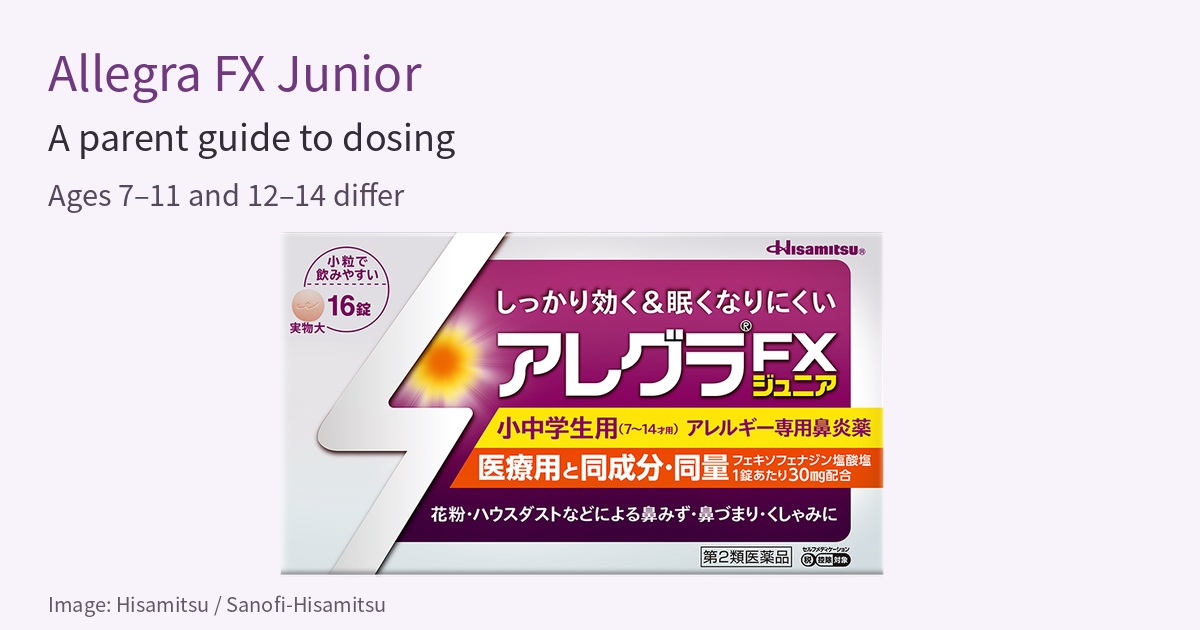
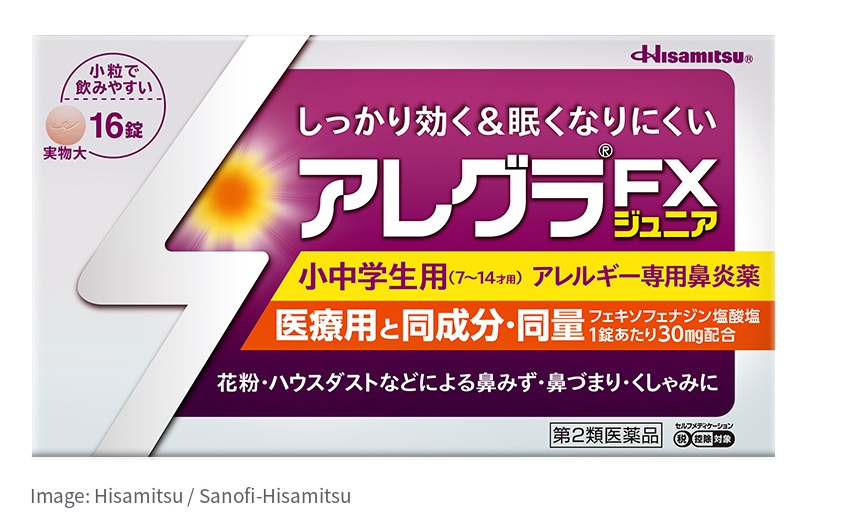
The Japanese name is アレグラFXジュニア. Look for ジュニア (Junior), the 7–14 age range and fexofenadine hydrochloride 30 mg per tablet. This is a Japanese Class 2 OTC medicine, supplied in a 16-tablet pack.
Adult Allegra FX has a different tablet strength and age restriction. Do not give adult Allegra FX to anyone under 15, including a 12–14-year-old. Do not halve an adult tablet or replace two Junior tablets with one adult tablet. Parents choosing for themselves can read the separate Allegra FX and Alesion20 comparison.
One dose is different from the daily total
Ages 7–11
One tablet per dose, morning and evening.
Daily total: two tablets, containing 60 mg. A 16-tablet box supplies eight days at this dose.
Ages 12–14
Two tablets per dose, morning and evening.
Daily total: four tablets, containing 120 mg. A 16-tablet box supplies four days at this dose.
Do not give it to a child under 7. The 12–14 band starts on the 12th birthday. At 15, do not simply extend the children’s directions. Meeting the age range still leaves the symptoms, medical history and other medicines to check. The number of days in a box is not permission to finish it without reassessing symptoms.
Giving a dose: water, morning and evening, supervision
- A parent or guardian should check the tablet count each time. Keep the morning and evening doses separate; do not give the daily total at once.
- Push each tablet out of its blister first. Swallowing the packaging can injure the oesophagus.
- Give the tablets with about a glass of water or lukewarm water. They may be taken on an empty stomach; an irregular breakfast does not turn this into a once-daily medicine.
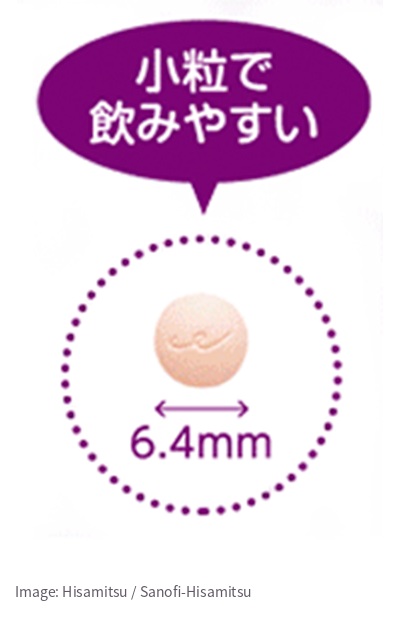
- The manufacturer shows a tablet diameter of about 6.4 mm. Small does not mean every child can swallow it. If swallowing is difficult, ask a pharmacist rather than independently crushing, chewing or substituting an adult medicine.
- When caregivers share responsibility, record the time and tablet count. If a dose was missed, spat out or may already have been given, do not automatically give a full replacement dose; ask for advice. For an accidental overdose, contact a doctor, pharmacist or registered medicine seller.
For established seasonal nasal allergy when this product is suitable, the manufacturer recommends starting at the predicted start of pollen dispersal or when symptoms first appear. This is not a reason to give preventive medicine to every child travelling to Japan.
Already given a cold or travel-sickness medicine?
Do not use other allergy medicines while taking Junior, including medicines for allergic skin conditions and oral rhinitis medicines, or oral medicines containing antihistamines. These can include cold remedies, cough/expectorant medicines, travel-sickness tablets and sleep or sedative medicines.
“Syrup,” “children’s” or “no fever ingredient” does not establish compatibility. Bring all packages or clear photos, plus the amounts and times already given. The guide to Japanese children’s cold, cough and nasal syrups can help identify an existing bottle; it is not advice to combine it with Junior.
- The manufacturer also prohibits use with antacid preparations containing aluminium hydroxide and magnesium hydroxide, erythromycin (an antibiotic), and apalutamide (a prostate-cancer medicine).
- Do not stop a prescription to make room for an OTC allergy tablet, or invent a spacing interval to get around these restrictions.
- Ask about any nasal spray already being used. Nasal sprays are not all prohibited, but the particular product needs checking.
Medical history to check before buying
Do not use it after an allergic reaction to this product or an ingredient. Besides the under-7 prohibition, advice before use is required for ongoing medical treatment, a previous diagnosis of another allergic condition such as asthma or atopic dermatitis, a history of allergies to medicines or other substances, severe nasal congestion, or uncertainty about the cause. Check inactive ingredients as well when an allergy matters.
The children’s leaflet retains general precautions for oral rhinitis medicines: pregnancy or possible pregnancy and older age require advice; a breastfeeding person must avoid the medicine or avoid breastfeeding while using it, with a clinician helping plan treatment and feeding. Do not drink alcohol before or after taking it. These general precautions do not provide an adult dose.
Do not wait a week: stop after 3–4 days without improvement
If symptoms have not improved after 3–4 days, stop and consult a doctor, pharmacist or registered medicine seller with the leaflet. Even if it helps, consult before continuing beyond two weeks. Worsening symptoms or warning signs need earlier attention.
Which reactions mean stopping?
Stop immediately and seek advice with the leaflet for swelling of the throat, eyelids or lips; rash, itching, hives or skin redness; nausea, vomiting, abdominal pain or indigestion; numbness, headache, fatigue, malaise, dizziness, insomnia, nervousness, nightmares or sleep disturbances; frequent or difficult urination; palpitations, altered taste, swelling, chest pain, breathing difficulty, raised blood pressure or menstrual changes. Severe symptoms such as breathing difficulty or altered consciousness need immediate medical care.
Stop and consult if dry mouth, constipation, diarrhoea or drowsiness persists or worsens. “Less likely to cause drowsiness” does not mean it cannot happen, or guarantee unaffected schoolwork or sports.
Rare, serious warning signs: obtain medical care immediately
- Anaphylaxis or shock: itching, hives, hoarseness, sneezing, an itchy throat, breathlessness, palpitations or confusion soon after a dose.
- Liver dysfunction: fever, itching, rash, yellow skin or eyes, brown urine, marked tiredness or loss of appetite.
- Agranulocytosis, low white blood cells or low neutrophils: sudden high fever, chills or a sore throat.
Keep the box and leaflet when travelling
Store in a cool, dry place away from direct sunlight and out of children’s reach. Do not transfer to another container or use after expiry. Original packaging lets each caregiver check the name, age range, dose and expiry.
Bring four things to the pharmacy: your child’s exact age, the main symptoms and how long they have lasted, medical and allergy history, and every medicine already given with its time. Those details are more useful than asking which box is strongest.
Official sources
- Allegra FX Junior official product information
- Directions, ingredients and precautions
- Complete Japanese package leaflet
- Patient information and symptom-assessment guide
- Manufacturer FAQs
- National Taiwan University: Taiwan Allegra brand-name reference
This guide explains Japanese product labels and does not replace individual medical assessment. Read the full leaflet supplied with the medicine before use.