Shopping for GUM “mouthwash” in Japan? Before deciding on alcohol, check the words 液体ハミガキ. The regular and non-alcohol Dental Rinse compared here are liquid toothpastes: rinse, spit, and then brush. Rinsing alone is not their complete use.

I’m Irene, a Taiwanese pharmacist working in a Japanese drugstore. This guide uses Japanese manufacturer information to explain the labels, sensory differences and brushing sequence. It is not a personal product test or an effectiveness ranking.
Japanese official information checked: October 22, 2026. This guide addresses adults who can rinse and spit independently. It covers the Japanese regular and non-alcohol GUM Dental Rinse, not GUM PLUS, the refreshing type or overseas versions.
The main decision: sensation, not stronger versus weaker
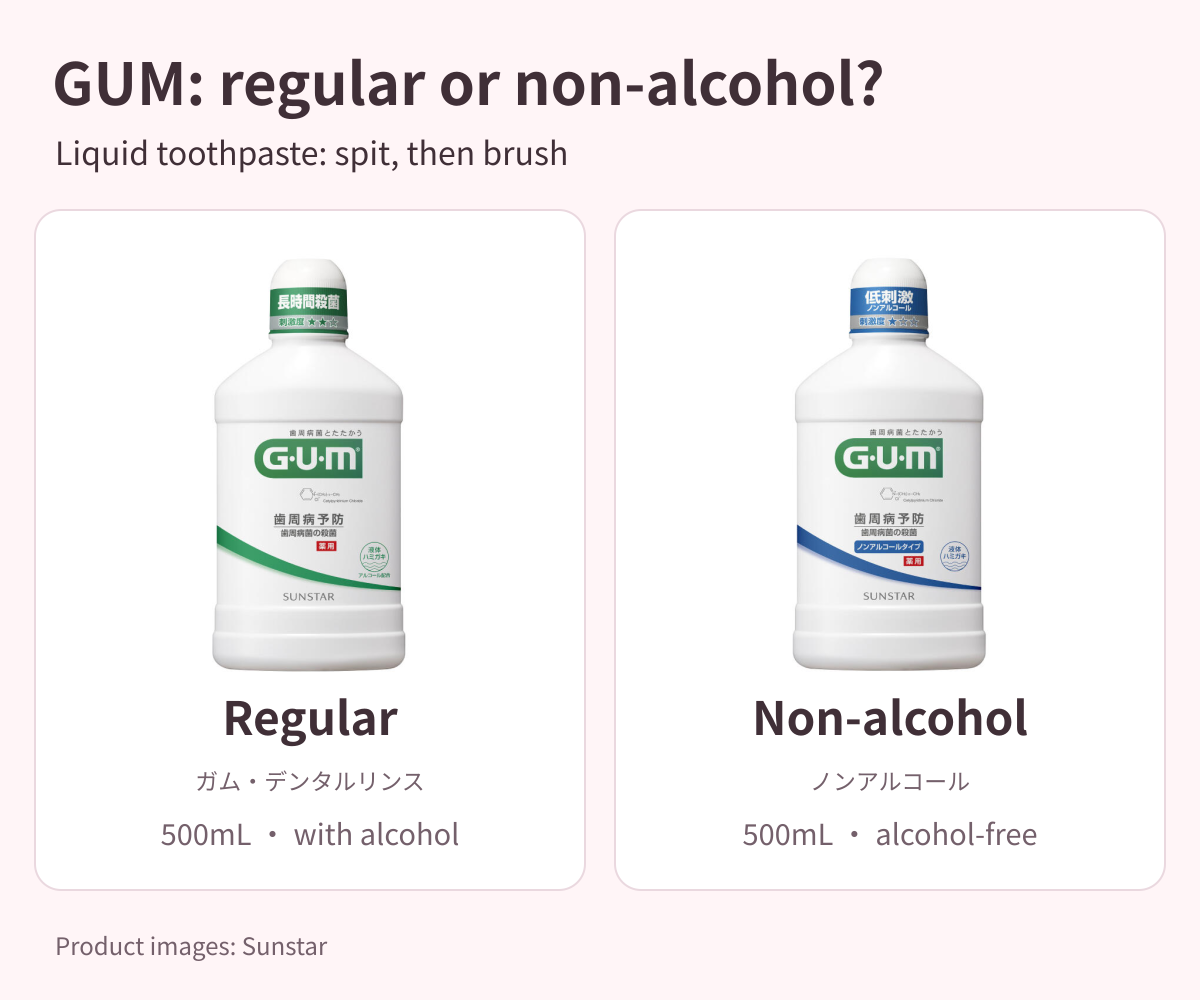
Sunstar’s comparison FAQ says the types have the same stated indications and effects and can be chosen by preferred sensation. Regular contains alcohol (ethanol) and has a sharper, refreshing feel. Non-alcohol contains no ethanol and is positioned as a low-stimulation option. Both have a herb-mint flavour.
You do not need to tolerate a stronger sting to choose the supposedly “more effective” bottle. Equally, alcohol-free does not mean flavour-free, comfortable for everyone, or suitable for every oral condition. Start with whether you dislike alcohol’s sensation, then check the actual label.
Regular: for those comfortable with a sharper feel
ガム・デンタルリンス
[レギュラータイプ]
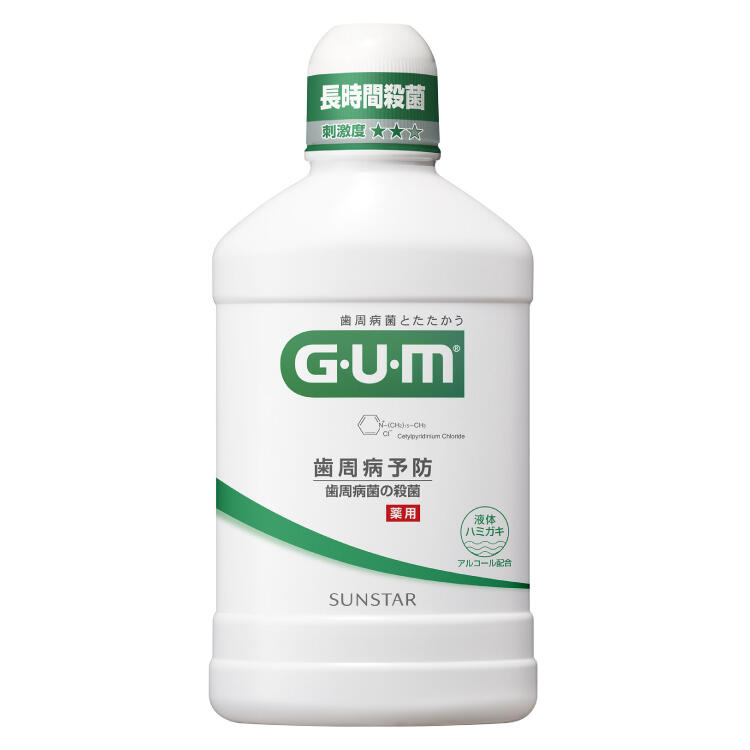
- Contains alcohol (ethanol).
- Herb-mint flavour.
- Japanese classification: quasi-drug, liquid toothpaste.
This may be an option if you like that sensation. A stronger sensation is not evidence that it treats gum disease better.
Non-alcohol: for those who dislike alcohol’s sensation
ガム・デンタルリンス
[ノンアルコールタイプ]
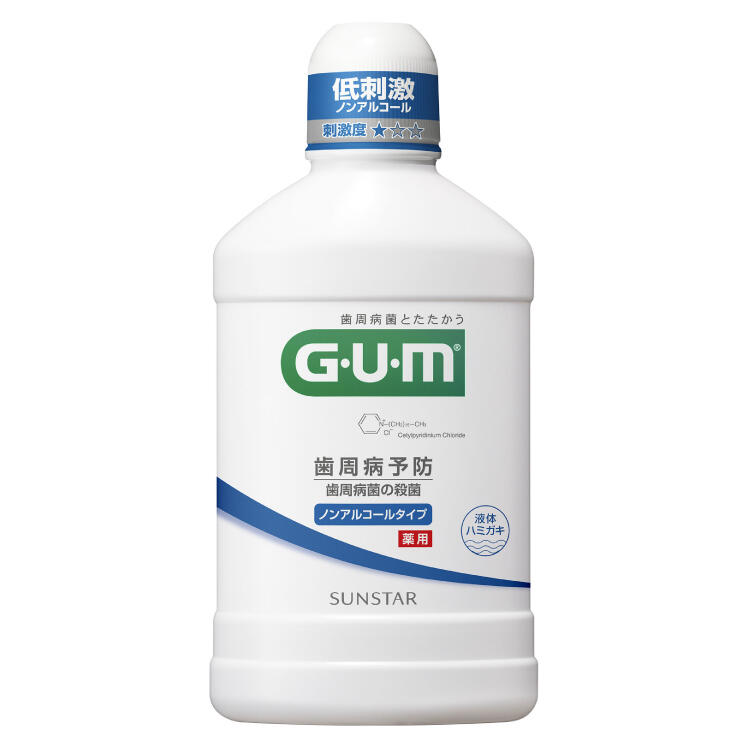
- No alcohol (ethanol).
- Also herb-mint flavour.
- Also a quasi-drug and liquid toothpaste.
The manufacturer positions it for people who dislike stimulation. That is a shopping distinction, not a guarantee for allergies, oral sores or children.
These are official Japanese 500mL product images, not photographs taken for this blog. Both product pages list 80, 250, 500, 960 and 1300mL sizes. Check store availability and actual prices separately; size and price are not measures of effectiveness.
The easy-to-miss step: brush after spitting
The official sequence is the same for both bottles:
- Take an appropriate amount—approximately 10mL—into your mouth.
- Rinse thoroughly for approximately 20 seconds.
- Spit it out, then brush. Sunstar’s FAQ says to brush with nothing added to the toothbrush at this step.
- A water rinse afterward is not necessary. If the remaining sensation bothers you, rinse lightly.
If you wanted a separate after-brushing rinse that does not require brushing afterward, recheck the category. Do not rely on the English words “Dental Rinse” or a retailer’s translated title. These directions should not be applied to every GUM product.
Read prevention claims without turning them into treatment promises
Both official product pages identify CPC (cetylpyridinium chloride) and GK₂ (dipotassium glycyrrhizinate) as medicinal ingredients and describe prevention of periodontal disease—gingivitis and periodontitis—and bad breath. Prevention is not a promise to cure established disease or a guarantee of identical results for every person.
If gum problems persist, or pain or bleeding concerns you, seek a dental assessment rather than simply switching to a sharper-tasting bottle. This guide does not equate these rinses with the cavity-prevention role of fluoride toothpaste. If your dentist has recommended an oral-care routine, check how to combine products rather than stopping that advice because of this article.
Safety boundaries before you use either bottle
- This is not a drink: spit it out after rinsing. Alcohol-free does not mean safe to swallow.
- This article does not set a minimum age or equate non-alcohol with a children’s product. Ask a dentist or pharmacist before choosing for a child or someone who has difficulty swallowing safely or spitting.
- Follow the precautions on your bottle. Stop if discomfort occurs and seek professional advice; low stimulation does not rule out an individual reaction.
- For accidental swallowing, consider the amount and symptoms, not just the absence of alcohol. Sunstar advises consulting a doctor with the product if a large amount is swallowed at once or anything seems abnormal. Its FAQ below also explains what to do after a very small accidental amount.
Buying for someone else? Send the full name
Confirm three things first: regular or non-alcohol, whether herb-mint is acceptable, and whether the person understands that brushing follows spitting. Only then choose a size. Do not mix information from another GUM range, an older review or an overseas pack into this decision.
If an existing routine already meets your dentist’s advice, a shopping list is not a reason to add another bottle. The useful question is whether the sensation and required method suit you—not which bottle seems “stronger”.