The Japanese box says once daily. That does not mean one spray: this Nasonex uses two sprays in each nostril at one daily session. A bottle lasting about two weeks is another easy number to misread. It does not mean waiting two weeks to decide whether treatment is helping.

I’m Irene, a Japan-licensed pharmacist from Taiwan working in a Japanese drugstore.
This guide covers only ナゾネックス点鼻薬<季節性アレルギー専用>, the Japanese 10g OTC product. Check suitability before technique. Do not transfer directions from an overseas Nasonex product, a prescription or another Japanese nasal spray.
- Identify the Japanese product first
- Two sprays on each side at one daily session
- Keep the three time limits separate
- When not to use this OTC product
- What to tell the pharmacist before buying
- Symptoms that should not wait a week
- Three practical travel questions
- Storage and the final label check
- Related guides
- Official sources
Identify the Japanese product first
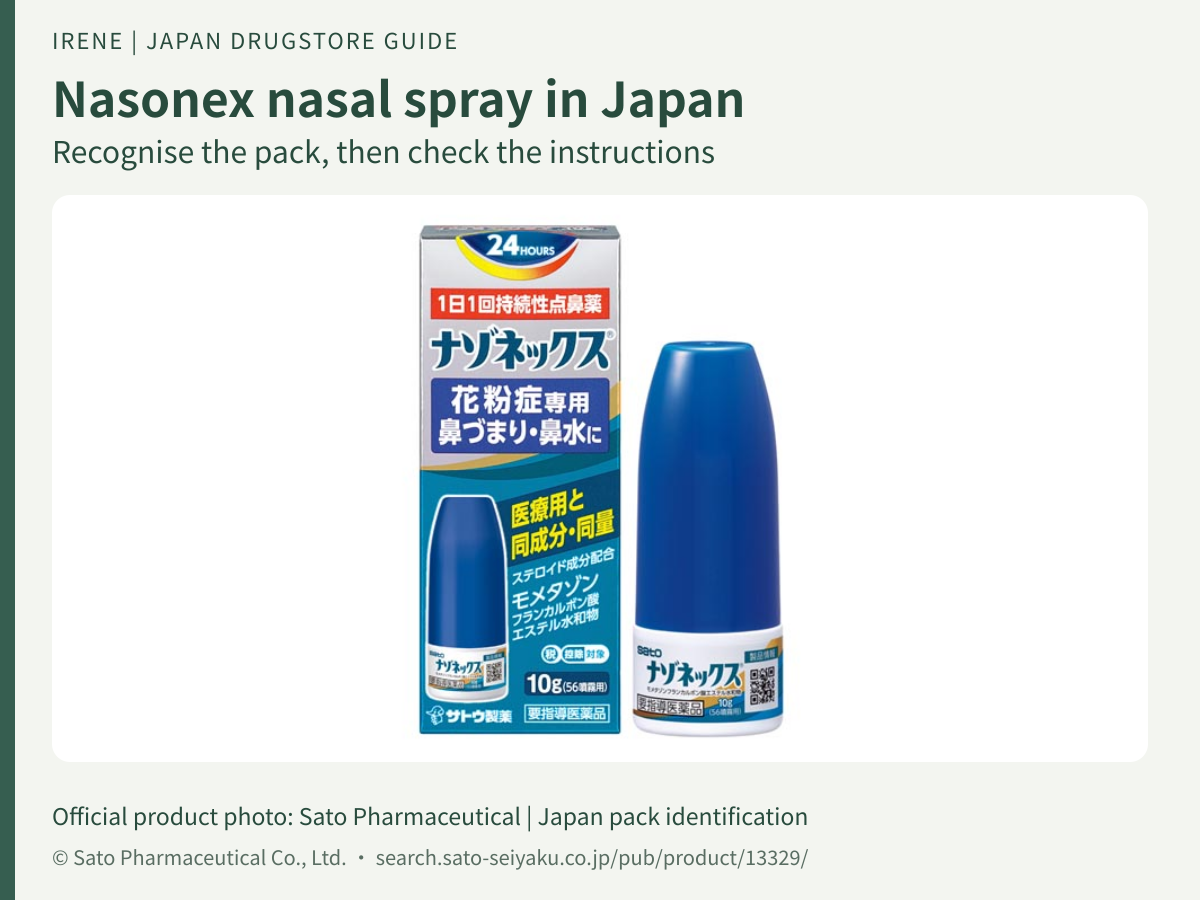
Look for the full Japanese name, 10g, 1日1回 and 要指導医薬品. Sato Pharmaceutical launched this product in Japan on 25 September 2025, not in 2026. Purchase it with a pharmacist's guidance. Stock at individual shops has not been checked.
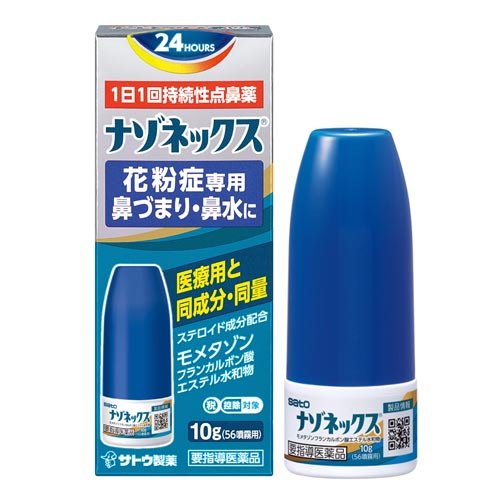
Its active ingredient is the nasal corticosteroid mometasone furoate hydrate: 52mg per 100g, equivalent to 50mg of mometasone furoate. That is a formula concentration, not the amount to spray at one time.
The Japanese OTC indication is relief of a blocked nose, runny nose and sneezing caused by seasonal pollen allergy. Do not extend this indication to a cold or year-round house-dust allergy. Ask first if the cause is unclear.
Two sprays on each side at one daily session
For an eligible person aged 15 or older, use two sprays in each nostril once daily: four sprays in total at that session. Do not split this into morning and evening doses. Under 15s must not use this product, including a reduced adult dose.
Choose a convenient time and keep it consistent to help avoid missed doses. On first use, prime with about 10 sprays into the air until a fine mist appears. Priming is preparation, not 10 additional sprays into your nose.
Original Irene illustrations based on the Japanese official directions, not manufacturer artwork or an official translation. For eligible users aged 15 or older only. Read the contraindications and stop-use advice below and the complete leaflet in the box.
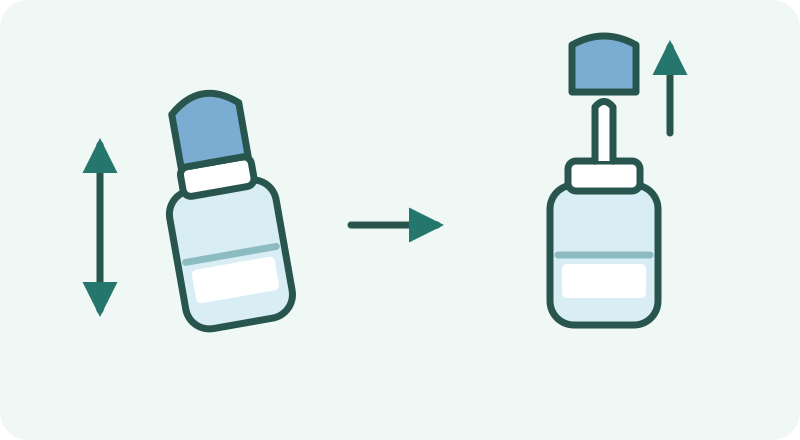
Blow your nose. Shake the bottle well up and down, then pull the cap straight up without twisting. The two drawings show successive actions with the same bottle.
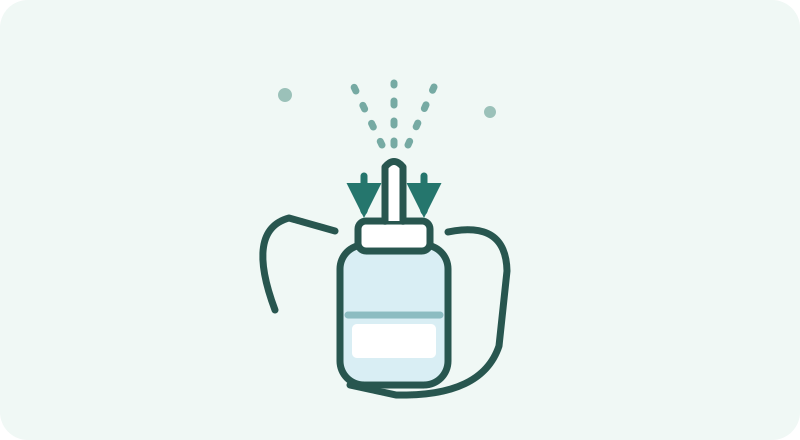
Hold the bottle firmly. Before first use, spray about 10 times into the air until a fine mist appears. This prepares the pump; these are not 10 extra sprays into your nose.
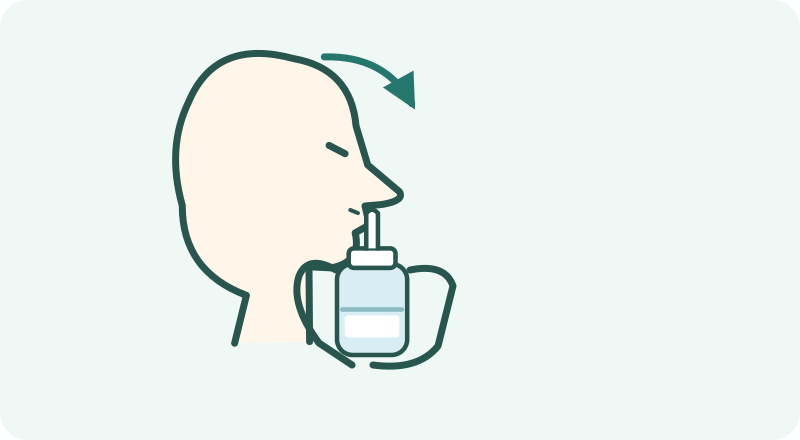
Hold the bottle firmly and insert the nozzle into a nostril with your head tilted slightly forward. Avoid contact between the tip and nasal mucus to prevent contamination. This simplified illustration does not specify insertion depth.
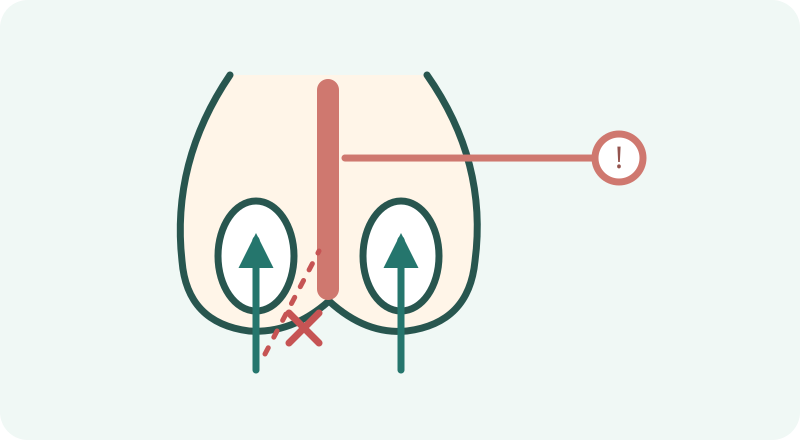
The red centre line represents the nasal septum, the wall between the nostrils. Do not aim the nozzle at it. Insert the nozzle straight into the nasal cavity before spraying. This is a simplified direction diagram, not an anatomical drawing or advice to tilt sharply outward.
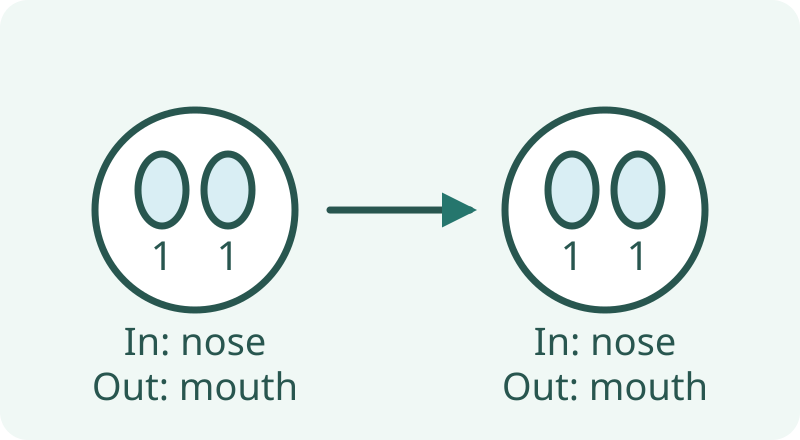
Spray once into each nostril. Breathe in through your nose and out through your mouth, then repeat once on each side and repeat the breathing step. That makes two sprays per nostril at one session, once daily.
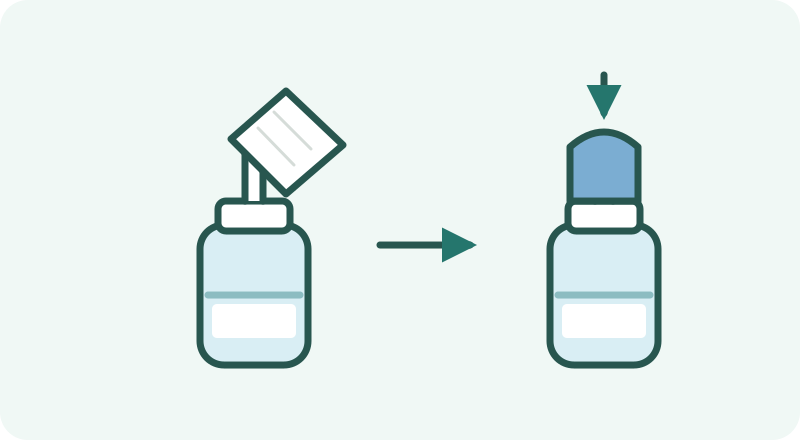
Wipe the part that touched the nose and replace the cap. Rinse your mouth if you taste the medicine. Never pierce the nozzle with a needle, share the bottle or transfer its contents.
Keep the three time limits separate
About two weeks per bottle describes the manufacturer's estimate at the labelled dose. It is not a course you must finish or permission to keep treating an unresponsive symptom for two weeks.
About one week without improvement means stop and consult a doctor or pharmacist with the leaflet. Adverse effects and warning signs require earlier action.
No more than three months in one year includes time spent using other steroid nasal sprays. If you have already used steroid nasal sprays for three months or more in the past year, do not start this product. A new bottle, a different brand or autumn after spring does not reset the total. An ENT specialist should assess a need for longer treatment.
Keep a note of start dates, product names and previous periods of steroid nasal-spray use. This limit concerns nasal steroids. It is not an instruction to stop other prescribed steroid treatment.
When not to use this OTC product
Age 15 or older is only one condition. Do not use it if any of these apply:
- A history of an allergic reaction to this product or any of its ingredients.
- Pregnancy or possible pregnancy.
- Pus, ulcers or injury inside the nose, or nasal surgery that has not fully healed.
- Diagnosed systemic fungal infection, tuberculosis-related disease, an infection, ocular herpes simplex or recurrent nosebleeds.
- Three months or more of steroid nasal-spray use within the past year.
Do not combine it yourself with another steroid nasal spray. If a doctor has prescribed such treatment, follow the doctor's instructions. Do not stop or switch prescribed medicine on the basis of this guide.
What to tell the pharmacist before buying
Consult first if you are receiving medical treatment, breastfeeding, older, have a history of allergies to medicines or other substances, receive allergy treatment such as desensitisation, use long-term or high-dose systemic steroids, or are unsure whether the symptoms are seasonal allergy.
Also discuss pain in the head, forehead or cheeks; yellow or green nasal discharge; heaviness around the nose; or a blocked nose with a nasal voice or a feeling of something inside. These are reasons for assessment, not a checklist for diagnosing yourself.
The manufacturer says this product can be used with cold medicines or oral rhinitis/allergy medicines. Their own precautions still apply, so show the pharmacist every product you use. This does not make Nasonex a cold treatment or permit combining steroid nasal sprays.
Symptoms that should not wait a week
Stop and consult promptly for possible adverse effects such as nasal irritation, itching, dryness, pain, redness, burning, bleeding, crusting, altered smell, or new runny nose, blockage or sneezing. Throat discomfort, pain, dryness or swelling; rash; headache; fatigue; cough; or an altered taste also call for stopping and seeking advice.
If eye pain, blurred or reduced vision, distorted vision or eye symptoms with a headache occur after use, stop immediately and consult a doctor or pharmacist with the leaflet. Repeated nosebleeds or crusting inside the nose need medical assessment after stopping because they may progress to a hole in the septum. New head, forehead or cheek pain, or yellow/green discharge after use, also means stop and consult.
Seek immediate medical care for signs of a serious allergic reaction soon after use, such as hives, a hoarse voice, difficulty breathing, palpitations or confusion. Do not wait for the one-week review point.
Three practical travel questions
Can I start before symptoms as prevention? Preventive use without symptoms is not approved for this product. The manufacturer advises starting when symptoms or their early signs appear. Continued use remains subject to the safety conditions, the one-week review and the annual total.
What if I miss a dose? Use it when you remember unless the next dose is close. In that case, skip the missed dose and resume the normal schedule. Never double the dose or use it twice in one day.
Can I replace NAZAL or Flunase with this? Bring the original pack, dose and dates of use to the pharmacist. A similar bottle or the word steroid is not enough to establish a suitable replacement. The related guides below help identify products; they are not switching or combination instructions.
Storage and the final label check
Keep the capped bottle in a cool, dry place out of direct sunlight and children's reach. Do not use an expired product. Use promptly after opening; do not invent a fixed after-opening expiry period that the manufacturer has not specified.
Japanese product information checked on 7 November 2026. This guide supports product identification and a discussion with a pharmacist; it does not replace diagnosis or the complete leaflet in your box. Ask a pharmacist if the actual pack differs.
Related guides
Official sources
- Sato Pharmaceutical product information
- Japanese package leaflet with full safety information
- Sato Pharmaceutical launch announcement dated 25 September 2025
- Official product overview
- Official illustrated administration instructions
- Official FAQ on time of day
- Official FAQ on the approximately two-week bottle supply
- Official FAQ on spring and autumn cumulative use
- Official precautions page read together with the Japanese leaflet
- Official FAQ on cold-medicine combinations
- Official FAQ on oral rhinitis and allergy medicine combinations
- Official FAQ on preventive use
- Official FAQ on a missed dose