
I’m Irene, a Taiwanese pharmacist working in Japan. Two DHC bottles, both labelled “White”, can look like a simple vitamin-C choice. But these are medicines, not the familiar supplement pouches. Let’s check the full Japanese name, the amount per daily dose and the point at which you should stop and seek advice.
First identify the blue and yellow packs
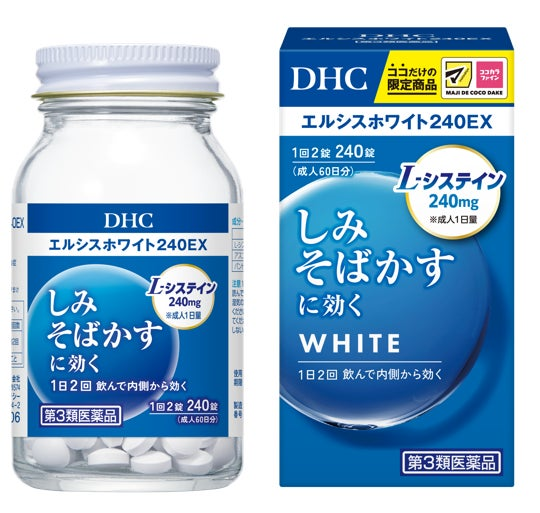
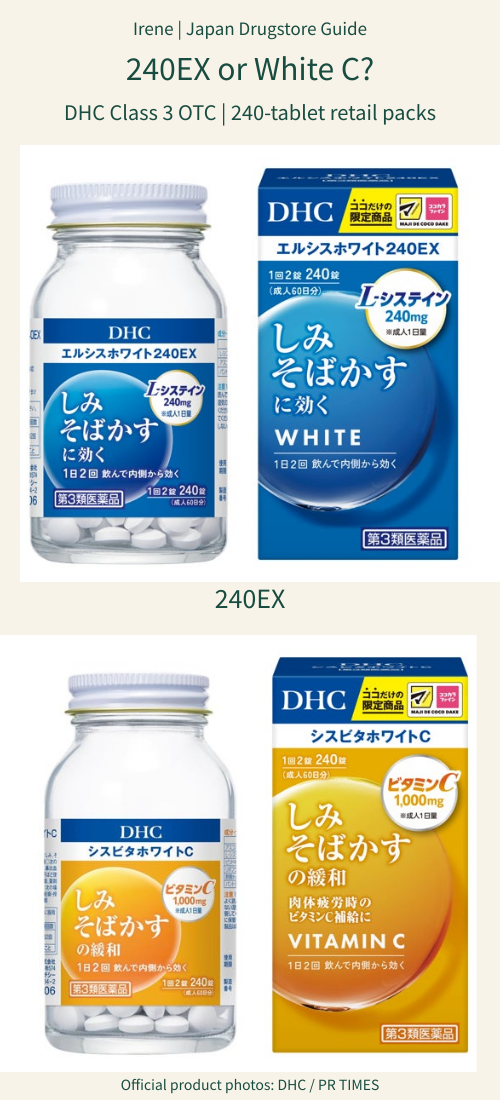
The blue pack is DHCエルシスホワイト240EX, an L-cysteine preparation. The yellow pack below is DHCシスビタホワイトC, a vitamin-C-based preparation. Both are Japanese Class 3 OTC medicines. Use the full printed names when asking in a shop; colour alone is not enough.
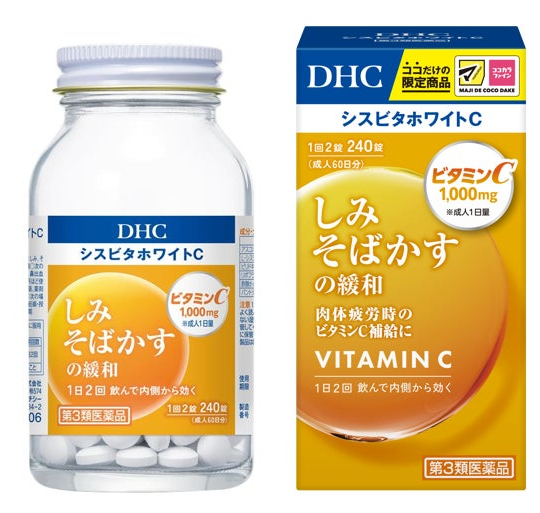
The packs shown here contain 240 tablets. DHC’s direct-sale range also has 120-tablet packs, so check the tablet count before comparing prices. “240” in the 240EX name refers to 240mg of L-cysteine in the adult daily dose; it does not tell you how many tablets are in every pack.
What changed in 2026? From 22 May, these established medicines expanded into Matsumoto Kiyoshi and Cocokara Fine group stores, excluding some locations, and their online store. This was a new retail channel, not the introduction of a new formula. The launch prices for the 240-tablet packs were ¥3,850 and ¥4,290 including tax respectively; current store prices and stock may differ.
Compare the formula, not a “stronger” ranking
All amounts below are per four tablets, the adult daily dose. They are not amounts per tablet.
240EX: L-cysteine 240mg, vitamin C (ascorbic acid) 500mg and calcium pantothenate 30mg.
シスビタホワイトC: vitamin C 1,000mg, L-cysteine 160mg, vitamin B6 (pyridoxine hydrochloride) 30mg, vitamin B2 (riboflavin) 12mg, vitamin E (d-α-tocopheryl acetate) 25mg and calcium pantothenate 24mg.
The first has more L-cysteine; the second has more vitamin C and additional active vitamins. That does not establish which works better for you. Do not combine both simply to collect their ingredients. Show a pharmacist any medicines and supplements you already take so the choice does not create unnecessary duplication.
240EX is labelled for pigmentation such as spots, freckles and sun-related pigmentation, general fatigue, hangovers, acne, eczema, hives, contact rash and drug eruptions. A drug-eruption indication is not permission to manage a suspected reaction to another medicine yourself; seek professional advice.
シスビタホワイトC is labelled for relief of spots, freckles and pigmentation from sun exposure or contact rash; prevention of gum and nose bleeding; and vitamin-C supplementation during physical fatigue, pregnancy/breastfeeding, reduced strength during or after illness, and older age. The bleeding indication is not a substitute for assessing unexplained bleeding. Pregnancy-related supplementation on the label is not blanket advice to start it without checking your own treatment and supplements.
Neither label promises that every dark mark will disappear, or that you will see a result during a short trip. If you are uncertain what a skin change is, get it assessed instead of choosing by a “White” label.
Using either medicine: separate one dose from one day
1. Count the tablets for your age
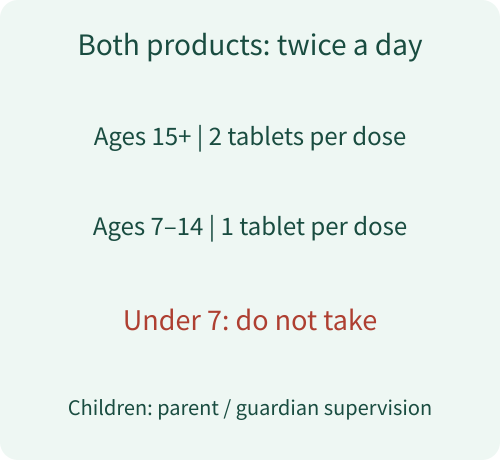
For both products: ages 15 and over take two tablets per dose, twice a day. Ages 7–14 take one tablet per dose, twice a day, under a parent or guardian’s guidance and supervision. Children under 7 must not take either product.
240EX can be taken regardless of meals. シスビタホワイトC is taken before or after meals. Follow the instructions on your own pack; “four tablets a day” does not mean taking all four at once.
The 240-tablet bottle equals 60 days at the adult labelled dose. That is a pack-size calculation, not an instruction to continue for 60 days without reassessing symptoms.
2. Keep the desiccant; remove the packing material
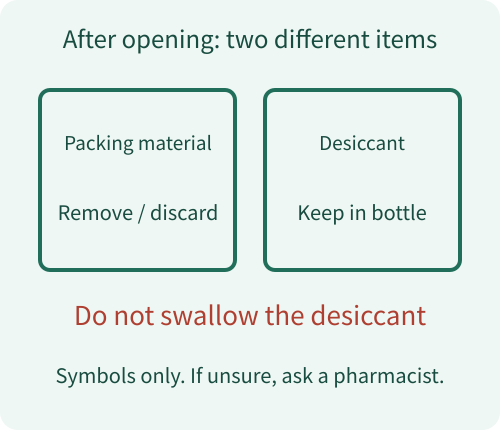
After opening, discard the protective packing material, but leave the desiccant in the bottle. Do not swallow the desiccant. The symbols in the diagram are explanatory, not photographs of the contents of your bottle. If you cannot identify an item, ask a pharmacist before removing or taking it.
Do not touch tablets with wet hands or put tablets already taken out back into the bottle. Close the lid firmly after every use. Store in a cool place away from moisture and direct sunlight, out of children’s reach. Do not transfer to another container or take after expiry. After opening, use as soon as reasonably possible while following the dosage and stopping rules, not by taking extra tablets.
3. Know when to stop, rather than finish the bottle
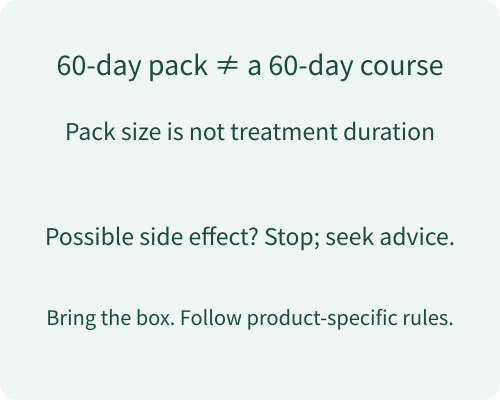
With 240EX, rash, nausea/vomiting or abdominal pain after taking it may be side effects: stop immediately and take the box to a doctor, pharmacist or registered OTC-medicine salesperson in Japan. Stop and consult if diarrhoea persists or worsens, or if symptoms do not improve after taking it for a while. Its box does not specify a fixed number of days for that last point.
With シスビタホワイトC, nausea/vomiting may be side effects: stop immediately and take the box to a doctor, pharmacist or registered OTC-medicine salesperson in Japan. Stop and consult if diarrhoea persists or worsens. If symptoms have not improved after about one month, stop and consult a doctor, dentist, pharmacist or registered salesperson. Do not wait a month when a possible side effect appears.
Both contain vitamin C, which may affect urine and stool test results. Tell your doctor you take the product when receiving medical care. シスビタホワイトC contains vitamin B2, which can turn urine yellow; that does not mean every change in urine is harmless.
My shelf-side recommendation
Start with the symptom you want help with, then the exact medicine name and your existing medicines or supplements. Do not choose by the larger vitamin-C number, a bigger bottle or a promise of fast whitening. DHC’s general medicine guidance advises consulting a doctor or pharmacist before use if you are prone to allergies, pregnant or under medical treatment.
For buying the intended pack, the useful three-part check is: the full Japanese name, 第3類医薬品, and 240錠. For taking it, the useful check is different: your age, tablets per dose and twice-daily frequency. Keeping those checks separate is more useful than memorising a marketing number.
Official sources
Checked 9 November 2026. Product photographs: DHC’s official launch materials distributed via PR TIMES. Diagrams are original Irene summaries of official instructions, not manufacturer illustrations. Read the complete box instructions; this guide does not diagnose skin conditions or replace individual advice.
DHC official retail-launch announcement
DHC current 240EX medicine information
DHC current シスビタホワイトC medicine information