 I’m Irene, a Taiwanese pharmacist working in a Japanese drugstore. Let’s check the intended use and your skin first, then the material and pack size.
Check your skin before choosing a patch
Do not treat the word “Hydro” as permission to cover a popped or draining pimple with this product. If an area is red, swollen, painful, keeps recurring or is difficult to identify, ask a dermatologist or pharmacist first. Buying a pack to test on the area is not a way to diagnose it.
“Pimple patch” is a shopping term, not a substitute for the product’s classification and restrictions. If treating inflamed acne is your goal, checking the appropriate treatment comes before choosing between patch materials.
Identify the two standard packs
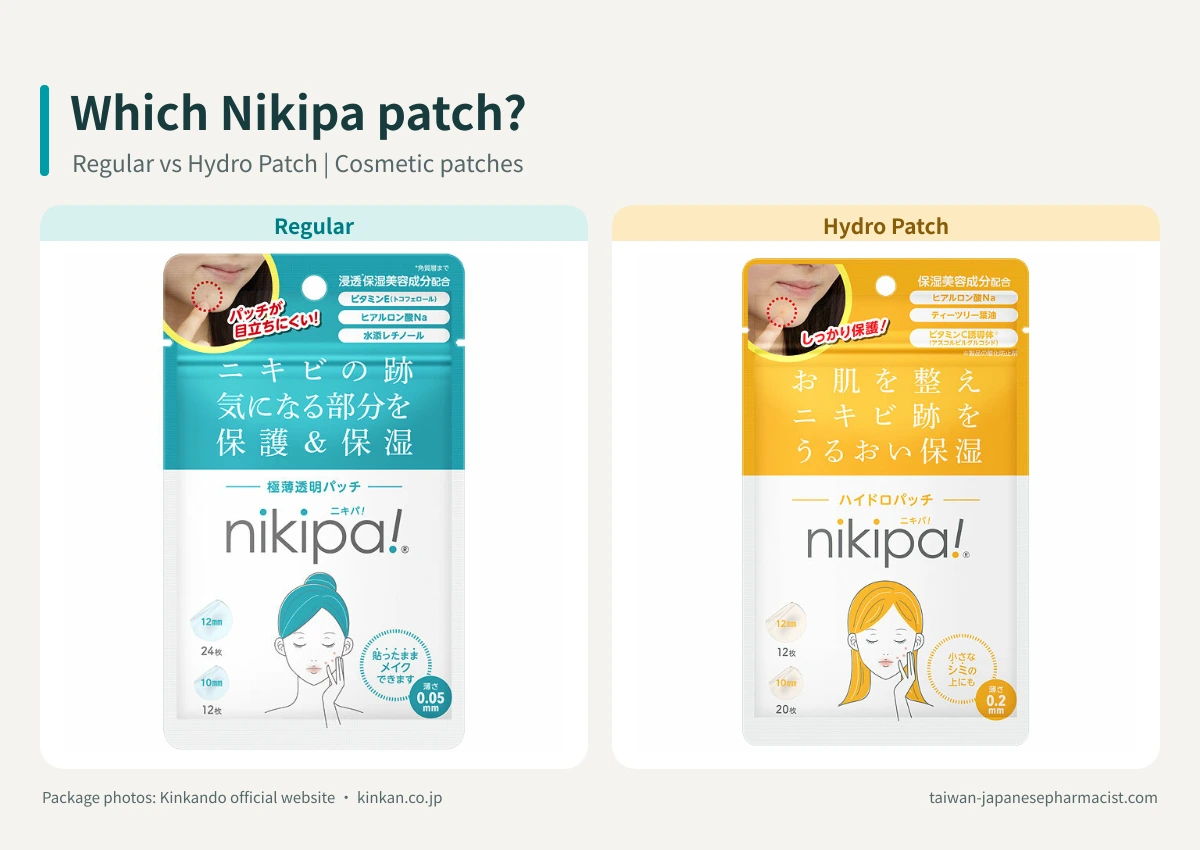
Film: nikipa!(ニキパ!)
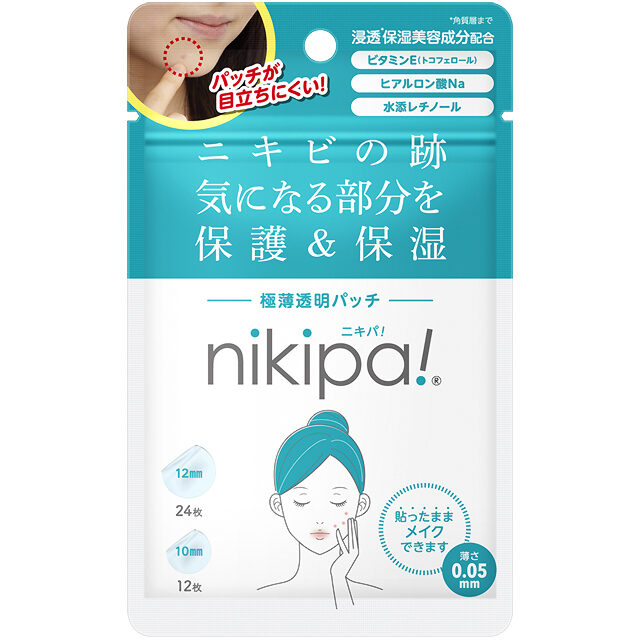
36 patches: twelve 10-mm and twenty-four 12-mm patches. JAN: 4987062121002.
A transparent, 0.05-mm urethane film, described as discreet and water-resistant. Highlighted moisturising ingredients include vitamin E, sodium hyaluronate and hydrogenated retinol.
Hydrocolloid: ニキパ ハイドロパッチ
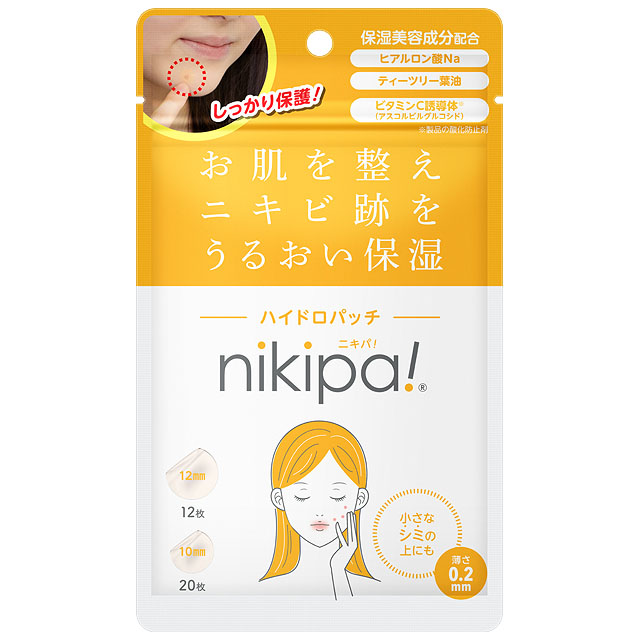
32 patches: twenty 10-mm and twelve 12-mm patches. JAN: 4987062124003.
Uses hydrocolloid for local moisturising and skin conditioning. Highlighted moisturising ingredients include a vitamin C derivative, sodium hyaluronate and tea tree leaf oil.
Both packs contain both diameters. The film pack has more 12-mm patches; Hydro has more 10-mm patches. The name, count and JAN help identify these exact versions. Check the pack you buy rather than transferring specifications from a Premium product.
What makes a useful choice?
- You prioritise a thin, discreet covering: start with the standard film’s stated features. Water resistance does not guarantee it will stay attached through swimming, washing or sweating.
- You specifically want hydrocolloid for local moisturising: check for the full Hydro Patch name. The material does not cancel this cosmetic product’s restrictions on wounds and abnormal skin.
- You want makeup over the patch: Both products allow makeup over the patch. Choose by material and skin suitability rather than time of day.
- You want to treat acne, remove scars or cover broken skin: pause and check the need. Neither product’s name nor its moisturising ingredients establish those treatment uses.
Start with whether your skin is suitable for a patch, then choose the material and size that fit your needs. For acne treatment, ask a pharmacist or dermatologist about an appropriate option.
Four steps for either patch
- 1Clean
Check for unsuitable skin, then wash the area. - 2Dry
Remove moisture. Do not apply cosmetics underneath the patch. - 3Apply
Peel it from the clear backing and place it on the area. Makeup goes above the patch. - 4Remove slowly
If difficult to peel off, moisten slightly with water or lukewarm water first.
For the standard film, Kinkando additionally suggests gently pressing and blending BB cream or liquid foundation over the patch. Permission to apply makeup above it does not mean applying skincare or foundation to the skin first: products underneath can make attachment less reliable.
These two official pages do not specify a universal wear time or a white-colour replacement rule. Do not borrow an “eight-hour” rule or wound-dressing instructions from another product. Follow your pack and ask the manufacturer if uncertain. Remove it and stop use immediately if irritation develops.
Sensitive skin, reactions and storage
- Use only for the intended purpose. Watch your skin during use and take particular care with sensitive skin or an allergy tendency.
- Stop immediately and consult a dermatologist for redness, swelling, itching, irritation, loss of colour/white patches or darkening during use, or after sunlight exposure following use. Continued use may worsen the problem.
- Both are patch-tested, but this does not guarantee freedom from allergy or irritation for everyone.
- Use promptly after opening. Avoid extreme heat, extreme cold and direct sunlight. Keep out of reach of infants and young children.
- Kinkando notes that Hydro Patch may contain air bubbles because of its material; these do not indicate a quality problem. That statement does not mean a blister forming on your skin can be ignored.
Questions worth asking before buying
Do tea tree oil or vitamins make these acne treatments?
The manufacturer presents these as cosmetic moisturising ingredients. An ingredient’s reputation does not establish a medicinal effect for the finished product. If you need acne treatment, check the appropriate medicine and instructions separately.
Can I cover acne cream with one?
The two product pages do not provide instructions for combining these patches with acne medicine. Do not improvise by sealing a medicine underneath. Ask a pharmacist or doctor to check the exact treatment and your skin.
Does the reference to acne marks mean scar removal?
Hydro Patch’s description concerns moisturising and conditioning. It is not a promise to remove indented scars, eliminate pigmentation or treat scarring. Decide whether you want moisture, a discreet covering, or assessment of a skin problem.
Before taking a pack home, keep a photo of its full name, count and precautions. That is more useful than remembering the colour alone. If you are unsure what the skin change is, ask a pharmacist or dermatologist before using a patch.
Sources and scope
Product information checked on November 11, 2026, Japan time. These are the Japanese standard versions. Follow the actual pack and current instructions.
- Kinkando: nikipa! product details, ingredients, directions and precautions
- Kinkando: Nikipa Hydro Patch product details, ingredients, directions and precautions
Shopping reference: JAPANKURU’s Kinkando drugstore article, dated July 29, 2024, is explicitly sponsored. Product directions and precautions in this guide were checked against Kinkando’s official information.