I’m Irene, a Taiwanese pharmacist working in Japan. The Pikachu box is easy to spot. What I want you to take home, though, is more than a familiar character: the ability to identify the medicine and use it correctly. This is an anti-itch patch, not a wound dressing or mosquito repellent.
Check three details on the shelf
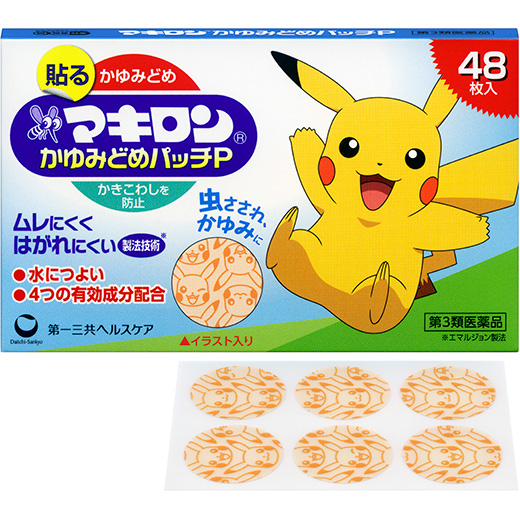
Look for the full name マキロンかゆみどめパッチP, the 第3類医薬品 marking (Japan’s Class 3 OTC medicine), and the 48-patch pack. P is steroid-free. The similarly named Makiron Patch Ace contains a corticosteroid and is a designated Class 2 OTC medicine. Do not transfer directions between the two.
P is indicated for insect bites, itching, and chilblains. Do not apply it to wounds, weeping or scratched-open skin, eroded skin, or contact dermatitis. Helping prevent scratching is not the same as treating a scratch wound.
Apply in three steps
Is it for ages two and up?
The manufacturer sets no minimum age but recommends use from around age two because adhesive patches can irritate skin. This is a recommendation, not an absolute under-two prohibition or a promise of no reactions after two. Ask a pharmacist about infants and younger children rather than choosing by the character alone.
Can I apply it right after an insect-bite cream?
No. The manufacturer advises against immediate application after another topical insect-bite medicine because ingredients may overlap. It advises an interval without giving one fixed number of hours. Show the other medicine to a pharmacist; do not invent a “30-minute rule.” If using it on the face, avoid the eye area and mucous membranes.
Know when to stop
Ask a doctor, pharmacist, or registered medicine seller before use if you are receiving medical treatment or have had allergic symptoms from medicines or other substances.
Stop immediately and consult one of those professionals, taking the box, if a rash, redness, itching, swelling, contact dermatitis, dryness, irritation, heat or stinging develops, or if the treated skin darkens. Stop and seek advice if symptoms have not improved after 5–6 days. Replacing the patch repeatedly is not a substitute for reassessment.
Keep unused patches in their foil pouch with the opening folded closed, away from sunlight, heat, moisture and children. Do not use expired patches.
Irene’s takeaway: identify P, check for intact skin, and remember that longer wear is not necessarily better. The packaging helps you find the product; your symptoms and its directions determine whether it fits.
Official sources
Checked November 14, 2026. This guide concerns the Japanese product and does not replace individual medical advice. Read the actual box and leaflet before use.
Manufacturer’s product information