Not every Isodine bottle is a gargle. Nodo Fresh is a ready-to-use 25mL throat medicine. The important technique is not to inhale while you spray.

I’m Irene, a pharmacist. Gargles, lozenges and sprays can be confusing on a Japanese drugstore shelf. Let’s identify this pack, check whether it is appropriate and make the spraying technique and stop rules easy to follow.
Identify the pack: Nodo Fresh 25mL, not gargle
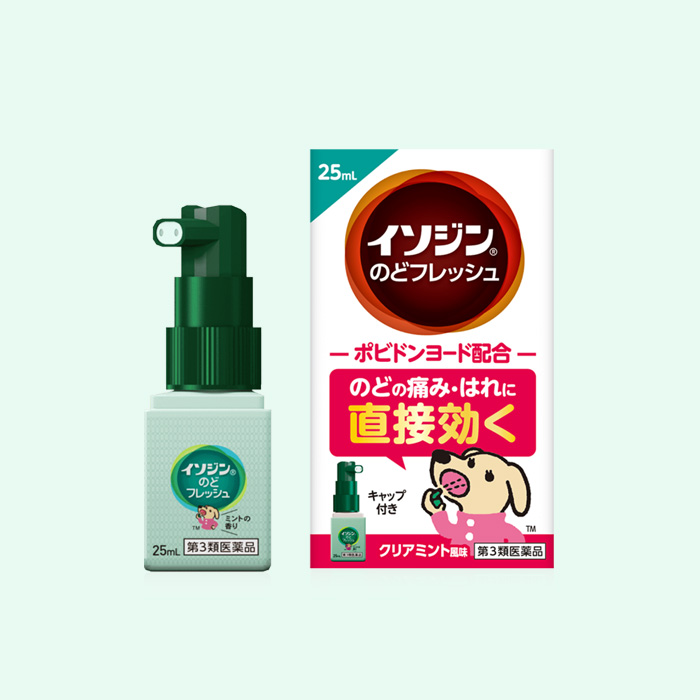
This is a Class 3 OTC medicine containing povidone-iodine, for roughness, pain, swelling, discomfort and hoarseness caused by throat inflammation. Each 1mL contains 4.5mg povidone-iodine (0.45mg available iodine). It is neither a throat sweet nor Isodine gargle that you dilute with water.
A ready-to-use throat spray can be convenient when travelling without a gargle cup. Convenience does not mean it suits everyone, or that it prevents flu, COVID-19 or all infections.
Before choosing it, check whether you need advice
- Do not use if you have had an allergic reaction to this product or its ingredients. Do not use continuously for a long period.
- Ask a doctor, pharmacist or registered OTC medicine seller first if you are pregnant, may be pregnant or breastfeeding; have had an allergy to medicines or other substances; have severe sores inside your mouth; or have been diagnosed with thyroid dysfunction.
- Children must use it under a guardian’s guidance and supervision. The leaflet does not specify a minimum age; that is not a claim that every child can use it independently. Ask a pharmacist if a child cannot follow the speaking and no-inhaling instructions.
No dilution: say “ah” and spray 2–3 times
The official directions are to spray an appropriate amount onto the throat mucosa several times a day. The leaflet does not give a fixed dosing interval or daily maximum. If you are unsure how often to use it, ask a pharmacist rather than increasing use yourself.
This is a ready-to-use spray. Do not dilute it with water or treat it as a medicine to drink.
Following the official directions, spray 2–3 times while making the sound. Do not inhale while spraying: the liquid could enter your bronchial tubes or lungs.
Use the stop-and-seek-help guidance below if adverse effects occur or symptoms worsen. Persistent symptoms also have a review point.
These reading steps summarise the official instructions; they do not add a new dose. Do not copy priming-pump counts or dosing intervals from a different spray.
When should you stop, and when is it urgent?
Stop immediately and take the carton to a doctor, pharmacist or registered OTC medicine seller if you develop a rash, redness, itching, mouth irritation, stinging, burning, other irritation, nausea or discomfort after use.
Hives, sudden hoarseness, breathing difficulty, palpitations or confusion occurring soon after use can indicate a serious allergic reaction. Get medical help immediately. Do not dismiss sudden voice changes or breathing difficulty as your original sore throat and keep spraying.
Stop and seek advice if symptoms have not improved after 5–6 days. Do not wait until day five if symptoms markedly worsen, you cannot swallow or breathing becomes difficult.
Before putting it in your travel bag
- Use only on the affected throat area, not as a drink or on wounds or burns.
- Avoid contact with eyes. If it gets in an eye, rinse immediately with water or lukewarm water; see an ophthalmologist if symptoms are severe.
- It contains ethanol. Keep away from flames and do not poke the nozzle with a needle or other object.
- It may discolour silver-containing dental materials, such as dentures. Check the material and ask a professional if you wear dentures.
- Store in a cool place away from direct sunlight and children’s reach. Do not transfer into another container or use after expiry.
- A small amount remaining at the end is a feature of the bottle design. Do not dismantle the bottle or drink the remainder.
Irene’s shelf-side reminder: Identify the 25mL throat spray, check whether it suits you, then remember “say ah, do not inhale while spraying.” Recognising the pack and knowing when not to continue are both part of choosing well.