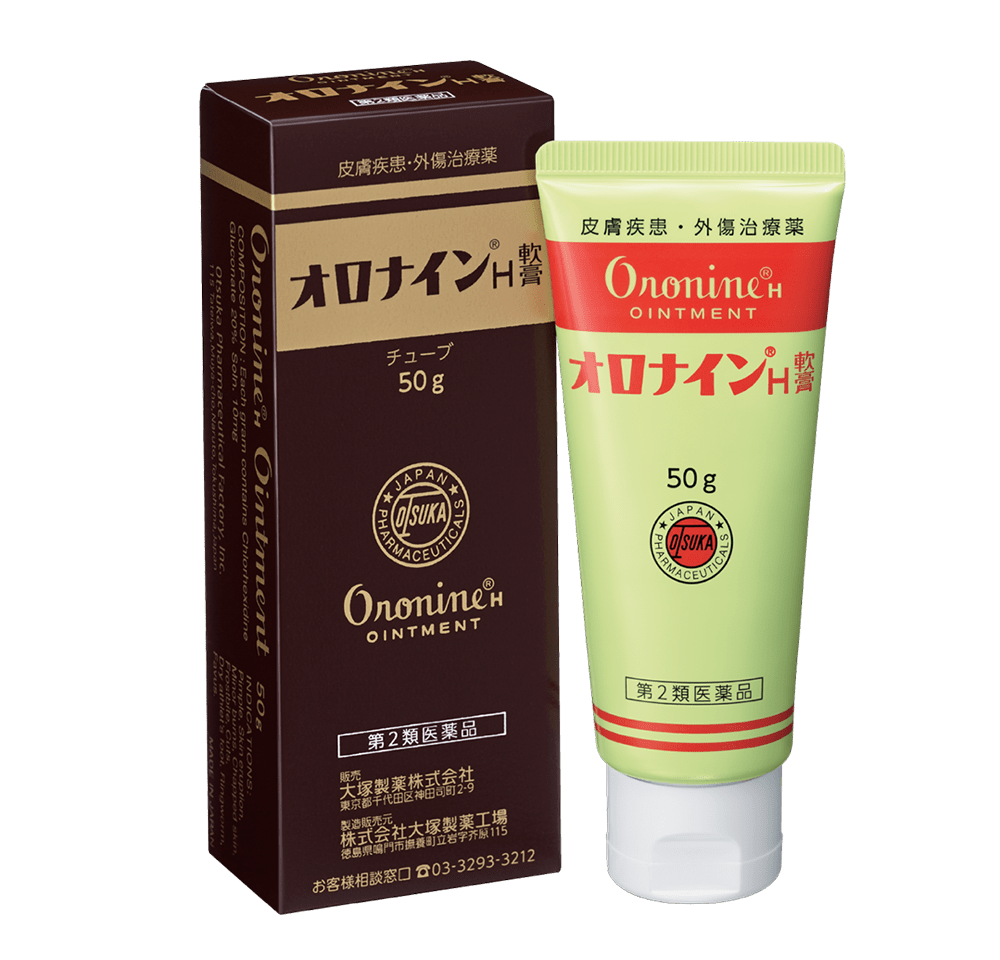
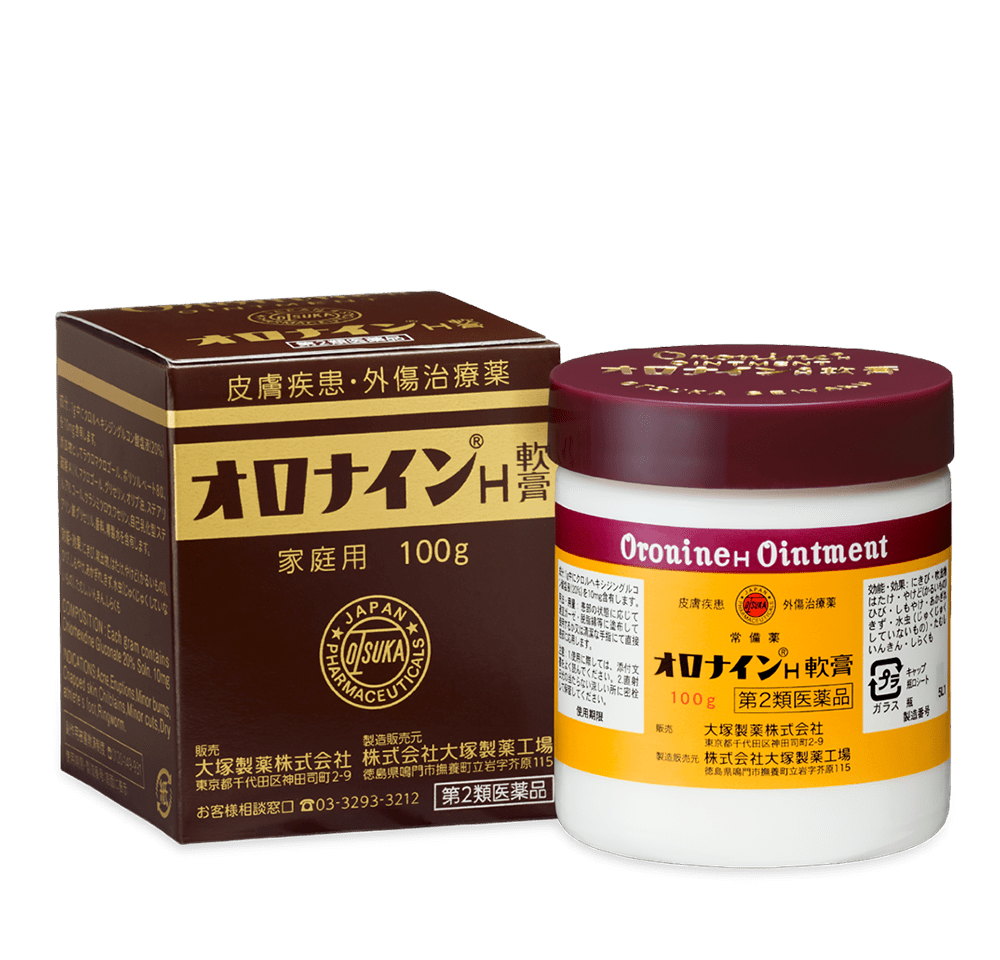
Oronine H ointment, sold in brown boxes in Japan, comes in small tubes and larger jars. Check whether it suits the skin problem before choosing a size. Different sizes do not mean different strengths. This Category 2 OTC medicine contains an antiseptic and has important limits.

I’m Irene, a Taiwan-born, Japan-licensed pharmacist working in a Japanese drugstore. Here is a practical way to separate situations where Oronine may fit from those needing another approach or medical assessment.
Start with the skin problem
| What you want to treat | What to do |
|---|---|
| A small scrape, cut, skin crack or pimple | Within the labeled uses; clean first, check the cautions below and follow the directions |
| Eczema, contact dermatitis or an insect bite | Do not use Oronine; ask a pharmacist for a symptom-appropriate option |
| Everyday moisturizing or makeup preparation | Choose another type of product; Oronine is not indicated as a moisturizer and must not be used as a makeup base |
| A very large or deep wound; a very large or deep burn, a burn on the face, genitals or buttocks, or a chemical or electrical burn | Seek emergency medical care immediately; do not delay care to try Oronine |
| A large affected area or severe weeping/erosion, without the emergency features above | Consult a doctor, pharmacist or registered medicine seller before use |
Burns need extra care. The Japanese indication covers minor burns only; it is not burn first aid. For a minor heat burn, cool the area under cool running water for 20 minutes, and do not apply creams or ointments as first aid. For any emergency features in the table, seek medical care immediately. Do not self-treat a burn from prolonged contact with a heat pack or electric blanket with Oronine. The manufacturer recommends medical assessment for every infant burn, regardless of apparent severity. Blistering or uncertain depth also calls for assessment rather than ointment alone.
The label also includes non-weeping athlete’s foot and certain other skin conditions. That does not make every peeling or itchy foot athlete’s foot, and weeping athlete’s foot is excluded. If the cause is uncertain, get it assessed before choosing treatment.
What is in it? Does it contain a steroid?
Its antiseptic is chlorhexidine gluconate; it contains no steroid. The Japanese label states 10mg of a 20% chlorhexidine gluconate solution per gram of ointment. The 20% figure describes the ingredient solution, not the finished ointment.
Do not use it if you have reacted to Oronine, its ingredients or chlorhexidine. A history of other medicine allergies or current medical treatment also means consulting before use.
Tubes and jars: choose the container, not a stronger version
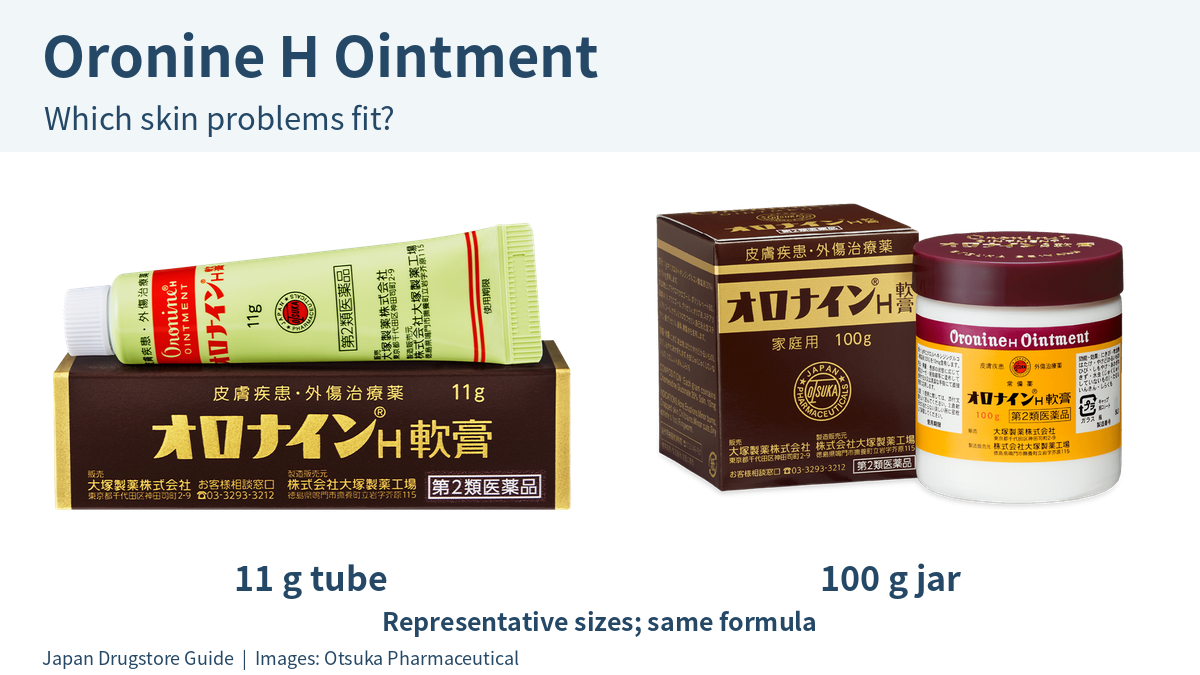
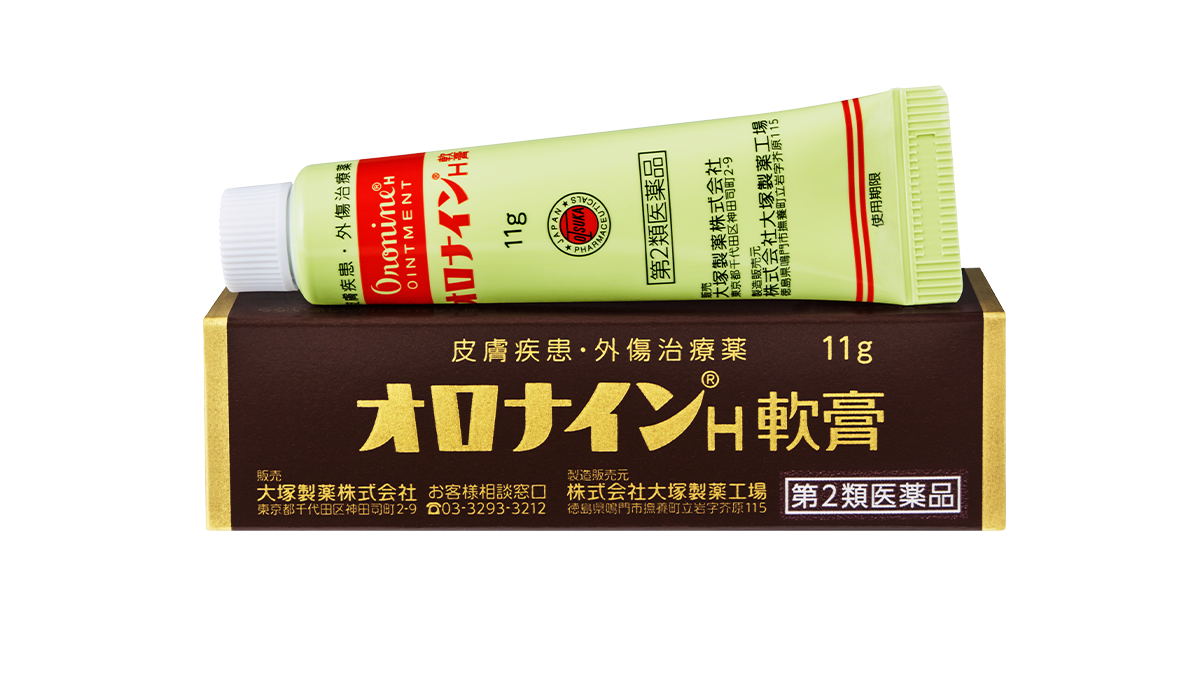
The current Japanese range is 11g, 30g, 50g, 100g and 250g, all Oronine H ointment. The 11g and 50g products are tubes; the others are jars. Consider 11g for a small portable pack or 50g for its flip-top squeeze tube. A larger jar is not a stronger medicine.
Application and stopping rules
Clean the affected area and surrounding skin first. Depending on the area, apply an appropriate amount using gauze or cotton, or directly with clean fingers. The Japanese leaflet does not set one universal number of daily applications. Use externally only; keep it out of the eyes, ears, mouth and nostrils. Rinse accidental eye exposure immediately; see an eye specialist if symptoms are severe.
The manufacturer states no age restriction, provided the indications and precautions are followed, with adult supervision for children. This does not override the infant-burn advice above. It also states no special pregnancy restriction when used correctly according to the leaflet; seek advice if receiving treatment or unsure about the condition.
Stop and seek advice for rash, redness, itching, swelling, dryness or cracking. If there is no improvement after 5–6 days, stop and take the leaflet for advice. Permission for daily use does not mean indefinite self-treatment.
Hives, hoarseness, throat itching, breathing difficulty, palpitations or confusion soon after use may indicate a severe allergic reaction. Seek urgent medical care immediately; do not wait 5–6 days.
Keep the box and check the expiry date. Close tightly, store in a cool place out of sunlight and children’s reach, and do not transfer to another container. Protect glass jars from breakage.
Official sources
- Product range and FAQ
- Japanese leaflet
- Eczema, bites and makeup restrictions
- Daily use and review period
- Minor-burn guidance
- NHS: burns and scalds, first aid and emergency signs
- NHS: cuts and grazes, emergency signs
Checked 13 October 2026. Read the Japanese leaflet supplied with your product before use.