“Three live bacteria” can make The Guard look like a simple probiotic. In Japan, The Guard α³+ is a Class 3 OTC medicine with 11 active ingredients, including antacids. If you are considering it for irregular bowel movements, loose stools or gas, check whether the combination suits you before choosing a large bottle.

I'm Irene, a Taiwan-born pharmacist licensed in Japan and working in a Japanese drugstore. This guide explains the shelf name, medicine checks and bottle sizes, so buying for yourself or a relative involves less guesswork.
- Who should ask a pharmacist first?
- Three decisions to make at the shelf
- Find α³+: 150, 350 and 550 mean tablet count, not strength
- Why is it more than a probiotic?
- How does it relate to Cabagin?
- How to take it: after each meal, according to age
- When to stop: two weeks is not a required course
- Before putting it in a travel pill box
- Sources
Who should ask a pharmacist first?
Consult a doctor, pharmacist or registered medicine seller before use if you are receiving medical treatment, have previously had an allergic reaction to medicines or other substances, have diagnosed kidney disease or thyroid dysfunction, or take the anticoagulant warfarin. If buying for someone else, get their medicine list first. Asking only whether they take stomach medicine is not enough.
Bloating with sudden severe abdominal pain, vomiting blood or vomit resembling coffee grounds needs immediate medical care. Bloating with fever, ongoing vomiting, or an inability to pass stool or gas also needs prompt medical assessment. Do not try a bowel medicine for two weeks before seeking help in these situations.
Three decisions to make at the shelf
- Irregular bowel movements, loose stools, constipation or gas-related bloating: these are among its labelled uses. After the medicine checks above, it may be an option to compare.
- Looking for a bacteria-only product: The Guard is a different type of combination. It also contains antacid, gas-relief and stomach-support ingredients. Do not decide from the number of bacteria alone.
- Already taking another gastrointestinal medicine: show both packages or ingredient lists to a pharmacist before switching or combining them. Avoid adding products with overlapping functions on your own.
Find α³+: 150, 350 and 550 mean tablet count, not strength
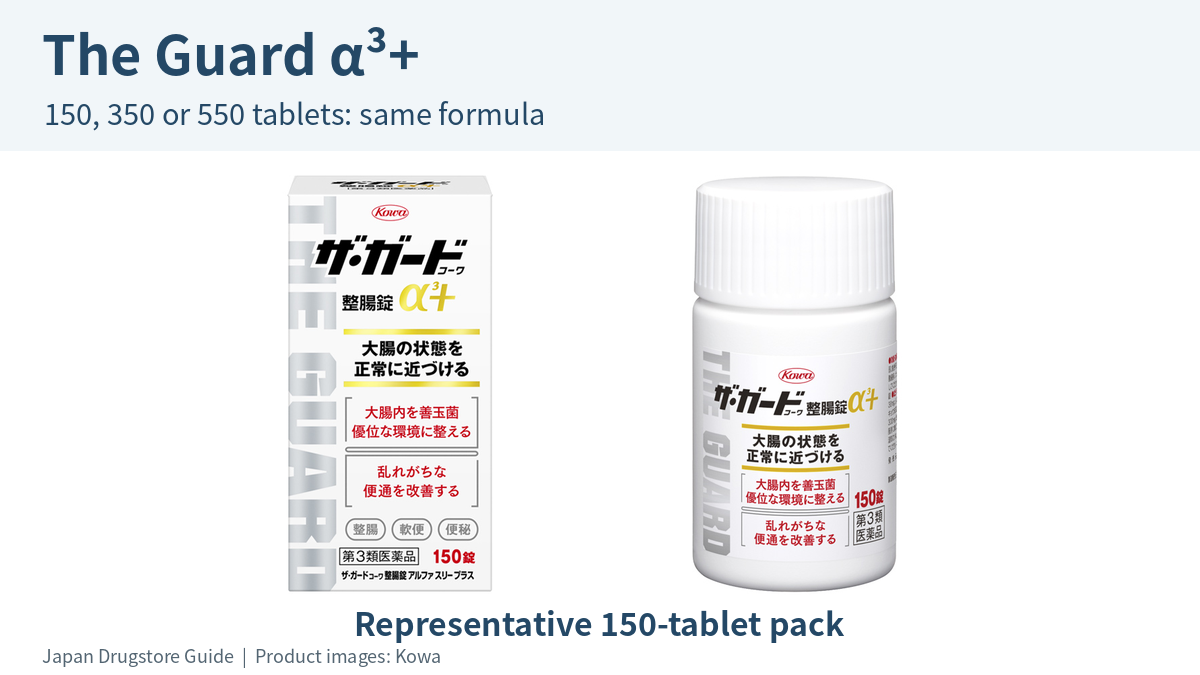
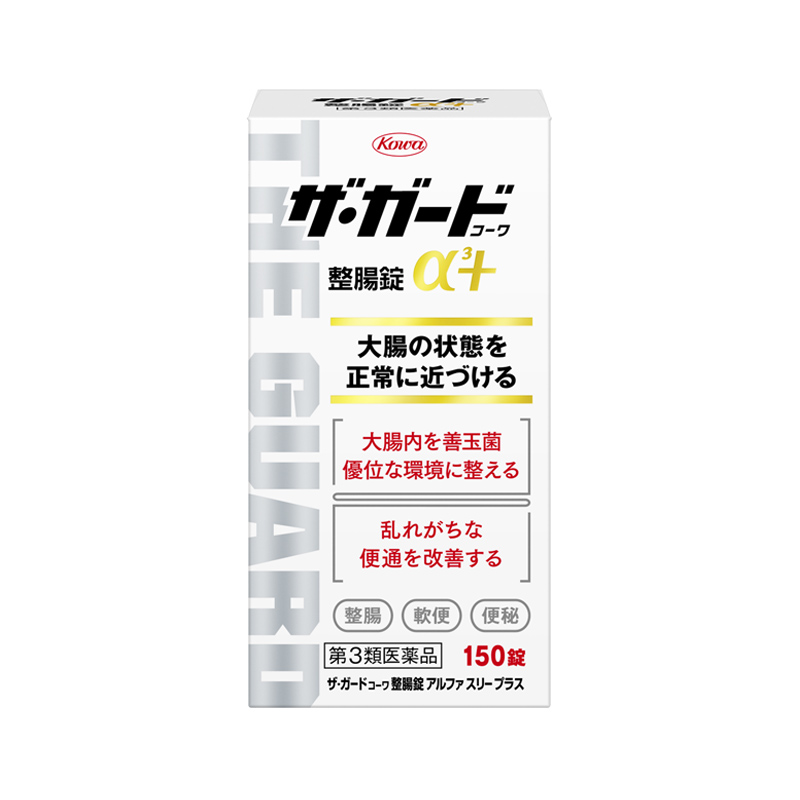
Look for ザ・ガードコーワ整腸錠α³+ on the Japanese shelf. Kowa currently lists 150-, 350- and 550-tablet bottles of the same formulation. A larger bottle is not stronger and is not a treatment course you must finish. For a first purchase, decide whether you need and can use the medicine before choosing the largest size.
Why is it more than a probiotic?
The formula contains natto bacteria, lactic acid bacteria and bifidobacteria. It also includes dimethylpolysiloxane for gas, calcium carbonate and magnesium hydroxide as antacids, and ingredients such as MMSC. This is a combination gastrointestinal medicine; the number of bacterial types cannot tell you whether it is the right choice. The Japanese leaflet linked below lists all 11 active ingredients.
How does it relate to Cabagin?
Avoid a rigid “The Guard is for the bowel; Cabagin is for the stomach” rule. The Guard's approved uses also include stomach fullness, indigestion, heartburn and stomach pain. Overlapping uses do not make the products interchangeable or a reason to take both. If your shopping note says Cabagin Alpha Plus, start with the Cabagin tablets and granules guide, match the name, then check the symptoms and formula.
How to take it: after each meal, according to age
Take with water or warm water three times daily, after each meal. Children need parental guidance and supervision. Do not give it to children under five.
| Age | Tablets per dose | Frequency |
|---|---|---|
| 15 and over | 3 | Three times daily, after each meal |
| 8–14 | 2 | Three times daily, after each meal |
| 5–7 | 1 | Three times daily, after each meal |
| Under 5 | Do not use | — |
When to stop: two weeks is not a required course
Stop immediately and consult a doctor, pharmacist or registered medicine seller, bringing the leaflet, if you develop a rash, redness, itching, abdominal fullness, abdominal pain or nausea after taking it. Although bloating is a labelled use, new bloating after taking the medicine can still be an adverse reaction. Do not simply increase the dose.
Constipation or diarrhoea may occur during use. Stop and seek advice if either persists or worsens. Also stop and seek advice if symptoms have not improved after about two weeks. Worsening symptoms or the warning signs above should not wait for that point.
Before putting it in a travel pill box
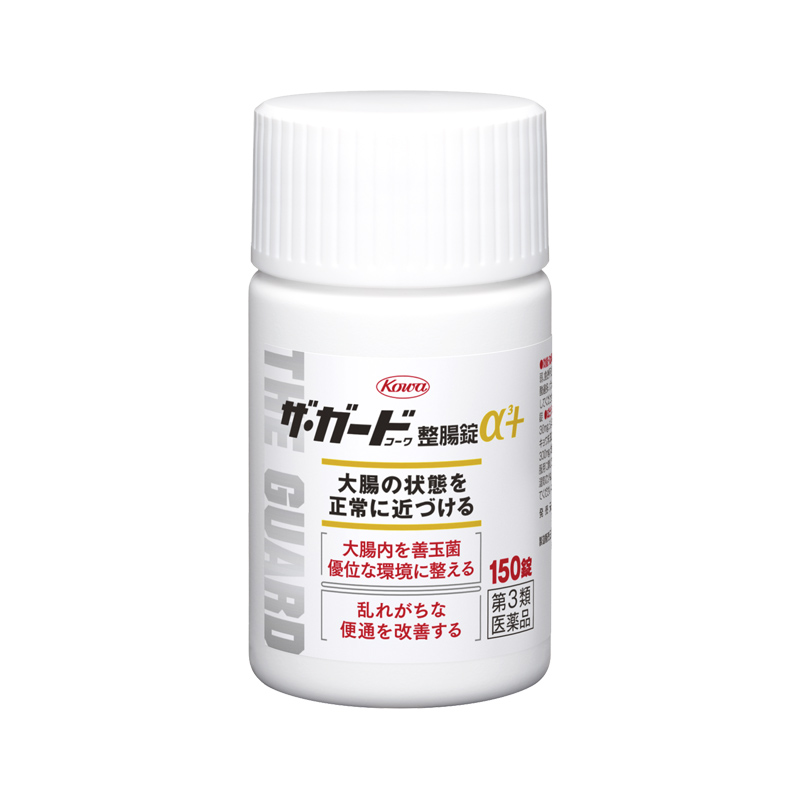
Do not transfer the tablets to another container or dissolve them in water beforehand. The original container itself has a drying function. Handle tablets with dry hands; discard any tablets accidentally wetted rather than returning them to the bottle.
After first opening, discard the plastic packing material that protects tablets during transport, and write the opening date on the box or bottle. Close the cap tightly after every use. Keep it away from heat and direct sunlight in a cool, dry place out of children's reach. Do not use expired medicine.
The manufacturer's quality guideline is to use the product within six months of opening. That does not mean taking it continuously for six months, and it does not replace the instruction to stop and seek advice after about two weeks without improvement. Keep these two different time limits in mind when choosing a bottle size.
My shopping order is simple: match the full name, check the medicine list, then choose the size. The Guard has specific labelled uses; it is not something every traveller needs just because a trip involves big meals.
Sources
- Kowa: official The Guard α³+ specifications, sizes and directions
- Kowa: complete Japanese package leaflet
- NHS: bloating and warning signs requiring medical care
Checked 13 October 2026. Check the latest package and leaflet supplied with the product when buying and using it.