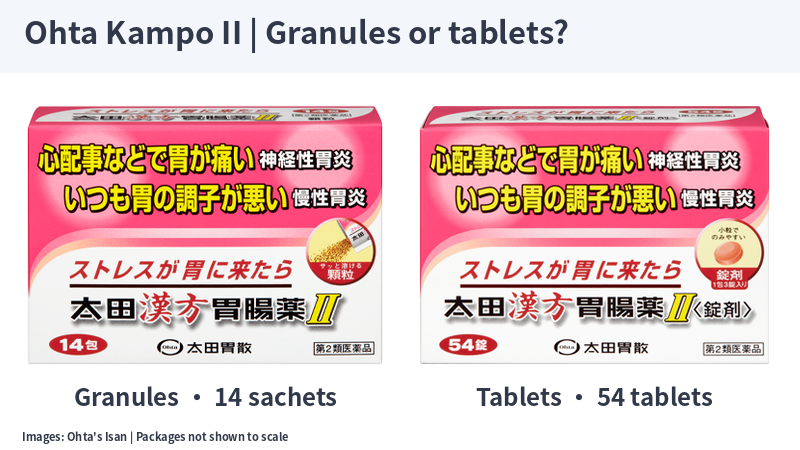
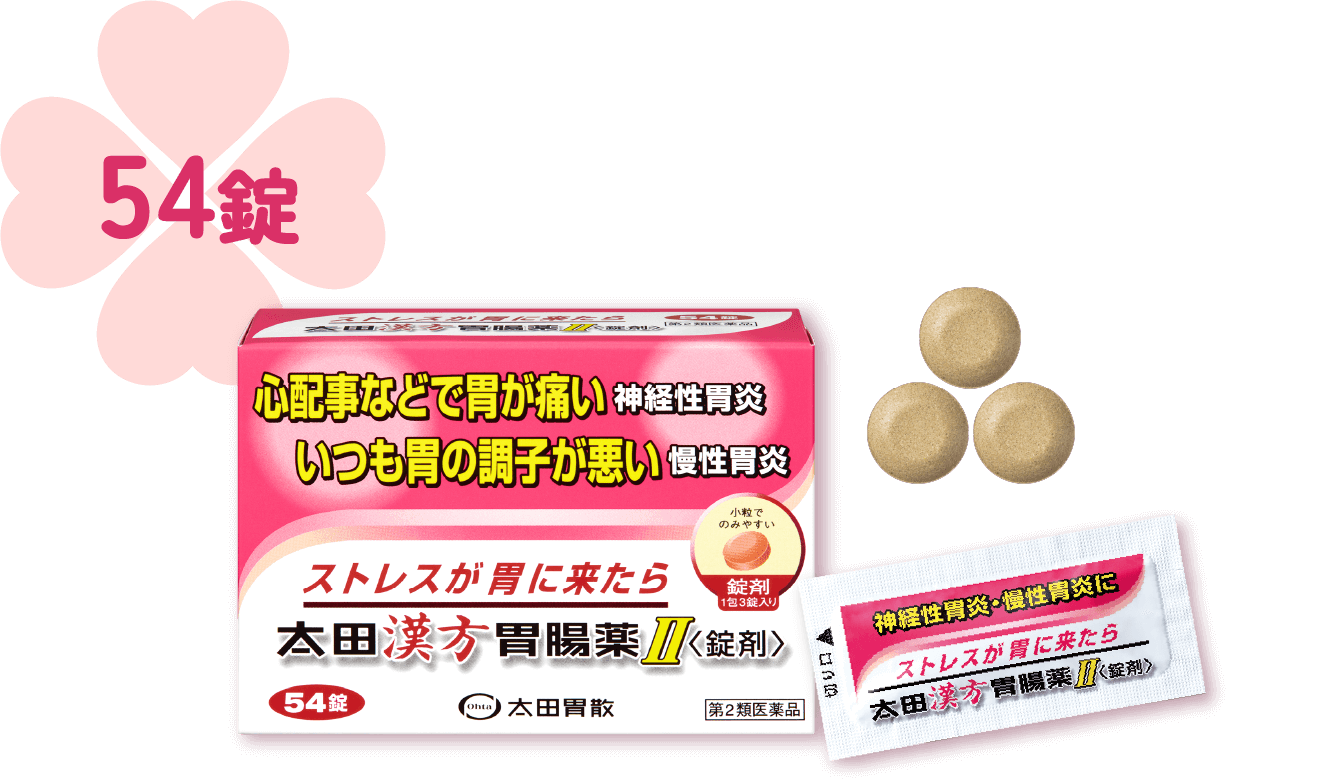
The pink Ohta Kampo II box comes as granules and tablets. Both have the same active ingredients at the labelled daily dose. The useful choice is the dosage form and packaging, after checking whether this particular Kampo stomach medicine fits your symptoms. It is a separate product family from Ohta's Isan S powder and A tablets.

I'm Irene, a Taiwan-born pharmacist licensed in Japan and working in a Japanese drugstore. Let's check the full name and suitability first, then compare a sachet of granules with three tablets, including the easily misunderstood instruction “between meals”.
Sources checked: 13 October 2026. This guide covers Japanese Ohta Kampo Gastrointestinal Medicine II, shortened here to Ohta Kampo II: 太田漢方胃腸薬Ⅱ and its tablet version 太田漢方胃腸薬Ⅱ〈錠剤〉. Both are Class 2 OTC medicines. Read the full leaflet supplied with your pack.
- Stomach pain is not automatically caused by stress
- Same formula: choose the form you can take correctly
- What is the same in the two forms?
- Age-specific doses: three times daily
- A short check before each dose
- When to stop or seek further care
- Is this the same as the familiar Ohta stomach powder?
- Official sources and image credits
Stomach pain is not automatically caused by stress
Get emergency medical help for sudden severe abdominal pain, severe pain that continues, vomiting blood, or bloody or jet-black stools. In Japan, call 119. These are among the warning signs listed by Japan's Ministry of Health, Labour and Welfare; do not spend time choosing a stomach remedy first.
The label describes a specific Kampo pattern: people of average or lower physical strength, with little abdominal firmness and nervous sensitivity, who have stomach or abdominal pain, sometimes with heartburn, belching, heaviness, poor appetite, nausea or vomiting. Within that pattern, the labelled indications are nervous gastritis, chronic gastritis and a weak stomach/digestive system. Feeling stressed alone does not establish that this is the right medicine.
Before taking either form, consult a doctor, pharmacist or registered medicine seller if you are receiving medical treatment, pregnant or possibly pregnant, or have previously developed rash, redness or itching from medicines or similar substances. Neither form is for children under 7. If pain is recurrent, worsening or accompanied by fever, get medical advice rather than assuming it is a familiar “stress stomach”.
Same formula: choose the form you can take correctly
The adult doses in this comparison apply to ages 15 and over. Children aged 7–14 have separate doses below. Both forms are taken three times daily; neither is a stronger upgrade of the other.
| Product / Japanese name | Dosage form | One dose, ages 15+ | Currently listed packs |
|---|---|---|---|
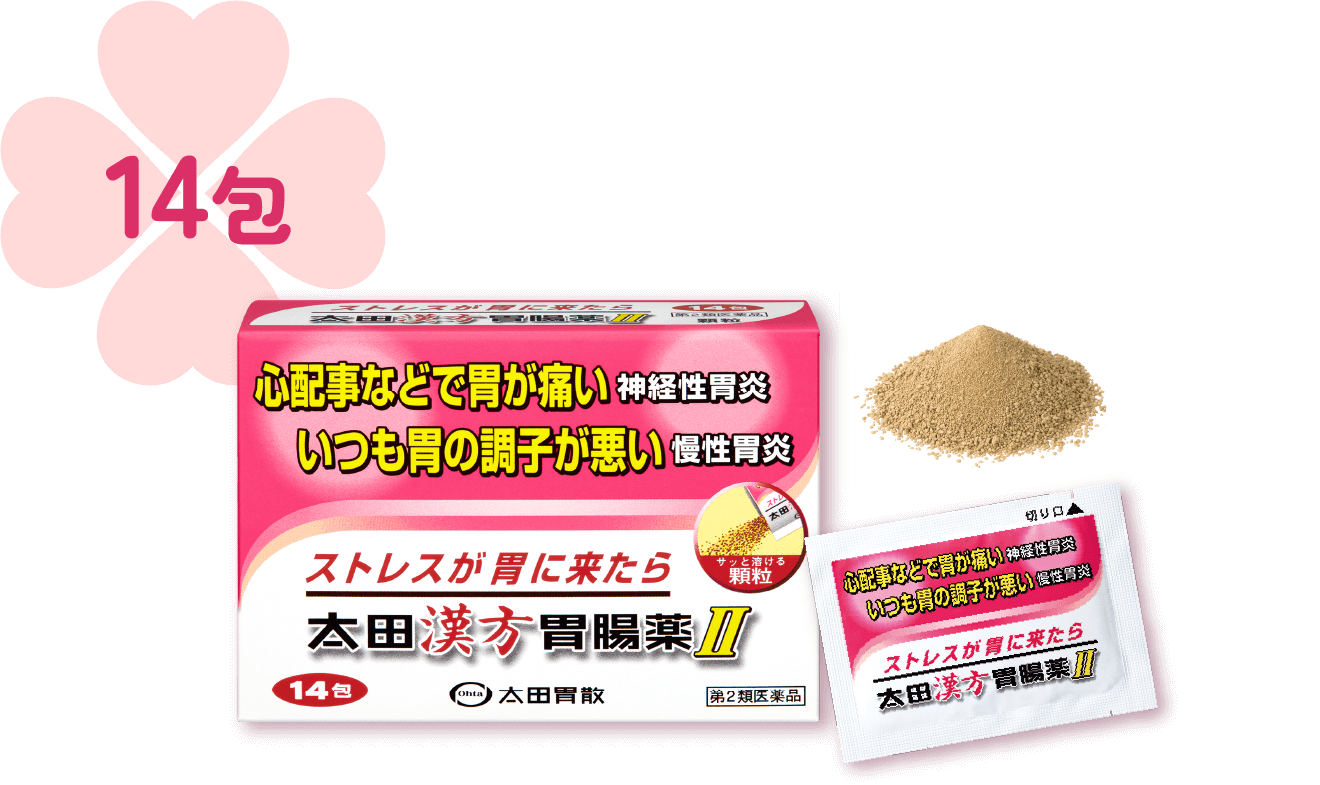
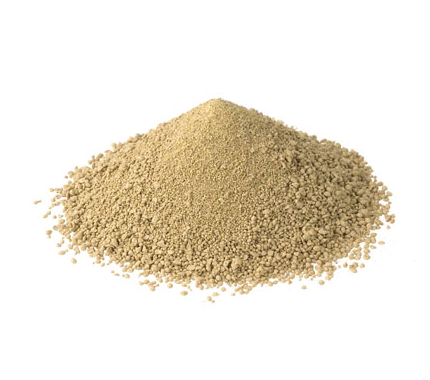
| Ohta Kampo II granules / 太田漢方胃腸薬Ⅱ | Granules in individual sachets | 1 sachet | 14 or 34 sachets |
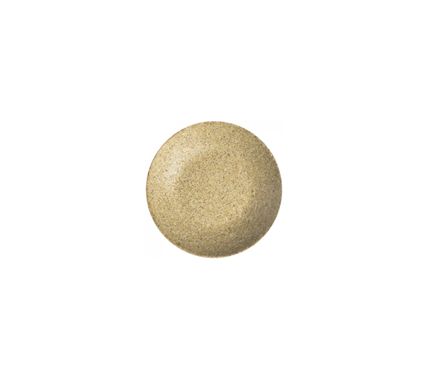
| Ohta Kampo II tablets / 太田漢方胃腸薬Ⅱ〈錠剤〉 | Tablets | 3 tablets | 54 tablets in 3-tablet sachets; 120 tablets in a bottle |
Choose granules if you prefer that form; choose tablets if you prefer swallowing tablets. For carrying a few doses, both the granule sachets and the 54-tablet sacheted pack offer individual portions. The 120-tablet product is a bottle pack. Keep the original packaging so that the name and instructions stay with the medicine.
What is the same in the two forms?
The following amounts are in the labelled daily dose for ages 15 and over: 3 sachets of granules or 9 tablets, not one sachet or one tablet.
| Active preparation | Granules: 3 sachets daily | Tablets: 9 tablets daily |
|---|---|---|
| Anchusan-ka-bukuryo mixed powder | 2,100 mg | 2,100 mg |
| Anchusan-ka-bukuryo extract | 270 mg | 270 mg |
Anchusan-ka-bukuryo (安中散加茯苓) combines a traditional formula with poria. It includes eight crude-drug materials, including licorice and oyster shell. The leaflets also list the raw materials used to make the extract; those are not extra ingredients to add again to the 270 mg extract amount. The additives differ, so anyone with an ingredient concern should check the complete list rather than assuming the two finished products are identical.
Age-specific doses: three times daily
These are amounts per dose. Take the appropriate amount three times daily, between meals (including bedtime) or on an empty stomach, with water or lukewarm water.
| Age | Granules per dose | Tablets per dose |
|---|---|---|
| 15 and over | 1 sachet | 3 tablets |
| 7–14 | ⅔ sachet | 2 tablets |
| Under 7 | Do not take | Do not take |
“Between meals” means 2–3 hours after a meal, not while eating. Bedtime is included in the timing instruction; it does not add a fourth daily dose. Children must take the medicine under a parent's guidance and supervision.
A short check before each dose
- Check which form you have and use the correct age-specific amount. Do not treat one tablet as equivalent to one sachet.
- Take it with water or lukewarm water at the labelled empty-stomach/between-meal timing.
- Do not combine the granules and tablets as separate stomach remedies: they contain the same active ingredients. If you take any other medicines, ask a doctor or pharmacist about compatibility first.
- If part of a granule sachet or a three-tablet sachet remains after a child's dose, fold the opening closed and use the remainder within two days, as the leaflet directs.
When to stop or seek further care
Stop immediately and take the leaflet to a doctor, pharmacist or registered medicine seller if rash, redness or itching appears. If symptoms have not improved after about one month of use, stop and consult. This is not an instruction to wait a month with worsening pain or to postpone assessment of symptoms that keep returning.
Keep the medicine in a cool, dry place away from direct sunlight and out of children's reach. Do not transfer it into another container or use it after expiry. The two-day instruction above concerns the remainder of an opened sachet, not the shelf life of an unopened box or a bottle.
Is this the same as the familiar Ohta stomach powder?
No. If you want the blue-and-white Ohta's Isan S powder, S sachets or A tablets, use the Ohta S versus A guide. If your shopping note says Taisho, use the Taisho Kampo and Taisho K comparison. A shared word such as “Kampo” does not make different brands or formulas interchangeable.
The shortest choice is: confirm that Kampo II is suitable, match the full product name, then choose granules or tablets you can measure and take correctly. The pink box and tablet count cannot tell you the cause of stomach pain.
Official sources and image credits
- Ohta's Isan: Kampo II granules and Japanese leaflet.
- Ohta's Isan: Kampo II tablets and Japanese leaflet.
- Ohta's Isan: Stomach symptoms and seeking care.
- Japan's Ministry of Health, Labour and Welfare: Emergency warning signs. Product photographs come from Ohta's Isan; they help identify the form and do not replace the product leaflet or an individual assessment.
- Ohta's Isan: Kampo II official brand page and package photographs.