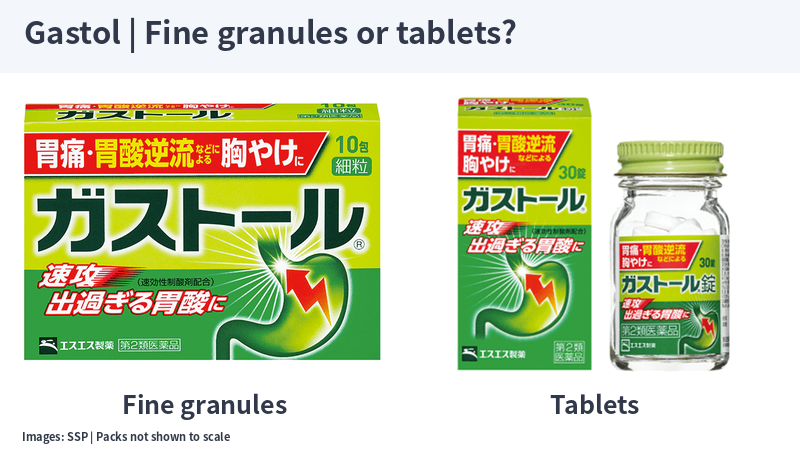
For Gastol, choosing fine granules or tablets mainly means choosing how you take the medicine: one sachet versus three tablets per dose. At the labeled adult daily dose, the four active ingredients and their amounts match. First check whether Gastol is suitable for you; its no-driving and pregnancy warnings matter more than the format.

I’m Irene, a Taiwan-born, Japan-licensed pharmacist working in a Japanese drugstore. Similar stomach-medicine names can make a quick shopping list confusing, so this guide starts with the exact box, then the dose and safety checks.
Checked on 14 October 2026 (Japan time) against current SSP product information and both complete Japanese leaflets. The leaflet in your own pack takes priority.
Gastol and Gaster 10 are different medicines
Look for ガストール on Gastol. It contains pirenzepine, antacids and a digestive enzyme. Gaster 10 (ガスター10) is a separate brand containing famotidine. Do not carry the instructions, age rules or dosing schedule from one name to the other.
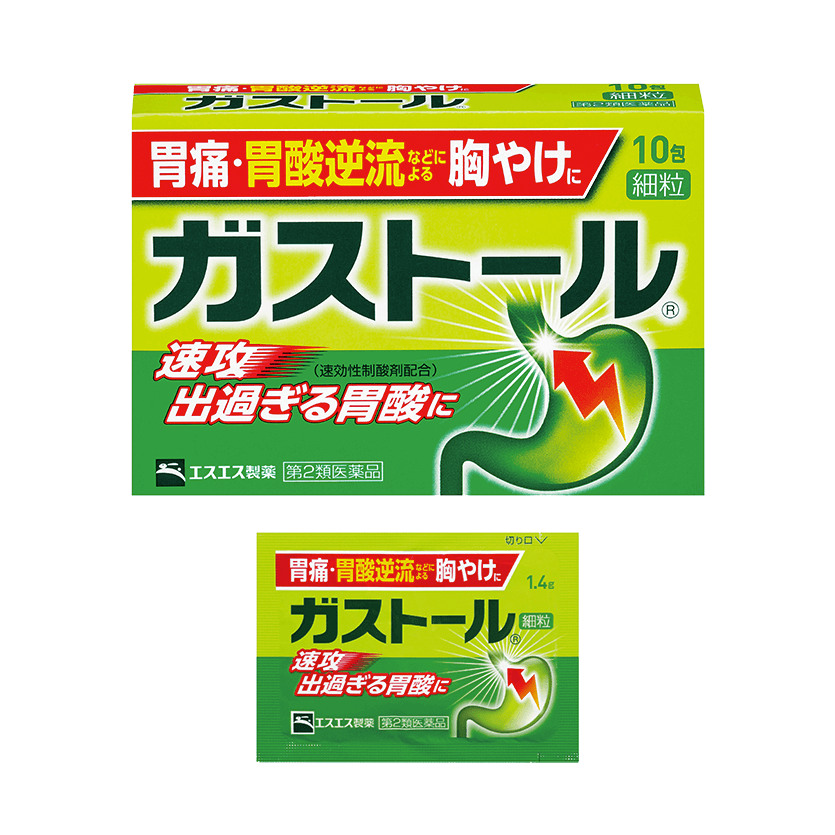
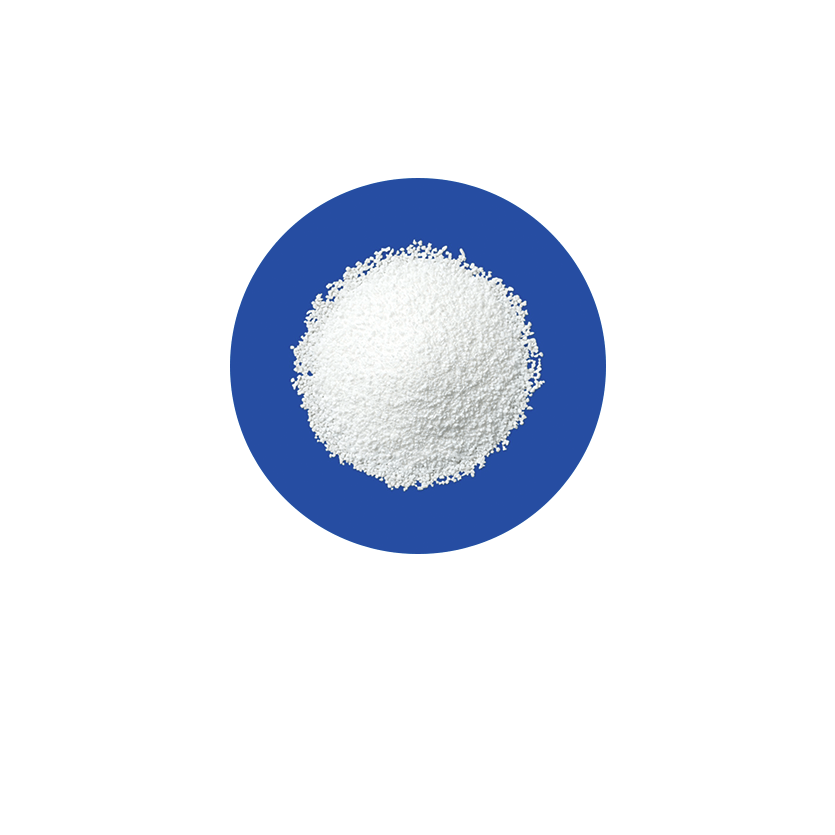
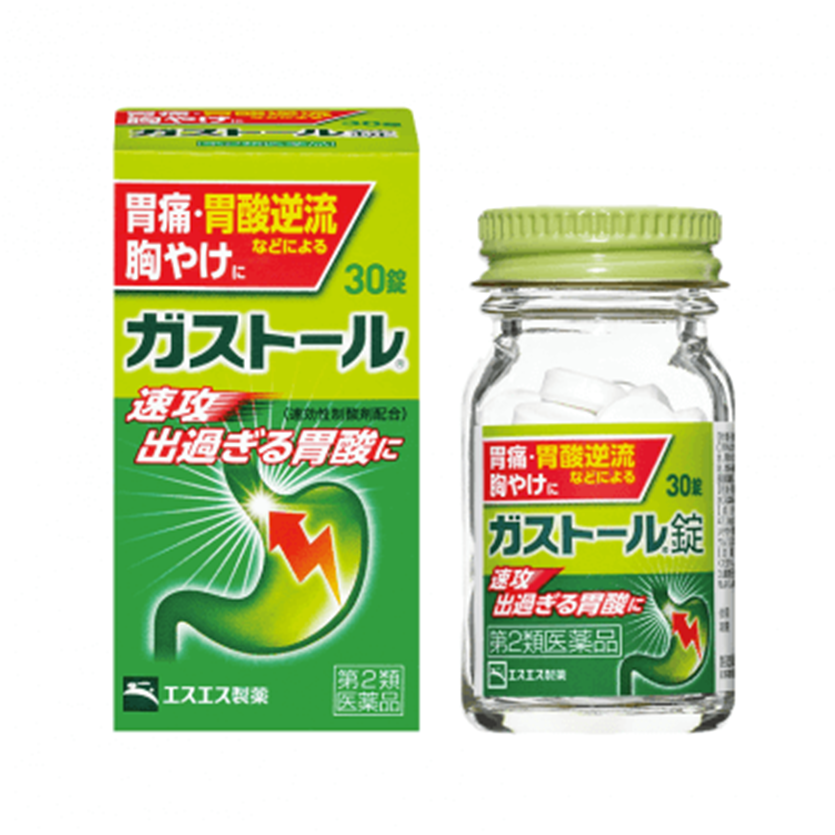

The table below gives a single dose for adults aged 15 and over, followed by the total when taken three times daily. Both forms are taken after each meal with water or lukewarm water. Neither may be taken under age 15.
| Form / shelf name | Single dose | Daily total |
|---|---|---|
| Fine granules / ガストール細粒 | 1 sachet | 3 sachets |
| Tablets / ガストール錠 | 3 tablets | 9 tablets |
Every quantity below is the labeled adult daily amount: 3 sachets of fine granules or 9 tablets. These are active-ingredient amounts, not the mass of one sachet or tablet. The formulations have different inactive ingredients; matching actives does not prove identical taste, texture or speed of relief.
| Active ingredient | Fine granules: 3 sachets | Tablets: 9 tablets | Role on label |
|---|---|---|---|
| Pirenzepine hydrochloride hydrate | 47.1 mg (45 mg anhydrous equivalent) | 47.1 mg (45 mg anhydrous equivalent) | M1-receptor blocker reducing excess acid secretion |
| Magnesium aluminometasilicate | 900 mg | 900 mg | Antacid and gastric-mucosal protection |
| Sodium bicarbonate | 1,200 mg | 1,200 mg | Antacid |
| Biodiastase 2000 | 30 mg | 30 mg | Digestive enzyme |
What the label covers
Both labels list stomach pain, heartburn, excess stomach acid, a blocked/full feeling in the chest, belching, heaviness or discomfort in the stomach, stomach bloating, nausea (including nausea related to drinking), vomiting, overdrinking, overeating, indigestion, stomach/abdominal bloating caused by indigestion, support of digestion and poor appetite.
Those are labeled symptoms, not a diagnosis of reflux disease or an ulcer. A recurring problem needs assessment rather than a larger supply of OTC medicine.
Who should not take Gastol?
- Do not take either form if pregnant or possibly pregnant, undergoing dialysis, or previously allergic to this medicine or its ingredients.
- Do not combine with gastrointestinal pain-relief/antispasmodic medicines or motion-sickness medicines. Show a pharmacist all current medicines rather than judging only by brand.
- Do not drive or operate machinery after taking it. Blurred vision and abnormal sensitivity to glare can occur.
- Do not use continuously for a long period.
Consult before use if receiving medical treatment, breastfeeding, older, with a history of medicine allergy, difficulty urinating, glaucoma or kidney disease. Both contain lactose as an inactive ingredient; granules also contain l-menthol. Check the complete list if you have an ingredient concern.
Stop rules and warning signs
If symptoms have not improved after about two weeks, stop and consult with the leaflet. This is a stop-and-review threshold, not a promise that waiting two weeks is appropriate for every stomach symptom.
Stop and seek advice for rash, redness, itching, nausea, bloating, palpitations, difficulty urinating or blurred vision. Stop if dry mouth, constipation or diarrhea persists or worsens. Get immediate medical care for signs of a severe allergic reaction, such as hives with throat/voice changes or breathing difficulty, or sudden high fever, chills and sore throat: the leaflets warn of rare anaphylaxis-like reactions and agranulocytosis.
Sudden or severe abdominal pain, vomiting blood/coffee-ground material, or bloody or black sticky stool needs immediate care. Persistent or recurrent pain, worsening symptoms, difficulty swallowing or unexplained weight loss needs prompt clinical assessment.
A simple shelf checklist
- Match ガストール, then check 細粒 (fine granules) or 錠 (tablets).
- Check safety and other medicines before choosing the format.
- Choose the form you can reliably take with water: one sachet or three tablets per dose. Do not take both as a combined dose.
- Keep the medicine in its original packaging, cool and dry, away from children. Close the tablet bottle tightly and remove its transport packing after first opening.
- Keep the leaflet. If the problem keeps returning, seek assessment rather than alternating stomach medicines.