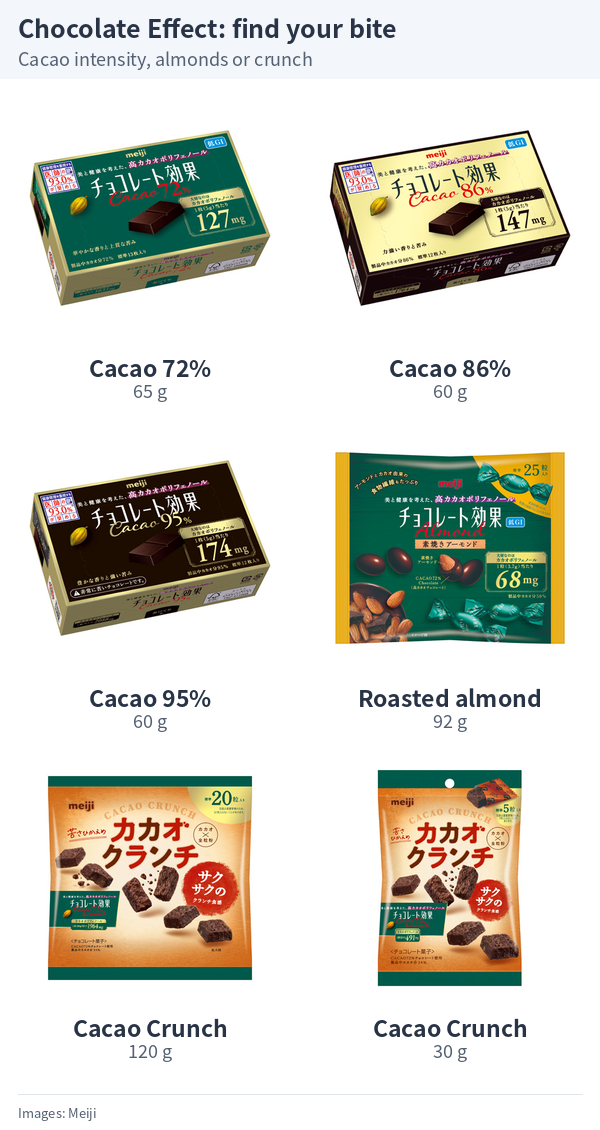

I'm Irene, a Taiwanese-born, Japanese-licensed pharmacist working in a Japanese drugstore. When choosing chocolate for a coffee break, the most useful question is simple: do you want a square of dark chocolate, a roasted almond to bite into, or a light, crunchy biscuit texture?
Start with 72% plain chocolate if you want to explore the range; consider 86% or 95% if pronounced bitterness is part of the attraction. For a crunchy snack, compare the almond and cacao-crunch versions instead of choosing by percentage alone. These are taste-led suggestions, not a health ranking.
Choose the experience first
The flavour descriptions below are Meiji's descriptions, not a personal tasting test.
| Choice | What Meiji describes | A practical reason to choose it |
|---|---|---|
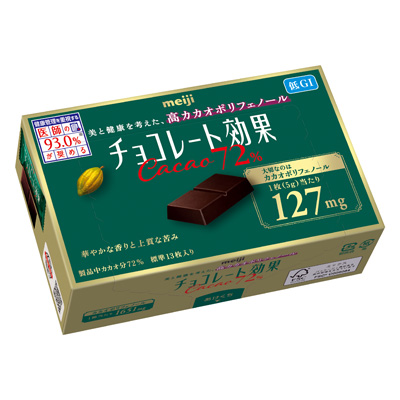
| Cacao 72%, 65 g box | Aromatic cacao, richness and a refined bitter note | A starting point for plain high-cacao chocolate |
| Cacao 86%, 60 g box | A stronger cacao aroma and rich bitterness | You already enjoy distinctly bitter chocolate |
| Cacao 95%, 60 g box | Rich cacao aroma and strong bitterness | Intense bitterness is what you are looking for |
| 72% roasted almond, 92 g bag | Direct-fire-roasted almonds with a crisp bite, coated in dark chocolate | You want a nut centre rather than a plain square |
| 72% cacao crunch, 120 g or 30 g | Crushed whole-wheat baked pieces, a crisp texture and milder bitterness | You prefer a biscuit-like crunch; the 30 g bag is easy to try |
The 72% on almond and crunch products describes the chocolate used. It does not mean the entire almond or biscuit-containing piece is 72% cacao.
Plain chocolate: start small before buying a large bag
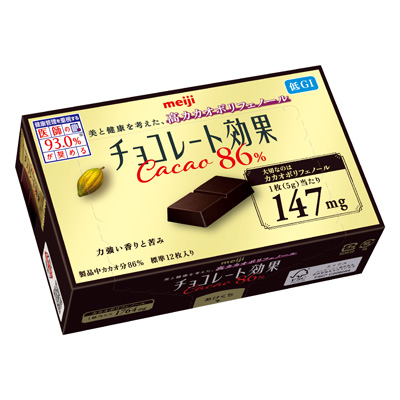
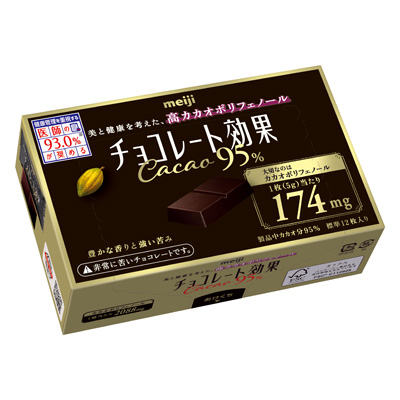
The three regular boxes use 5 g squares, making it straightforward to compare equal portions. Choosing 95% is not an achievement you need to work towards. If strong bitterness is not enjoyable, a lower-cacao version or a different texture may be the better purchase.
For the office, a small box can be a sensible first purchase before committing to a desk supply. Put out the amount you want for your break, then put the rest away. Chocolate remains a snack; it does not replace lunch or guarantee better concentration.
Almond or crunch: two different kinds of bite
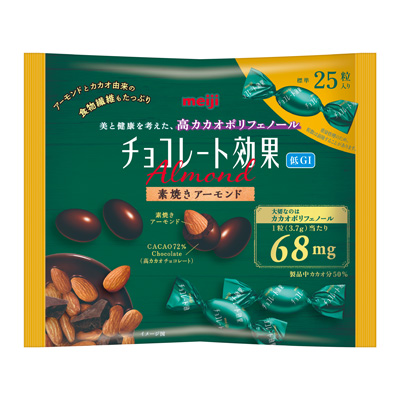
The almond version combines a whole-nut bite with chocolate. Its ingredient list includes almonds, vegetable fat and reduced starch syrup as well as cacao ingredients and sugar. If you are sharing, keep the original package available so colleagues can check allergens.
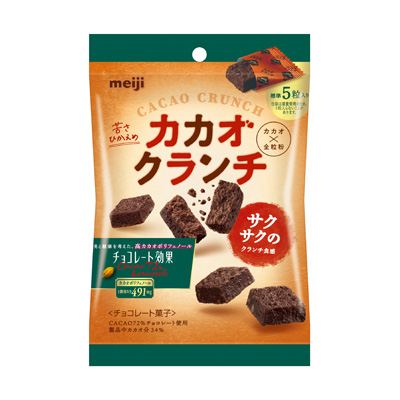
Cacao crunch combines chocolate with baked pieces made using whole-wheat flour. The 30 g pouch contains approximately five pieces according to Meiji. That makes it a convenient format to try on a trip or take to the office, but the whole pouch is still 156 kcal. A small-looking bag is not automatically a low-energy portion.
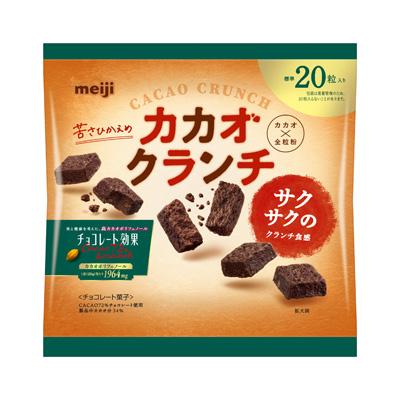
What changed in September 2026?
Meiji's September 1 launch introduced the smaller 92 g almond and 120 g crunch bags, alongside refreshed packaging for the 30 g crunch pouch.
A separate change followed on September 29: the former W Plus product was renewed as Cacao 72% Cacao Flavanol Plus, 60 g. Meiji describes a fruity acidic note from cacao-extract powder. “Fruity” here does not identify a fruit-flavoured chocolate.
Flavanol Plus is a separately labelled Japanese food with function claims. Do not transfer its claims or intake instructions to ordinary 72%, 86%, 95%, almond or crunch products. Its stated daily amount is three pieces, 15 g. It is not intended for minors, people with disease, pregnant people including those planning pregnancy, or breastfeeding people. People with a disease should consult a doctor before eating it; those taking medicine should consult a doctor or pharmacist. Stop eating it promptly and consult a doctor if you feel unwell. Its functionality and safety have not been individually evaluated by the Japanese government. More is not better. This snack guide does not recommend it for treating a condition.
Understanding the nutrition labels
| Plain chocolate | Basis | Energy | Fat | Carbohydrate | Available carbohydrate, 糖質 | Fibre |
|---|---|---|---|---|---|---|
| 72% | One 5 g square | 28 kcal | 2.0 g | 2.2 g | 1.6 g | 0.6 g |
| 86% | One 5 g square | 29 kcal | 2.3 g | 1.8 g | 1.0 g | 0.8 g |
| 95% | One 5 g square | 31 kcal | 2.6 g | 1.4 g | 0.6 g | 0.8 g |
The Japanese label term 糖質 means carbohydrate excluding dietary fibre; it is not the same as a sugars-only declaration. The higher-cacao squares have less of this carbohydrate, but slightly more energy per equal 5 g portion. None of these three ingredient lists is sugar-free.
Almond is labelled per 3.7 g piece: 22 kcal, 1.7 g fat and 1.3 g carbohydrate. Crunch is labelled per bag: 156 kcal for 30 g, or 624 kcal for 120 g. These bases differ, so comparing “one piece” against “one bag” would be misleading.
Allergens, storage and taking it home
- Plain 72%, 86% and 95%: milk ingredients and soy are declared.
- Almond: milk ingredients, almonds and soy are declared.
- Both crunch sizes: wheat, milk ingredients and soy are declared.
Dark chocolate is not automatically dairy-free. Check the package you actually buy: Meiji notes that renewed products and website information may differ. The plain versions contain cacao mass, sugar, cocoa powder, cocoa butter, emulsifier and flavouring; crunch also contains flour, margarine, vegetable fat and a raising agent.
All six products above specify storage in a cool place at 28°C or below. Consider warm luggage, sunlit desks and heated cars when planning a souvenir purchase. The storage instruction is more useful than assuming a sealed wrapper protects chocolate from heat.
The wider Japan range, at a glance
The brand's current lineup page groups plain boxes; 72%/86% 26-piece boxes; three large bags; almond; 72%/86% pouches; two crunch bags; Flavanol Plus; cacao ice cream; three bulk boxes; and a home-delivery-only 72% bag. The wider product catalogue also lists a 110 g 72% bag and 720 g bulk crunch. Listings are not a guarantee of stock at every drugstore; frozen and home-delivery items need different shopping plans.
For a first purchase, concentrate on flavour and format: 72% plain for a starting point, 86%/95% for a deliberately bitter choice, almond for a nut centre, or crunch for a crisp baked texture. If you prefer a more substantial bar-shaped snack, the SOYJOY guide explains a different format and texture.
Sources
Checked October 15, 2026. Product details refer to Japanese domestic listings.