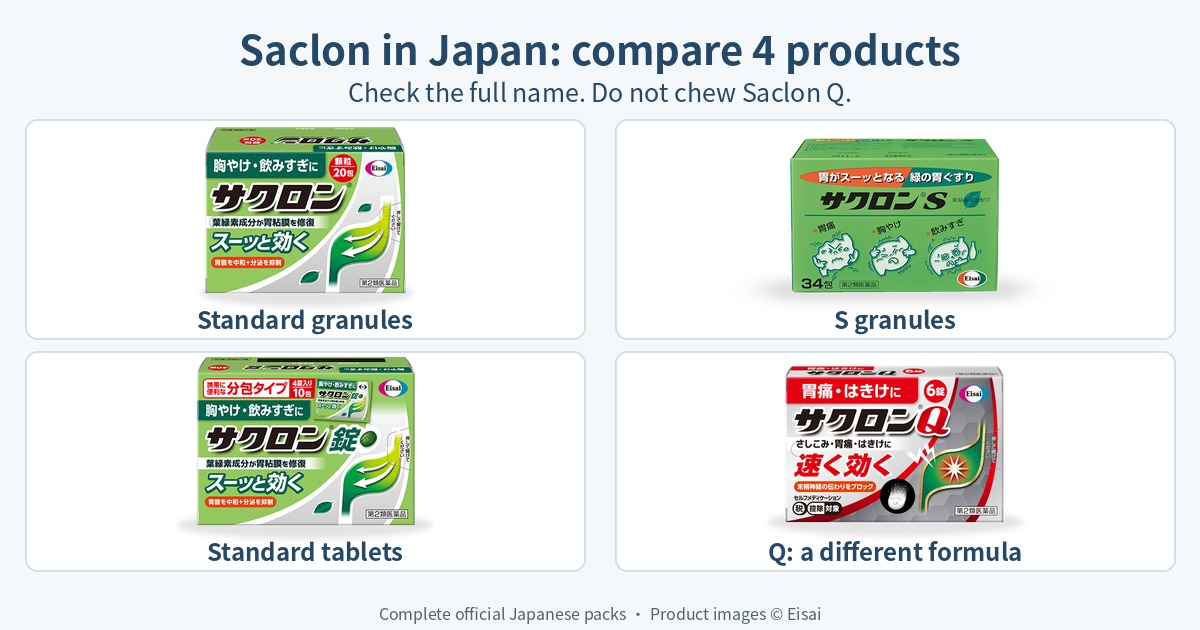

I’m Irene, a Taiwan-born, Japan-licensed pharmacist working in a Japanese drugstore. Saclon boxes can look similar, but an S or Q changes what you need to check. Let’s start with the full product name.
- The short version: check the formula, then the dosage form
- What actually changes between standard Saclon, S and Q?
- How much and when? “Between meals” has a specific meaning
- Q dissolves quickly in the stomach: swallow it promptly
- Check these precautions before taking a dose
- Practical questions after buying a pack
- Sources and reading notes
The short version: check the formula, then the dosage form
Standard Saclon granules and tablets have the same active ingredients in the same adult daily amounts. Saclon S changes the antacid blend. Saclon Q has a different active ingredient, age limit and dosing instructions. If you want the same product you used before, match the full Japanese name rather than the colour of the box. All four are Japanese Class 2 OTC medicines.
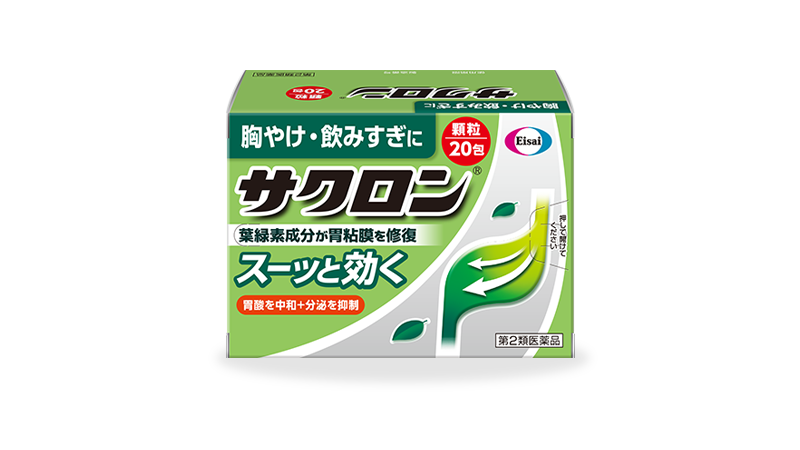
Standard granules; 20-sachet pack shown. Image source / copyright: Eisai.
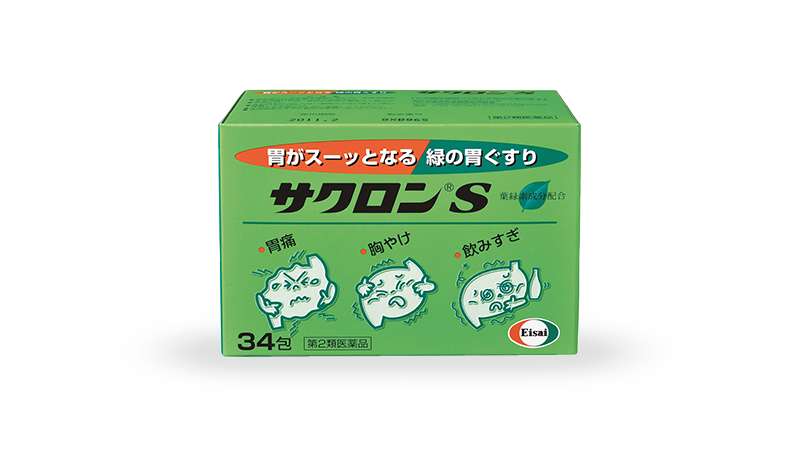
S granules; 34-sachet pack shown. Image source / copyright: Eisai.
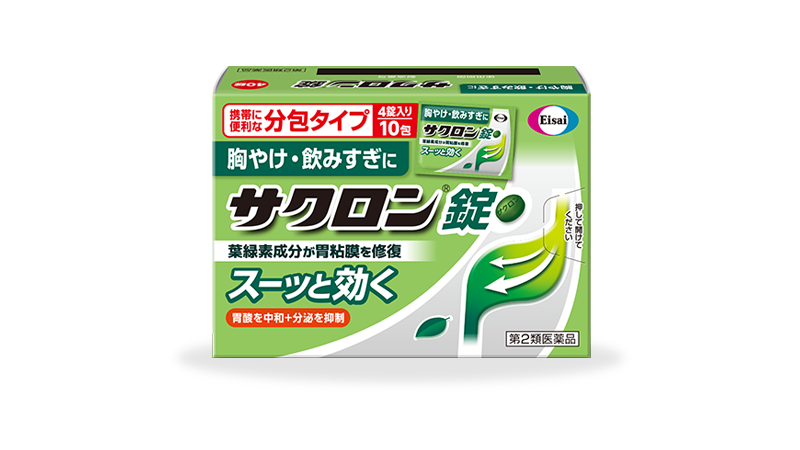
Standard tablets; 40 tablets in ten four-tablet sachets shown. Image source / copyright: Eisai.
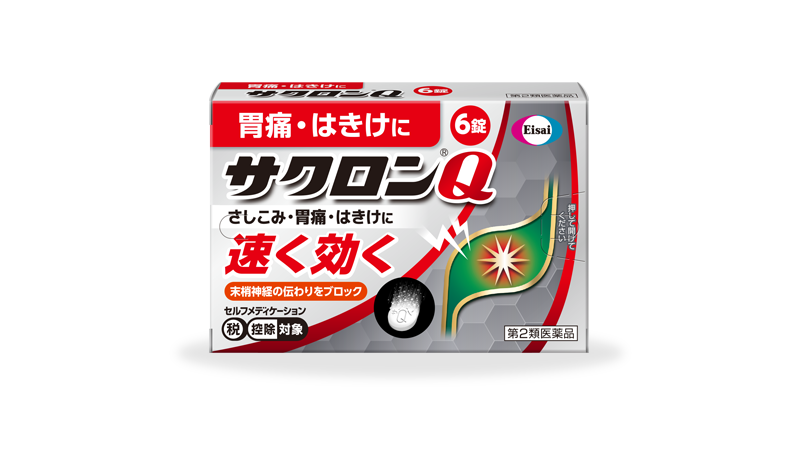
Q; six-tablet pack shown. Look for the large Q. Image source / copyright: Eisai.
- If the standard formula is appropriate for you: compare granules with tablets based on which you can take more comfortably with water. The adult single doses are one sachet and four tablets, respectively.
- If the name includes S: it is still a granule product, but its ingredient amounts differ. The letter does not establish that it is stronger or a better choice for everyone.
- If the name includes Q: it contains oxethazaine and is for ages 15 and over, at two tablets per dose. It is not an orally dissolving version of standard Saclon.
Do not take Q if you are pregnant or might be pregnant. The other three require consultation before use during pregnancy. Do not combine these four products yourself. If you take regular medicines, show their names to a pharmacist first.
What actually changes between standard Saclon, S and Q?
Standard granules, S granules and standard tablets combine acid-neutralising ingredients, Scopolia extract to reduce acid secretion, and potassium copper chlorophyllin to protect and repair the stomach lining. Q has one active ingredient, oxethazaine (オキセサゼイン), which acts directly on the stomach lining to block stimuli associated with symptoms such as stomach pain and nausea.
Watch the quantity basis: the first three use an adult daily amount; Q uses a single adult dose. The table keeps the Japanese leaflets’ original basis. Q’s 5 mg must not be mistaken for a daily amount.
| Product | Quantity basis | Active ingredients and amounts |
|---|---|---|
| Standard granules / standard tablets | Granules: 3 sachets (3.84 g) per adult day Tablets: 12 tablets per adult day | Potassium copper chlorophyllin 120 mg Anhydrous dibasic calcium phosphate 1,020 mg Precipitated calcium carbonate 1,020 mg Magnesium hydroxide 960 mg Scopolia extract (ロートエキス) 30 mg |
| S granules | 3 sachets (3.69 g) per adult day | Potassium copper chlorophyllin 90 mg Magnesium hydroxide 1,050 mg Anhydrous dibasic calcium phosphate 1,650 mg Scopolia extract (ロートエキス) 30 mg |
| Q | 2 tablets per adult single dose | Oxethazaine (オキセサゼイン) 5 mg |
For standard granules versus standard tablets, the dosage form is a useful practical distinction. S requires a separate formula check: it does not contain the precipitated calcium carbonate in standard Saclon, and the other amounts also differ. Adding up the milligrams does not tell you which works better. This table covers active ingredients; anyone with a history of medicine allergies should check the inactive ingredients too.
The first three are labelled for symptoms including heartburn, stomach pain, heaviness or bloating, nausea, and discomfort associated with excessive drinking. Q also lists stomach pain, nausea, vomiting and abdominal cramps among its indications. Overlapping indications do not make the products interchangeable or suitable to combine. This is a product-identification guide, not a way to diagnose the cause of stomach symptoms.
How much and when? “Between meals” has a specific meaning
Standard granules, S and standard tablets are taken three times daily on an empty stomach, between meals and at bedtime, with water or warm water. The Japanese term 食間 means roughly two hours after eating, when most food has left the stomach. It does not mean during a meal. Q can be taken when symptoms such as stomach pain or nausea occur; it does not use the same between-meal schedule.
| Product | Ages 15+, per dose | Ages 8–14, per dose | Frequency and timing |
|---|---|---|---|
| Standard granules | 1 sachet | 1/2 sachet | 3 times daily; between meals and at bedtime on an empty stomach |
| S granules | 1 sachet | 1/2 sachet | 3 times daily; between meals and at bedtime on an empty stomach |
| Standard tablets | 4 tablets | 2 tablets | 3 times daily; between meals and at bedtime on an empty stomach |
| Q | 2 tablets | Do not use | Up to 3 times daily; at least 4 hours between doses |
Children under 8 must not take standard granules, S or standard tablets. Children under 15 must not take Q. Ages 8–14 need a parent or guardian’s supervision with the first three. Do not transfer Q’s two-tablet dose to standard Saclon tablets.
Q dissolves quickly in the stomach: swallow it promptly
The Q leaflet specifically says to swallow promptly with water or warm water, without chewing. Because the tablet dissolves quickly, letting the ingredient spread in the mouth can leave numbness. Do not chew it or hold it in your mouth to dissolve.
- 1. Remove the tabletsPress them out of the blister. Never swallow the blister sheet or foil.
- 2. Swallow with waterAges 15+: two tablets per dose. Swallow promptly without chewing or sucking.
- 3. Keep the intervalLeave at least four hours before another dose, with no more than three doses in a day.
All four products are taken with water or warm water. If swallowing medicine is difficult, ask a pharmacist with the pack in hand rather than changing products without checking the formula and age limit.
Check these precautions before taking a dose
Do not build your own combination
The leaflets for standard granules, S and standard tablets prohibit taking gastrointestinal pain-relief/antispasmodic medicines at the same time. Q belongs to that category. Q also prohibits other medicines in that category and stomach medicines containing Scopolia extract (ロートエキス). That rules out adding Q to any of the other three yourself. The three non-Q products also overlap in ingredients, so do not stack them.
Show a pharmacist the names, ingredients and doses of any prescription medicines, other stomach medicines and supplements you use. “Another stomach tablet” is not enough to check an interaction. This article is not a complete interaction list.
Pregnancy, breastfeeding and medical conditions
- Q: do not use if pregnant or possibly pregnant. Consult before use if you are receiving medical treatment, are older, or have had allergic reactions to medicines or similar substances.
- Standard granules, S and standard tablets: consult before use if receiving medical treatment, pregnant or possibly pregnant, older, or with a history of medicine allergies; if you have difficulty urinating; or if diagnosed with kidney disease, heart disease, glaucoma or a thyroid disorder.
- Breastfeeding with the first three: the leaflets say to avoid taking the medicine or avoid breastfeeding while taking it. Ingredients can enter breast milk and may speed up an infant’s pulse; milk production may also be reduced. Discuss this with a clinician or pharmacist first. Q’s lack of the same leaflet wording is not proof that it is suitable during breastfeeding.
When to stop: no improvement after 5–6 Q doses
- Q: if symptoms have not improved after 5–6 doses, stop and consult a doctor, pharmacist or registered OTC medicine seller in Japan, taking the leaflet with you. Do not use continuously for a long period.
- Standard granules, S and standard tablets: stop and seek the same advice if symptoms have not improved after about two weeks.
These are review thresholds for symptoms that have not improved, not courses you must finish. Recurrent or worsening symptoms, or the warning signs below, need earlier medical attention.
With any of the four, stop immediately and seek advice if a rash, redness or itching appears. With Q, the same applies to headache, drowsiness, dizziness or weakness. Dry mouth, constipation or diarrhoea can occur with the first three, and constipation can occur with Q; stop and seek advice if these persist or get worse.
Get medical help first for these warning signs
Seek medical help right away for bloody vomit, black tar-like stools, severe constant abdominal pain, frequent vomiting, difficulty or pain with swallowing, shortness of breath, or pain in the chest, jaw, neck or arm. A “stomach pain” indication on a box is not a reason to keep masking these symptoms.
Practical questions after buying a pack
Does a new box mean a new formula?
At the time of checking, the official pages for standard granules, standard tablets and Q announced a gradual packaging change with no ingredient change. This article shows complete packages from the current official pages. Different-looking boxes may still be on shelves, so match the full name, ingredients, expiry date and enclosed leaflet.
Can I keep half a sachet until my next trip?
For both granule products, fold over the opening of a partly used sachet and do not use the remainder after more than two days. Standard tablets in four-tablet sachets have the same two-day instruction. For the 96-tablet bottle, close it tightly and aim to use it within six months of opening, without exceeding the printed expiry date. Write down the opening date. These are storage limits, not reasons to take the medicine every day until it is gone.
Why can stools turn green?
Standard granules, S and standard tablets contain green potassium copper chlorophyllin. Their leaflets explain that its excretion can turn stools green. This does not make every stool-colour change harmless: black tar-like stools or serious accompanying symptoms still need urgent medical attention.
Are Saclon and Sucrate the same brand?
Check the Japanese spelling: this guide covers サクロン (Saclon). スクラート (Sucrate) is a different brand. If that is the name on your shopping list, see the Sucrate G, standard and S five-product guide instead of using this article’s doses.
If your box says Gastol tablets or fine granules, or Gaster10, check that product’s own instructions. These related guides help you identify your medicine; they are not a recommendation to buy or combine several.
Sources and reading notes
Checked on 18 October 2026 against current Japanese product pages and the Japanese leaflets linked directly from them. This guide covers products sold in Japan. English names help identification; check the full Japanese name, your own pack and its leaflet. This article does not replace an individual diagnosis or medication consultation.
- Eisai: Standard Saclon granules product information · Japanese leaflet PDF
- Eisai: Saclon S granules product information · Japanese leaflet PDF
- Eisai: Saclon tablets product information · Japanese leaflet PDF
- Eisai: Saclon Q product information · Japanese leaflet PDF
- Eisai: Saclon series comparison
- US NIDDK: indigestion symptoms and when to seek medical help