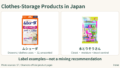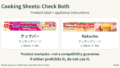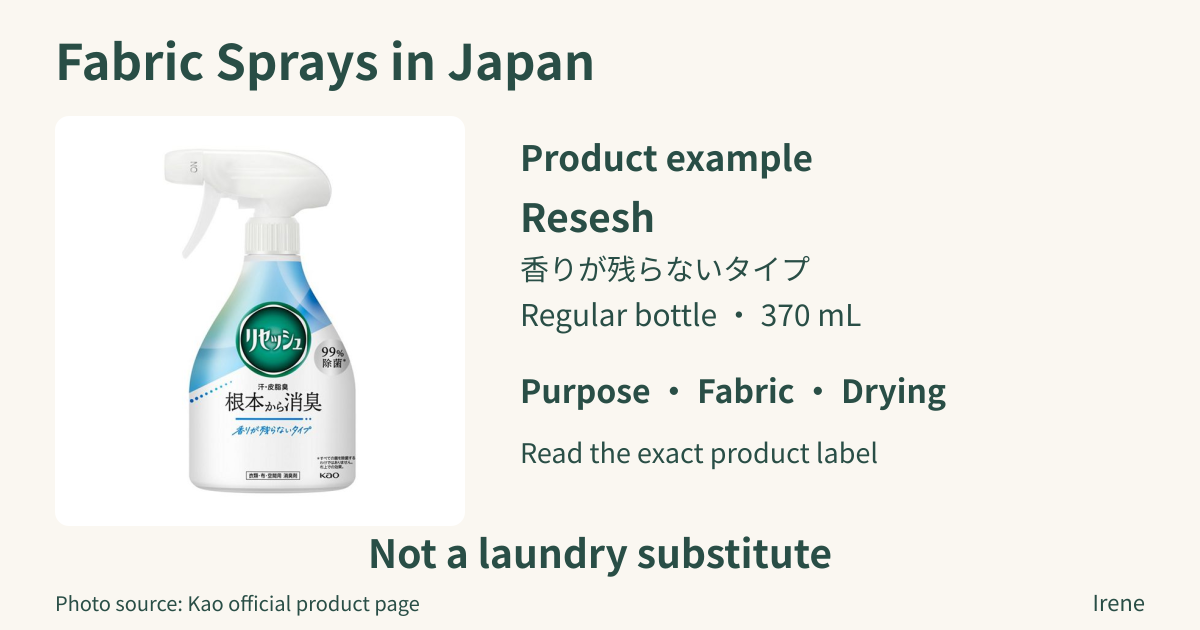
Product photographs: Kao official product page. Label-reading examples, not a performance ranking or manufacturer endorsement.
Your coat smells of dinner, but you cannot wash it straight away. Before buying a Japanese fabric deodorizing spray, ask: do you need to manage an odor, or remove dirt? Do not choose by fragrance alone or treat a fabric spray as laundry detergent, stain remover or body deodorant.
Check the intended use, the garment’s materials and finishes, and whether you can let it dry afterward. If suitability is unclear, do not use it. If you have not bought it yet, there is no need to buy a bottle just to experiment.
1. “Deodorizing” is not a promise to wash away dirt
The Japanese label 消臭 identifies an odor-related function, not proof that a product removes dirt. Kao’s Resesh FAQ says to remove dirt first when it is the source of an odor. The current リセッシュ 香りが残らないタイプ 本体 instructions also warn that existing dirt may cause ring marks, and concentrated or excessive spraying may leave marks or stickiness.
If you need to remove a food stain or clean dirty clothing, choose care according to the garment’s label and instructions—not extra sprays in place of washing. For laundry-product and accommodation checks, see the Emal travel laundry buying guide. Not every garment is suitable for washing with water yourself.
2. Fabric, room air and the body are different targets
Look for 用途 (intended use) or 品名 (product type). The Resesh product above is described as 衣類・布製品・空間用消臭剤: a deodorizer for clothing, fabrics and room air. Some products therefore cover more than one target. Read the exact product’s label rather than deciding from the bottle shape, brand or the word 除菌.
This product requires taking clothing off before spraying and prohibits direct spraying onto faces, skin, hair, people or pets. Those are its precautions, not instructions for body products. “For clothing” does not mean that you can spray yourself while wearing it.
3. Stop if the material or finish is uncertain
Read Resesh’s official guidance as three different situations: prohibited use, a required pre-check, and uncertainty. A spot test cannot override a prohibition. If the material, finish or restriction is unclear, do not use it.
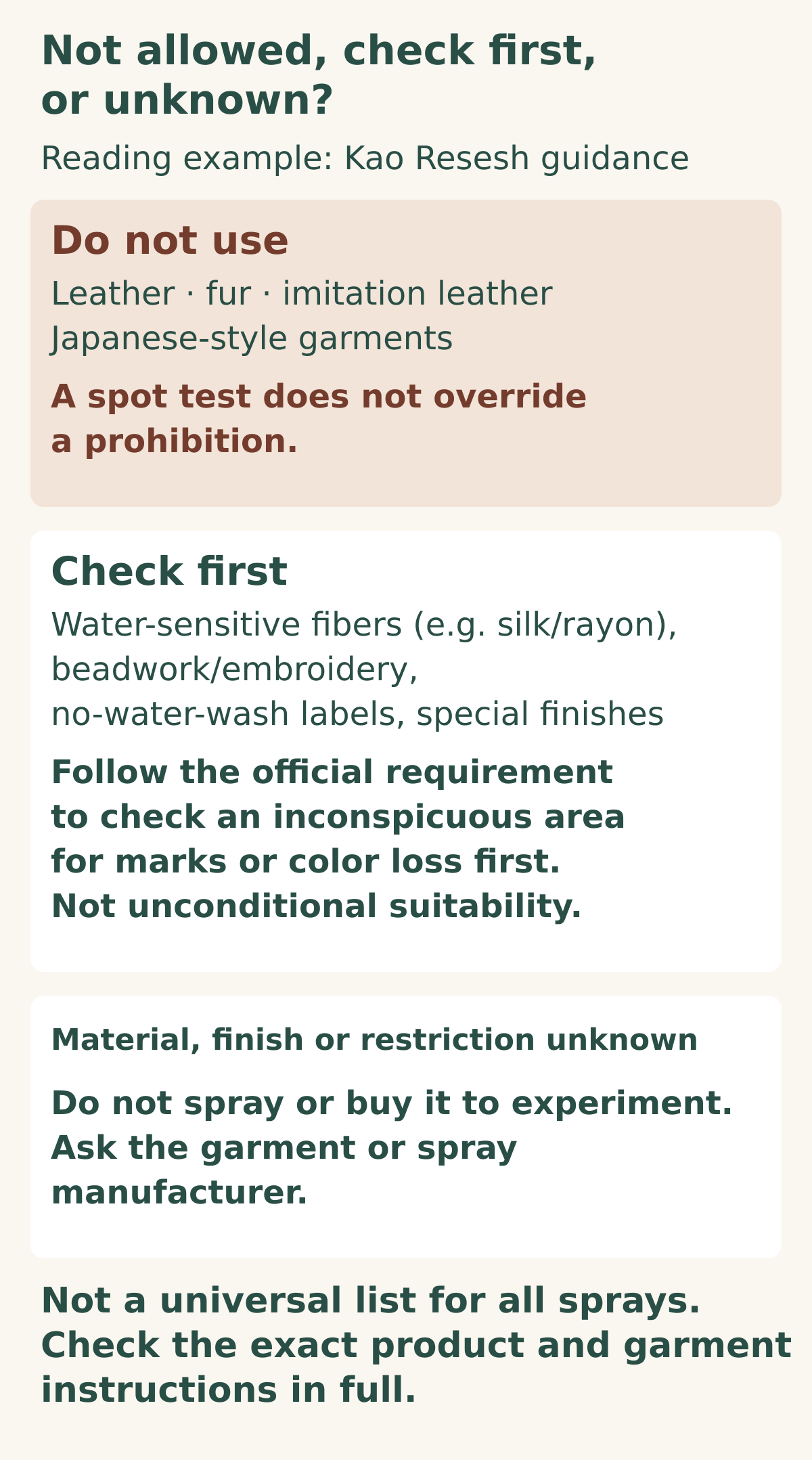
These are Resesh’s official conditions, not a universal material list for every fabric spray. Compare the garment’s composition, finishes and care instructions with the candidate spray’s restrictions. If instructions are unclear or conflict, do not spray until you have checked with the garment or spray manufacturer. A fabric-looking panel does not establish suitability for an entire coat, leather trim or decoration.
4. If you cannot let it dry, do not rush to spray and leave
The current Resesh product above requires thorough drying after spraying and ventilation in a confined space. If you have only minutes before departure, cannot let the garment dry properly, or cannot use the product appropriately in your accommodation, do not spray simply to put it straight back on. This guide does not supply a universal spray distance, number of sprays or drying time.
The product also cautions against inhaling it or getting it in the eyes, and requires storage out of children’s reach. Read the complete label before purchase and use; these checkpoints do not replace its precautions.
Three questions before checkout
- Is this a dirt problem or an odor problem? If cleaning is needed, do not choose deodorizer as a replacement laundry product.
- Is this garment suitable? Unknown materials, finishes or restrictions are reasons not to buy a spray to experiment—or use it.
- Can I remove the garment, ventilate and let it dry as directed? If not, hold off on adding this product.
This is a guide to intended use and suitability, not a brand-performance comparison. We have not tested fragrance, deodorizing speed, material safety or bacteria-removal performance, and do not interpret 除菌 as proof of infection prevention. The product is an example of label reading; not all physical packages, batches or products in its range have been inspected. Airline carriage and emergency first aid are outside this guide.
Official sources
- Kao: Resesh 香りが残らないタイプ, regular bottle—intended use, directions and precautions
- Kao: Resesh FAQ—materials and dirt-related guidance
Official pages checked: October 31, 2026. Follow the current label for the exact product and the garment’s care instructions.