Current Japanese official product information, permitted claims and precautions checked: 2 November 2026. This guide concerns Taisho Oral Rehydration Solution, 300 mL—not universal directions for every ORS.
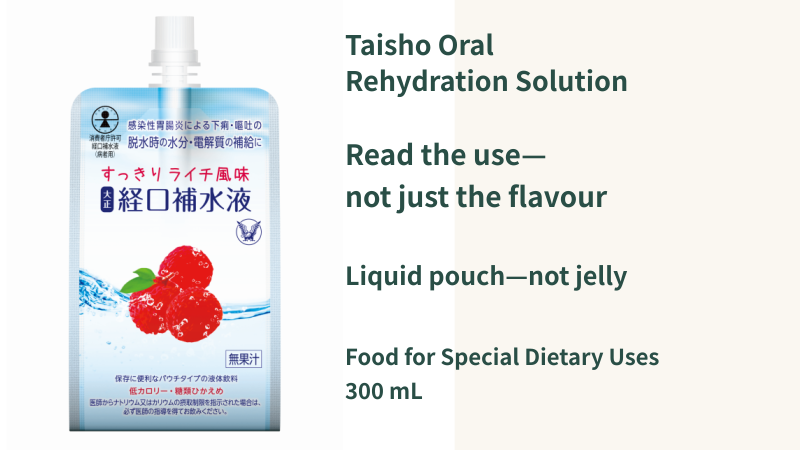
Can you transfer familiar OS-1 instructions to anything labelled “oral rehydration solution”? Read this product’s permitted use first. Taisho’s lychee-flavoured product, launched on 1 July 2025, is a liquid in a spouted pouch. More importantly, its current official information says to drink it only when a doctor has instructed its use for dehydration associated with diarrhoea or vomiting from infectious gastroenteritis.
This is not a ranking of which brand hydrates “more strongly”. It separates three things that can appear together: the ORS category name, this particular product’s permitted use, and whether the person has the relevant medical instruction. Flavour, reduced sugars and portability cannot replace the last two.
Identify the 300 mL liquid pouch—not jelly
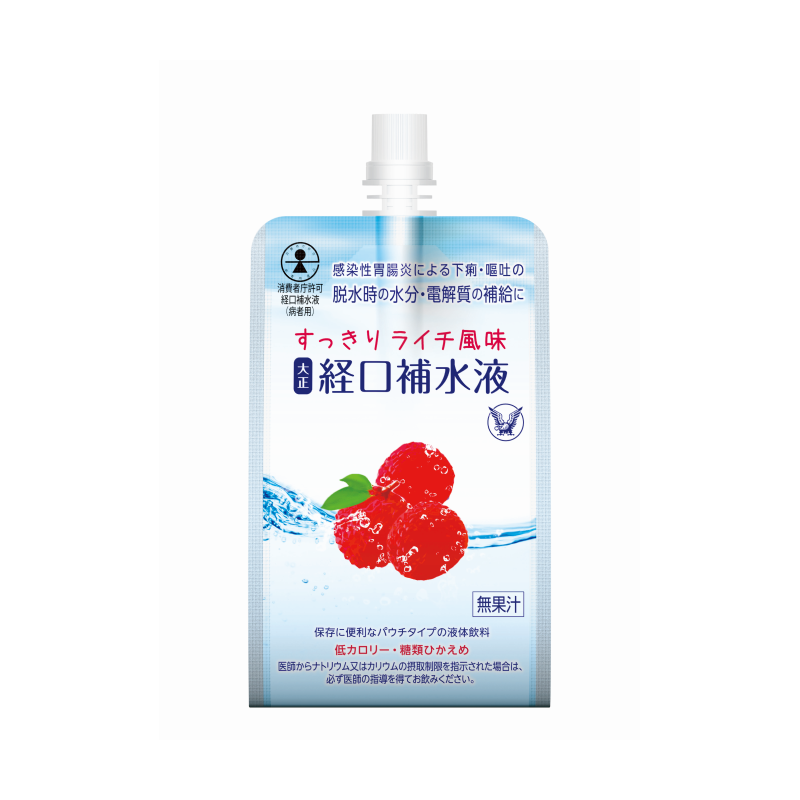
The full Japanese name is 大正 経口補水液 (Taisho Oral Rehydration Solution). It is a Japanese Food for Special Dietary Uses, for people with medical conditions (特別用途食品〈病者用食品〉), permission number 2024017—not an OTC medicine. The current official photograph shows the 300 mL packaging example, lychee-flavoured without fruit juice.
Despite the spouted-pouch shape, the manufacturer calls it a liquid beverage, not ORS jelly. The pouch does not establish a thicker consistency or suitability for someone with swallowing difficulties; that needs separate professional assessment. The manufacturer also notes limited pharmacy and drugstore availability, so do not assume every shop stocks it.
The shared category name does not make every use identical
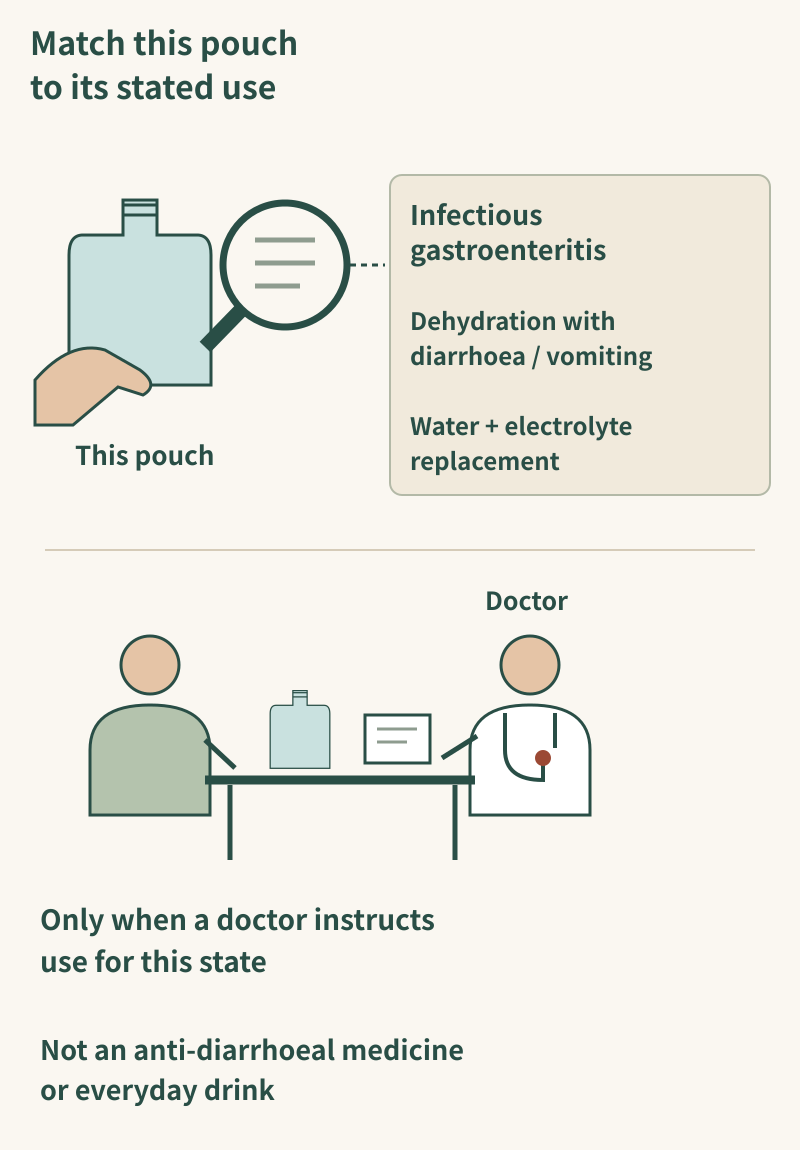
This product’s permitted claim concerns replacing water and electrolytes in dehydration associated with diarrhoea or vomiting from infectious gastroenteritis. Its precautions add a condition: drink it only when a doctor has instructed use for that state. Asking a pharmacist about the product is useful, but a general pharmacy conversation must not be treated as having already received that medical instruction.
Japan’s Consumer Affairs Agency explains that some ORS products also have heatstroke uses and that individual packaging should be checked. The words “oral rehydration solution” alone therefore do not establish that a product is appropriate for heatstroke or routine summer prevention. This is not a claim that Taisho’s formula is ineffective in every other situation; it is a reason not to extend its permitted use yourself.
Nor does replacing lost water and electrolytes mean curing infectious gastroenteritis or stopping diarrhoea. The manufacturer explicitly states that consuming more does not cure disease. Choosing a product and deciding whether medical assessment is needed are separate questions.
Reduced sugars is not sugar-free; a pouch is not 100 mL
ORS is more than flavoured water. The Consumer Affairs Agency explains that these formulations contain water, electrolytes and carbohydrates and are designed for absorption during dehydration. Less sugar or more salt is not automatically better; do not redesign the mixture or substitute another drink for a specifically recommended product.
Taisho’s current nutrition information distinguishes one 300 mL pouch from the figures in brackets for 100 mL. Examples are:
- Sugars: 3.54 g per pouch; 1.18 g per 100 mL. The separately listed glucose figures are the same.
- Salt equivalent: 0.823 g per pouch; 0.274 g per 100 mL.
- Potassium: 219 mg per pouch; 73.0 mg per 100 mL.
These are composition reference amounts, not a prescription for your daily intake. “Low calorie” and “reduced sugars” do not mean no sugar, no sodium or potassium concerns, or suitability as an everyday wellness drink. The agency cautions against routine or large-volume ORS consumption. If a doctor has restricted sodium or potassium, Taisho specifically requires that doctor’s advice and guidance.
After medical instruction, check quantity and storage too
The current official guide is one to two pouches daily (300–600 mL), adjusted according to the dehydration state, with advice and guidance from a doctor, registered dietitian, pharmacist or other relevant professional. This is not an invitation to diagnose yourself, apply the same amount to a child or treat severe symptoms by increasing the number of pouches. Confirm the individual amount with a healthcare professional. This consultation requirement does not remove the separate condition that a doctor has instructed use for the specified state.
- Stop drinking it if it does not suit your constitution or condition.
- Store away from heat and direct sunlight; consume promptly after opening.
- Follow the best-before date on the package in your hand. The launch information’s 36 months from manufacture is shelf-life information, not permission to store an opened pouch for 36 months.
For a consultation, show the actual pouch and explain the doctor’s instruction, whether vomiting or diarrhoea continues, and any sodium or potassium restriction. “Something like OS-1” is less useful than matching the actual product with its intended use.
If you are looking for OS-1
For its liquid, jelly and powder formats, water quantities and storage, see the OS-1 liquid, jelly and powder guide. That covers a different product series: its permitted uses, mixing instructions and drinking conditions must not be transferred automatically to this Taisho pouch.
Main official sources
- Taisho: current product information, permitted use and precautions
- Taisho: launch announcement dated 30 June 2025
- Japan Consumer Affairs Agency: oral rehydration solutions
- NHS: when diarrhoea and vomiting require medical help
This guide explains currently verified Japanese official product information. It does not replace individual diagnosis, medical instruction or the complete directions on your own package.