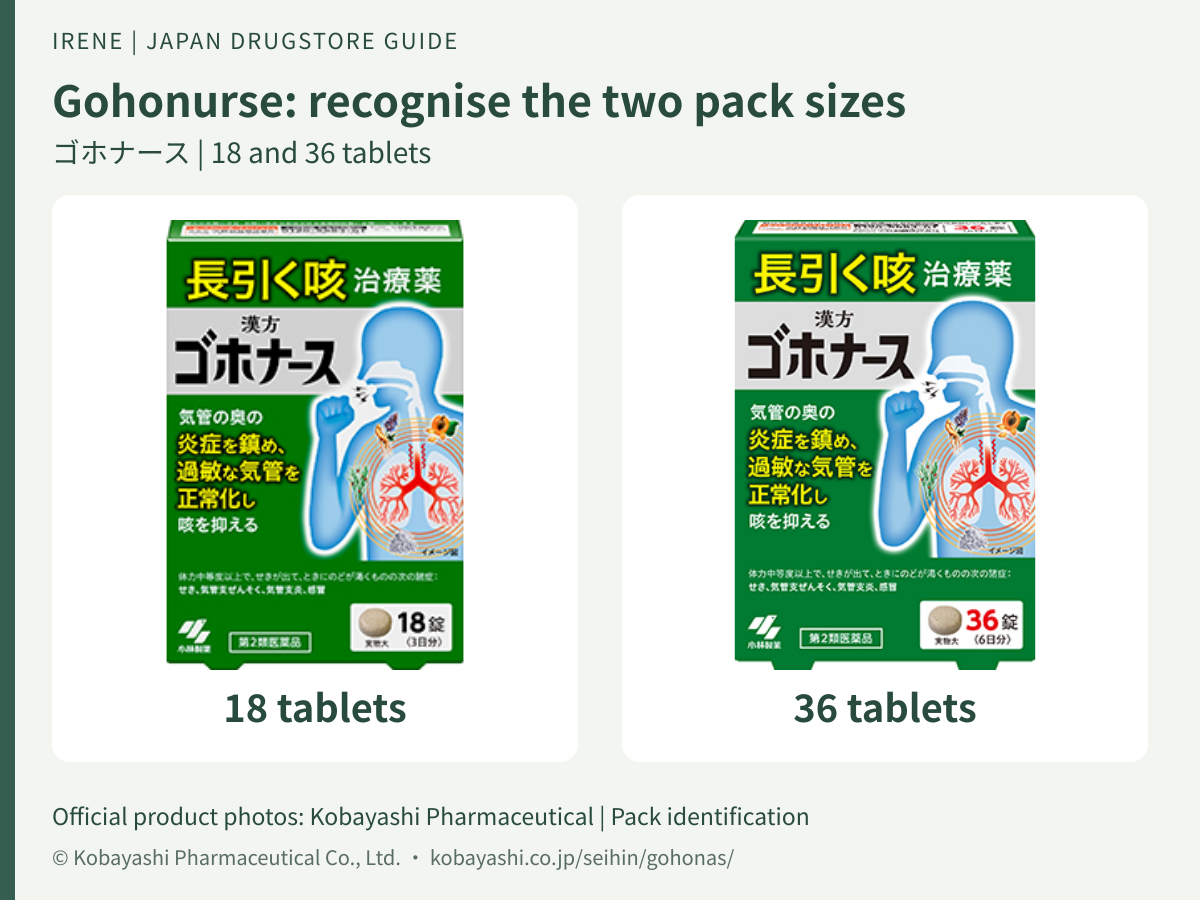
An 18-tablet box marked “3 days” and a 36-tablet box marked “6 days” describe how much medicine is inside, not a course you must finish. Kobayashi added the 36-tablet Gohonurse pack in Japan on October 7, 2026. More tablets do not make it a stronger formula.

I’m Irene, a Japan-licensed pharmacist from Taiwan working in a Japanese drugstore. Let’s separate pack size, dosing instructions and the point when you should stop, so a larger box does not become a reason to put off medical care.
Sources checked: November 7, 2026. This guide covers the Japanese ゴホナース tablets only. It helps you read the label and prepare questions, not diagnose your cough. Read the latest Japanese leaflet supplied with your product before use.
- What changes between 18 and 36 tablets?
- A Kampo formula still needs a medicine-interaction check
- If suitable, the labelled dose is three tablets twice daily
- Who needs advice before taking it?
- “Six days’ supply” is separate from “when to stop”
- Side effects mean stopping now
- Take these four details to the drugstore
- Sources and scope
What changes between 18 and 36 tablets?
Both packs have the sales name ゴホナース / Gohonurse and are Japanese Class 2 OTC medicines. They have the same labelled dose. Current official information does not describe the 36-tablet pack as an enhanced formula. The days on the box are calculated using six tablets per day.
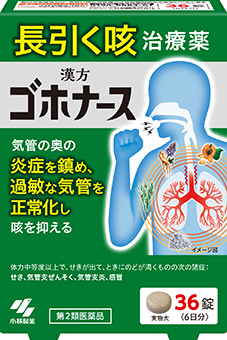
The two official cartons below help you identify ゴホナース, the lower-right 18-tablet/3-day or 36-tablet/6-day marking, and the Japanese Class 2 OTC mark. Those days are calculated from the labelled daily dose, not a treatment course prescribed for you. The images come from different official pages; their display sizes do not compare the cartons’ physical dimensions or the medicine’s strength.
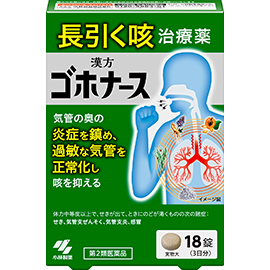
The number is the pack total, not a single dose.
A larger pack, not a six-day course you must finish.
This calculation does not establish suitability or mean you can ignore problems until day six. Ask a pharmacist about your symptoms and existing medicines before choosing a pack. The official launch announcement confirms the pack addition; individual shop stock has not been checked.
A Kampo formula still needs a medicine-interaction check
Gohonurse contains the Kampo formula makyokansekito (麻杏甘石湯). The labelled daily dose of six tablets contains 800 mg of extract, made from ephedra herb 2.0 g, glycyrrhiza (licorice) 1.0 g, apricot kernel 2.0 g and gypsum 5.0 g. Those gram amounts describe the source materials for extraction, not extra ingredients to take separately. The 800 mg is not the amount per tablet.
The approved indications carry a condition: moderate or greater physical strength, with cough and sometimes thirst. Age or body size alone cannot confirm that this description fits you. A cough remaining after a cold, or the word “herbal,” is not enough to establish suitability.
Why does the indication list mention childhood asthma if under-15s cannot take this product?
The full Japanese indication list is cough, childhood asthma, bronchial asthma, bronchitis, common cold and hemorrhoidal pain, in people meeting the stated constitution and symptom conditions. However, this product must not be taken by anyone under 15. An indication name does not override its age restriction or diagnose asthma. The product explicitly directs people with wheezing or difficulty breathing not to use it and to see a doctor.
Do not take Gohonurse with other rhinitis or cold medicines. Kobayashi’s current interaction Q&A also warns about overlapping herbal ingredients. Show a pharmacist every prescription medicine, OTC product, Kampo medicine and supplement you use, including products containing ephedra or licorice. This is not a list implying that everything else is safe to combine. Do not stop a prescription medicine to make room for Gohonurse.
If suitable, the labelled dose is three tablets twice daily
- Age 15 and over: three tablets per dose, twice daily, before or between meals with water or warm water.
- Under 15: do not take it. Do not invent a smaller child’s dose.
- Between meals (食間): about two to three hours after a meal, not while eating.
Six tablets is the total for a day, not a dose. Do not add another dose because you cough at night or copy another cough medicine’s schedule. Keep the original packaging and leaflet.
Who needs advice before taking it?
The current Japanese leaflet specifically lists the following situations for consultation with a doctor, pharmacist or registered salesperson before use:
- Receiving medical treatment; pregnancy or possible pregnancy.
- Physical weakness or declining strength, a weak stomach or intestines, pronounced tendency to sweat, or older age.
- Swelling or difficulty urinating.
- Diagnosed high blood pressure, heart disease, kidney disease or a thyroid disorder.
Also tell the pharmacist about breastfeeding, allergies and other personal circumstances. Absence from this list is not confirmation that the medicine is safe for you.
“Six days’ supply” is separate from “when to stop”
- When taken for a cold: stop and consult a doctor, pharmacist or registered salesperson, taking the packaging with you, if symptoms do not improve after five to six days. The unit here is days, not doses.
- The leaflet’s other situations: it says to stop and seek advice if symptoms have not improved after about one month. Long-term use also needs consultation. This is not advice to self-treat an unexplained cough for a month.
- A cough lasting more than three weeks: arrange medical assessment rather than continuing to switch products or buy larger packs because a month has not passed.
None of these periods is a waiting requirement when something is wrong. Seek prompt medical help for rapid worsening, feeling very unwell, chest pain, difficulty breathing or coughing up blood. Wheezing also triggers this product’s instruction to seek medical care instead of using it. The NHS cough guidance supplies the general warning signs; these are separate from this medicine’s stop-use instructions.
Side effects mean stopping now
Stop immediately and consult a doctor, pharmacist or registered salesperson, taking the packaging with you, if you develop a rash, redness, itching, nausea, loss of appetite or stomach discomfort after taking it.
Rare serious reactions include pseudoaldosteronism and myopathy. Warning symptoms include limb heaviness, numbness, tightness or stiffness, together with weakness or muscle pain that progressively worsens. Stop taking it and obtain immediate medical assessment for these symptoms rather than finishing the box.
Take these four details to the drugstore
- When the cough began, whether it is worsening, and whether you have phlegm, fever, wheezing or breathing problems.
- Your age, pregnancy or breastfeeding status, medical conditions and allergies.
- All medicines used now or recently, with the times taken. Bring packets or a medication list.
- A question about suitability and whether you need medical care, rather than only which pack is better value.
You can show this Japanese sentence: 「咳が○日続いています。今はこの薬を飲んでいます。ゴホナースを使ってよいか、受診が必要か確認したいです。」 It means: “I have had a cough for ○ days and am taking this medicine. I would like to check whether Gohonurse is suitable and whether I need to see a doctor.” If you do not know how long, say so rather than guessing.
For more preparation, see the guide to talking to a pharmacist in Japan. If you were looking for the difference between cough relief and treatment for phlegm, see the Asverin and Mucodyne comparison. It explains different products; it is not a recommendation to combine them.
Store Gohonurse in a cool, dry place out of direct sunlight and children’s reach. Do not transfer it to another container or use it after expiry. When unsure, getting advice is more useful than buying another box.
Sources and scope
This is an independent explanation based on the manufacturer’s information, not an official manufacturer translation. The Japanese medicine category does not establish approval, sale or import status in another country.
- Kobayashi: current Gohonurse information and pack sizes
- Current Japanese product leaflet
- Official English reference translation, September 2023
- Kobayashi, launch announcement of 24 September 2026
- current interaction Q&A
- NHS cough guidance
The manufacturer’s foreign-language translations are reading aids. Check the latest Japanese information supplied with your purchase. This article does not rank effectiveness, report personal use or confirm shop availability.