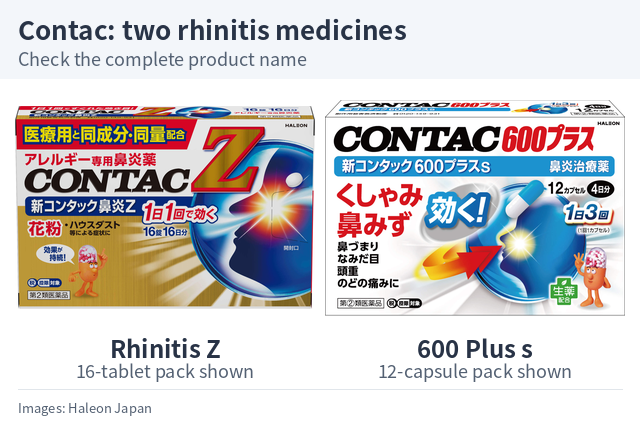
For nasal allergy symptoms, Rhinitis Z is the single-ingredient, once-at-bedtime option. New Contac 600 Plus s is a multi-ingredient medicine for a wider set of nasal symptoms and is taken three times daily after meals. Both are for ages 15+, and both prohibit driving after use. Do not take them together.

I'm Irene, a Taiwanese-born, Japanese-licensed pharmacist working in a Japanese drugstore. Recognising the Contac logo is a useful start, but the small words beside it change the medicine. Here is how to distinguish two nasal products without confusing them with Contac's cough medicines.
First, match the type of symptoms
| Check | New Contac Rhinitis Z | New Contac 600 Plus s |
|---|---|---|
| Japanese name | 新コンタック鼻炎Z | 新コンタック600プラスs |
| Main distinction | Cetirizine only; for nasal allergy symptoms | Five active ingredients, including a decongestant |
| Labelled symptoms | Sneezing, runny nose and blocked nose from pollen, house dust and similar allergies | Sneezing, runny/blocked nose, watery eyes, sore throat and heavy-headed feeling associated with acute rhinitis, allergic rhinitis or sinusitis |
| Age | 15 and over; under 15 must not use | 15 and over; under 15 must not use |
| Dose | 1 tablet once daily at bedtime | 1 capsule three times daily after meals |
| Driving | Prohibited after taking it | Prohibited after taking it |
| Japan OTC category | Class 2 | Designated Class 2 |
Z is worth discussing when the problem is clearly nasal allergy and you want a single-ingredient option. If it is unclear whether your symptoms are allergic, its leaflet specifically says to consult before use.
600 Plus s may be considered for its broader labelled nasal-symptom range, but its decongestant and other ingredients bring additional health-condition restrictions. A sinusitis indication means relief of specified symptoms; it does not mean that this medicine cures a sinus infection. Neither product is a general-purpose cough treatment.
Rhinitis Z: a small tablet, once before bed
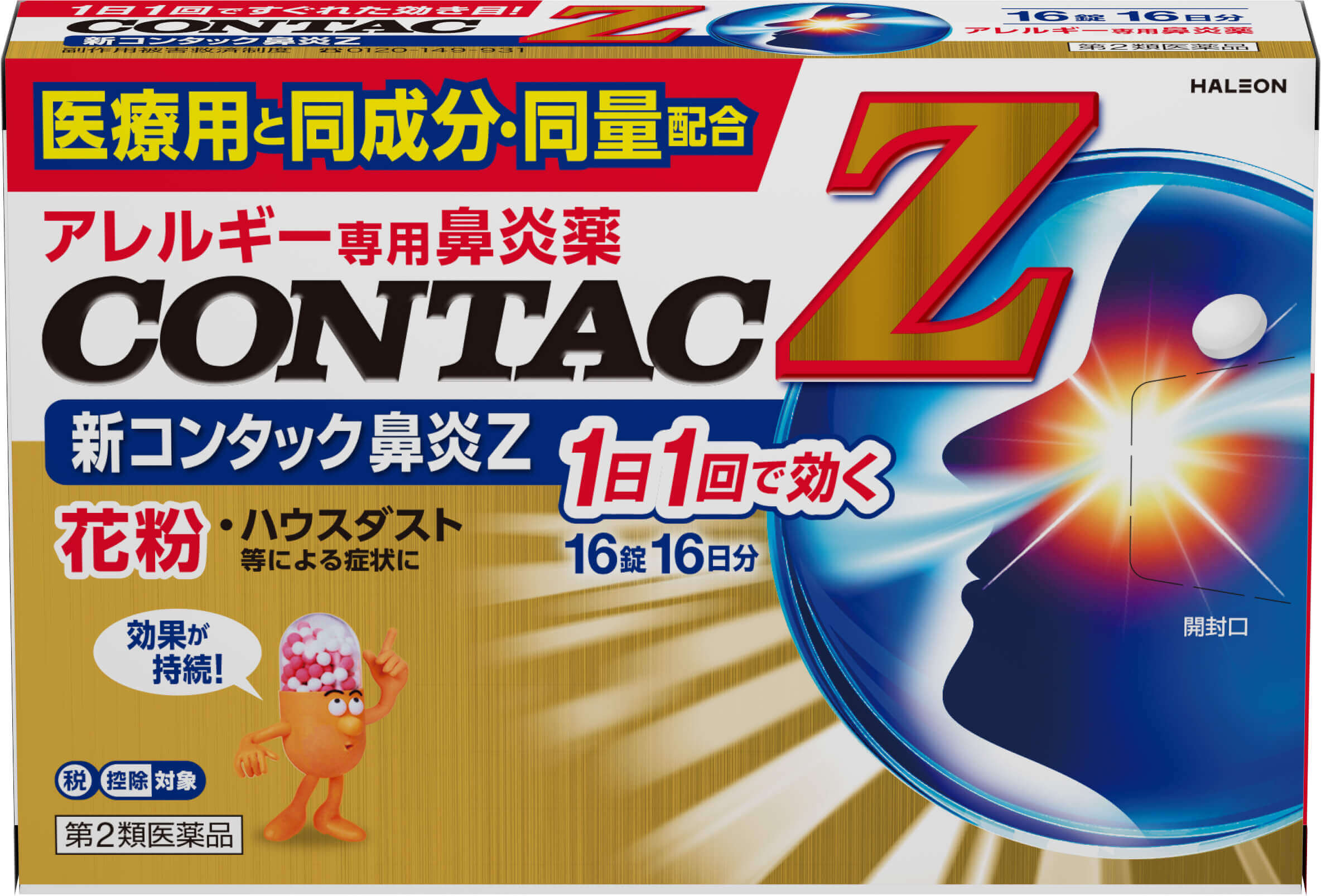
Each tablet contains cetirizine hydrochloride 10 mg. Take one tablet with water or warm water once daily at bedtime. Do not add another dose because symptoms return during the day.
The manufacturer describes the tablet as approximately 7 mm in diameter and the ingredient as less likely to cause drowsiness. That wording does not override the leaflet: you must not drive or operate machinery after taking it. Also, do not drink alcohol before or after taking Z.
For seasonal nasal allergy, the label recommends starting when symptoms first appear during the pollen season, while they are still mild. If there is no improvement after one week, consult a doctor, pharmacist or registered OTC medicine seller. Consult as well if you need to continue beyond two weeks, even if it is helping.
600 Plus s: pay attention to the small “s”
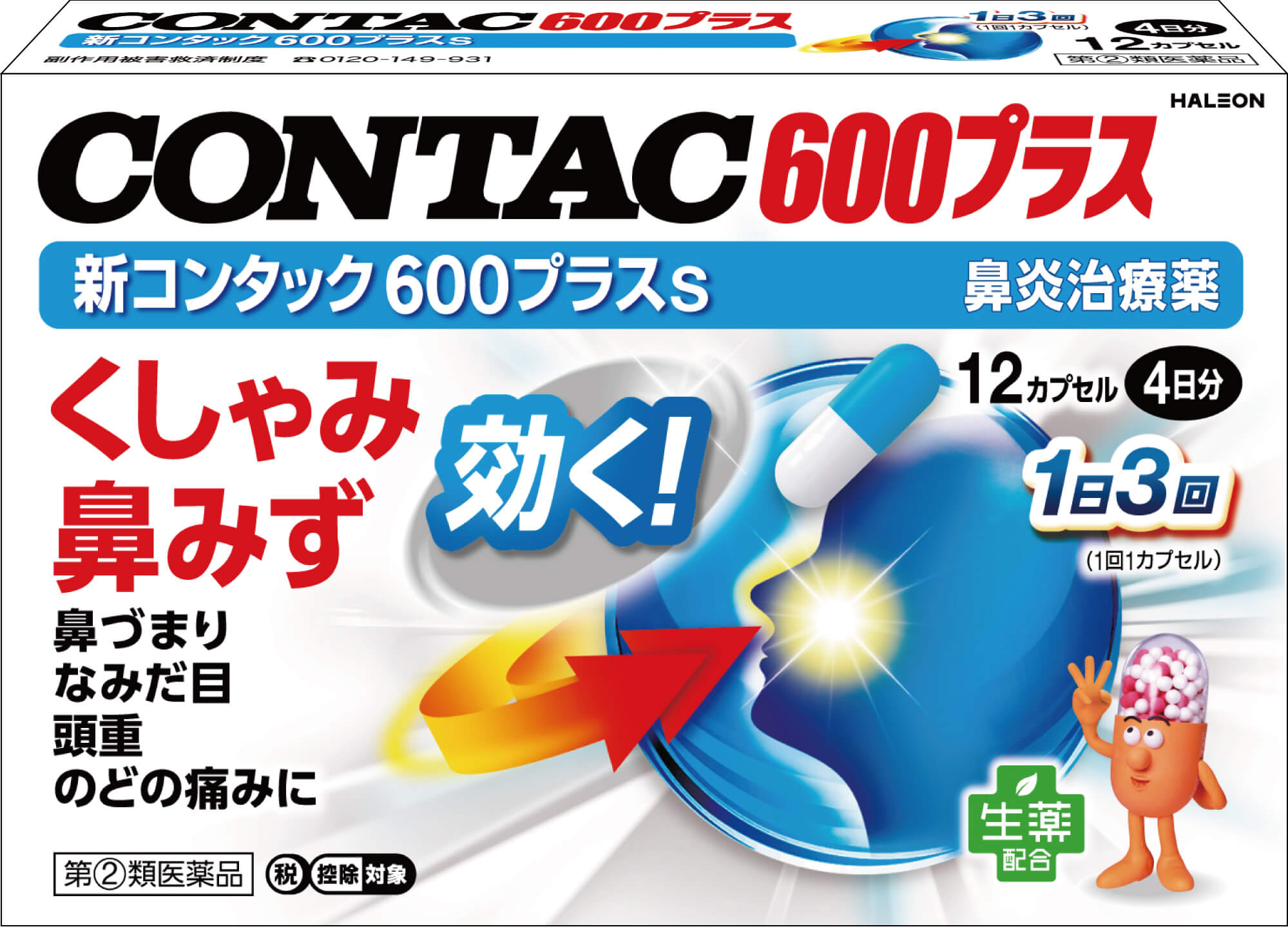
The current 600 Plus s is not the older New Contac 600 Plus. The brand itself warns that the directions differ. For this product, ages 15+ take one capsule three times a day after meals, with water or lukewarm water. Do not carry over an older package's sustained-release schedule or child dose.
| Active ingredient | Amount in 3 capsules, the adult daily dose | Labelled role |
|---|---|---|
| Pseudoephedrine hydrochloride | 105 mg | Reduces nasal congestion |
| d-Chlorpheniramine maleate | 4.5 mg | Relieves allergic symptoms |
| Total belladonna alkaloids | 0.4 mg | Reduces excessive nasal and tear secretions |
| Anhydrous caffeine | 120 mg | Helps the heavy-headed feeling associated with rhinitis |
| Saishin dry extract | 30 mg, equivalent to 300 mg crude herb | Helps suppress allergic symptoms |
These amounts are per day, not per capsule. The herb extract does not make the combination a herbal-only medicine, and caffeine does not make it safe to drive. Do not exceed the dose or use it continuously for a long period. Stop and consult if symptoms do not improve after five to six days.
Who should not take each one?
Rhinitis Z
Do not use Z if you have kidney disease, are under 15, or have had an allergic reaction to this product, its ingredients or piperazine derivatives, including levocetirizine or hydroxyzine. A breastfeeding person must either avoid the medicine or avoid breastfeeding while taking it; discuss a suitable plan with a clinician rather than choosing independently.
Do not combine Z with other allergy medicines, including medicines for skin allergies and oral rhinitis medicines; oral antihistamine-containing products such as cold, cough/expectorant, motion-sickness or sleep medicines; or oral medicines containing theophylline, ritonavir or pilsicainide hydrochloride hydrate.
Consult before use if receiving medical treatment, pregnant or possibly pregnant, older, previously allergic to medicines, diagnosed with liver disease or epilepsy, or if you have ever had a seizure. Also consult if the cause is uncertain or you have been diagnosed with other allergic conditions such as asthma or atopic dermatitis.
600 Plus s
Do not use if you have had an allergy to the product or its ingredients, difficulty urinating caused by an enlarged prostate, or a diagnosis of high blood pressure, heart disease, thyroid dysfunction or diabetes. Under-15s must not take it.
While taking it, do not use other oral rhinitis medicines, oral antihistamine-containing products such as cold, cough/expectorant, motion-sickness or allergy medicines, or stomach pain/antispasmodic medicines.
Consult first if receiving medical treatment, pregnant or possibly pregnant, breastfeeding, older, or with a medicine-allergy history. The leaflet also flags high fever, difficulty urinating, glaucoma, kidney disease, and treatment with a monoamine oxidase inhibitor such as selegiline hydrochloride. Tell the pharmacist if cold, cough or rhinitis medicines have previously caused insomnia, dizziness, weakness, trembling or palpitations.
Bring your medication list. Choosing the “more comprehensive” product is not helpful if one of its ingredients is unsuitable for you.
Side effects: when to stop and get help
For either product, stop and consult promptly if new symptoms suggest a side effect. Read the complete leaflet's symptom list; it is longer than a short shopping comparison can cover.
For Z, examples include rash or hives, swelling, breathing difficulty, palpitations, troublesome stomach symptoms, dizziness, unusual mood or behaviour changes, and urination problems. Seek immediate medical care for a severe allergic reaction, seizures, signs of liver trouble such as yellow skin or eyes, or unusual bruising or bleeding. Persistent or worsening dry mouth, constipation, diarrhoea or sleepiness also requires stopping and consultation.
For 600 Plus s, stop and consult for rash or itching, nausea/vomiting or loss of appetite, dizziness, insomnia, nervousness, headache, convulsions, difficulty urinating, flushing or abnormal sensitivity to light. Get immediate medical care for a severe allergic reaction; unusual bruising, bleeding, pallor or breathlessness; sudden high fever with chills and a sore throat; or a widespread red rash with small pustules and fever. Stop and consult if dry mouth, sleepiness, constipation or blurred vision persists or worsens.
Do not wait for the one-week or five-to-six-day review point when a concerning reaction occurs.
Before you put it in your travel bag
- Read the full name: 鼻炎Z and 600プラスs have different ingredients and schedules.
- Check age, existing conditions, pregnancy/breastfeeding and other medicines before buying.
- Remove the tablet or capsule completely from its blister before swallowing; never swallow the sheet.
- Keep the original package and leaflet in a cool, dry place out of sunlight and children's reach. Do not transfer the medicine to another container or use it past its expiry date.
My takeaway: choose by allergy-only versus broader nasal symptoms, health restrictions, then dosing schedule. A familiar logo, “less drowsy” wording or a larger ingredient list cannot replace those checks.
Sources
- Contac: current product lineup
- Contac: New Contac Rhinitis Z
- Contac: New Contac 600 Plus s
- Haleon: current Japanese Contac package leaflets, including Z and 600 Plus s
Information checked on 15 October 2026, including the 600 Plus s leaflet revised in April 2026. Follow the leaflet in your own pack and ask a pharmacist for personal advice.