
I'm Irene, a Taiwanese-born, Japanese-licensed pharmacist working in a Japanese drugstore. A sachet that gathers several supplements together can look appealing when you are packing for a trip or trying to simplify a busy morning. The question is whether its contents fit what you already take.
Choose by the ingredients and warnings, not by the age number alone. All three women's packs reviewed here contain 30 sachets and are labelled for one to two sachets daily: that means 15–30 days, not automatically one month. An older-age pack is not a stronger or better version for everyone.
What the three age labels actually change
These Japanese products are labelled 栄養機能食品, foods with nutrient function claims. Unlike Foods for Specified Health Uses (FOSHU), these products have not undergone individual review by Japan’s Consumer Affairs Agency Commissioner. They are supplements, not medicines for fatigue, menopause or a diagnosed deficiency. A brand's age grouping is not evidence that every woman of that age needs the same combination.
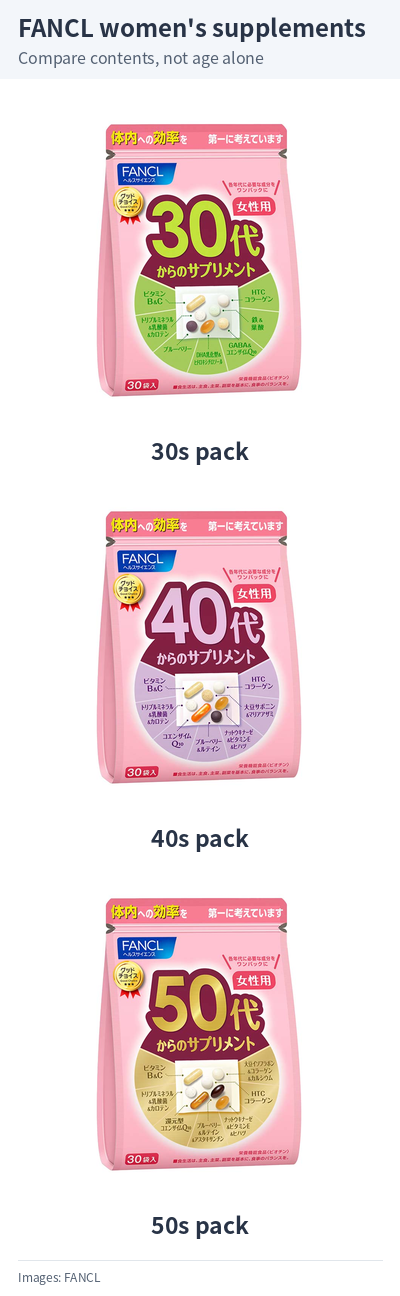
| Women's pack | Distinctive components in the combination | First thing to check |
|---|---|---|
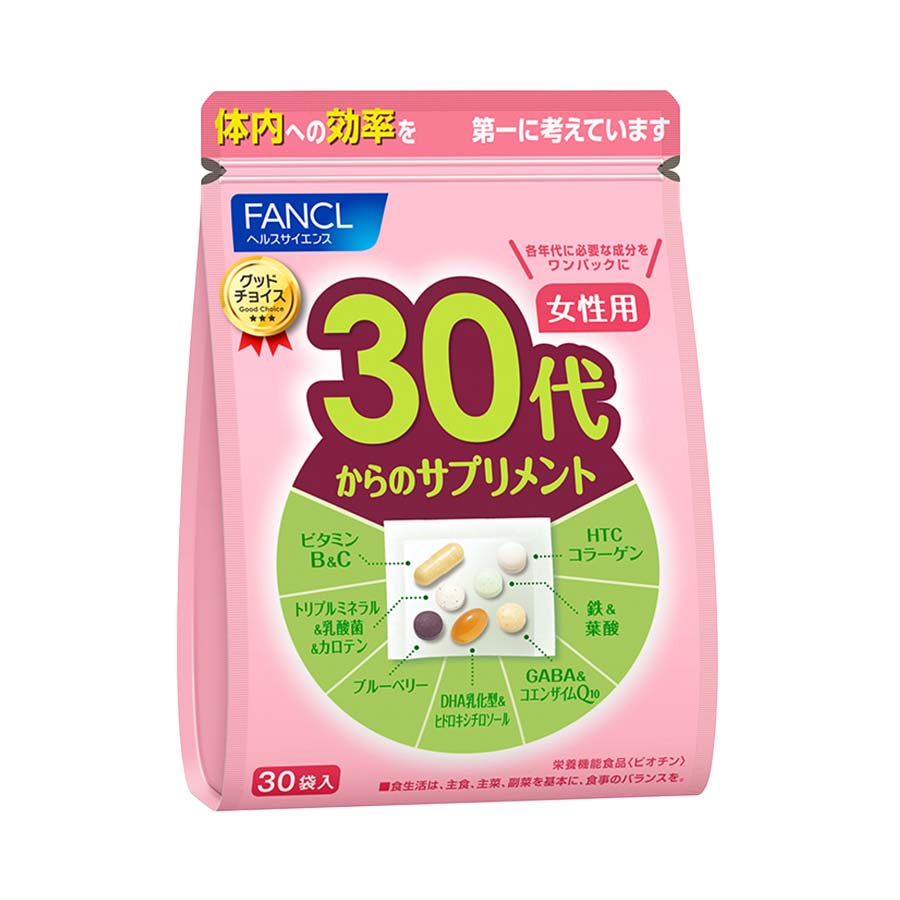
| 30s, 30代からのサプリメント 女性用 | Iron/folate, DHA, blueberry, GABA/CoQ10 and collagen, alongside vitamins/minerals | Existing iron, folate, fish-oil or multivitamin supplements |
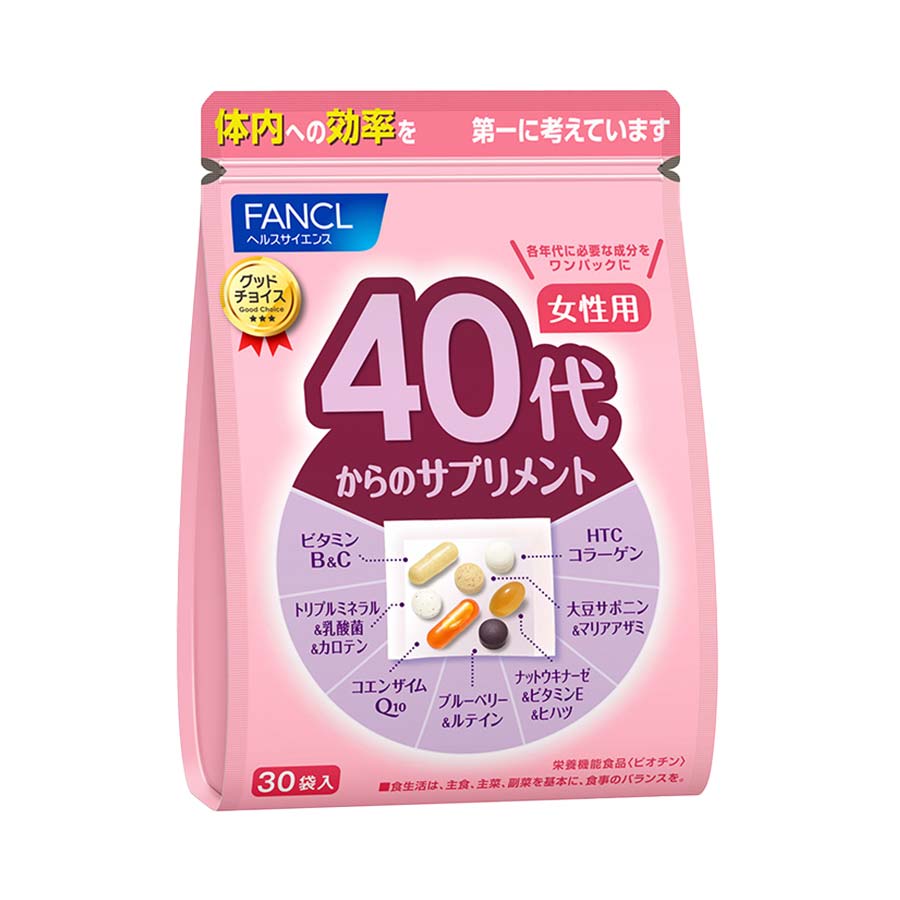
| 40s, 40代からのサプリメント 女性用 | CoQ10, blueberry/lutein, nattokinase/vitamin E/long pepper, soy saponins/milk thistle and collagen | Medicines, overlapping supplements, and the pregnancy/breastfeeding/child exclusion |
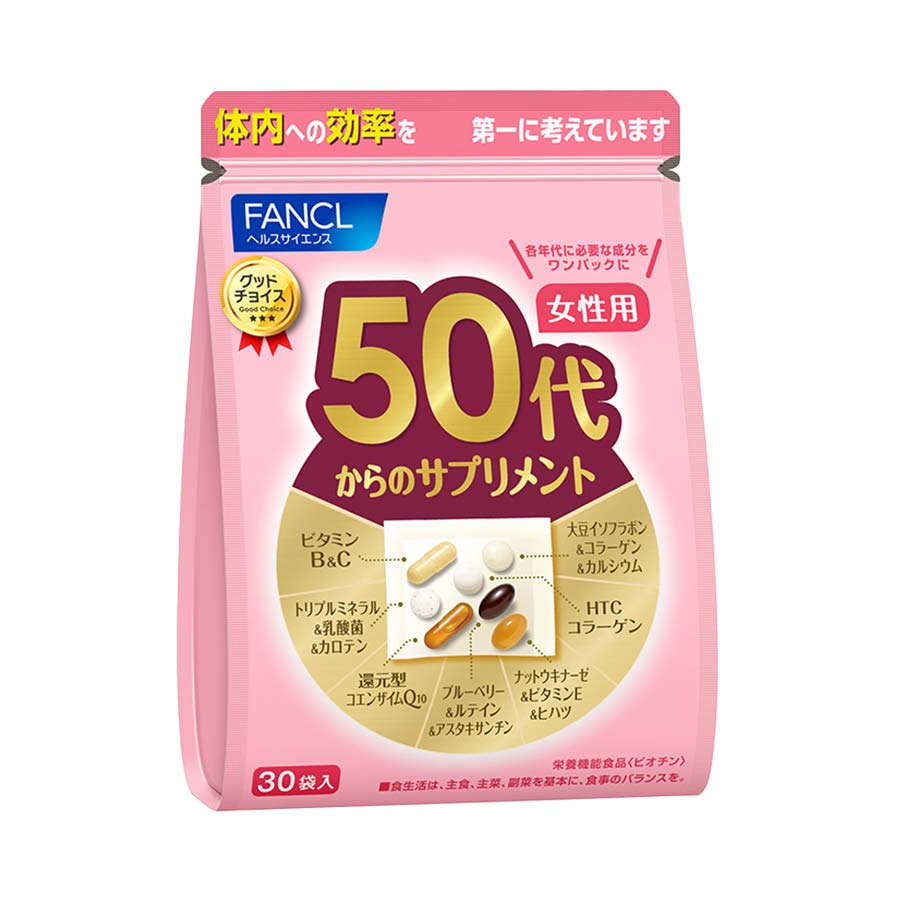
| 50s, 50代からのサプリメント 女性用 | Reduced CoQ10, blueberry/lutein/astaxanthin, nattokinase/vitamin E/long pepper, soy isoflavones/collagen/calcium | Other isoflavone products and the pregnancy/breastfeeding/child exclusion |
All three also include vitamin B/C and mineral/lactic-acid-bacteria/carotene combinations. Ingredient names explain what is bundled; they do not establish a treatment effect for the complete pack.
30s: check iron and folate before adding more
One sachet lists iron 5 mg, folate 167 micrograms, vitamin B6 3.9 mg and vitamin E 3.2 mg. It also provides DHA 92 mg and EPA 8 mg. The point is not that this automatically covers your needs; it is that a separate iron, folate or fish-oil product may overlap.
The declared allergen is gelatin. The ingredient list also includes fish oil and animal-derived ingredients, so the pack should not be assumed to be vegetarian. A women’s product containing folate is not automatically a prenatal supplement.
40s: the blend changes, rather than simply increasing everything
Per sachet, the 40s product lists vitamin E 75 mg, vitamin B6 13.3 mg, folate 67 micrograms and CoQ10 30 mg. Its vitamin and botanical combination differs from the 30s pack. Do not choose it simply because its vitamin E number is larger.
The declared allergens are soy and gelatin. FANCL expressly says pregnant or breastfeeding people and children should not take this product.
50s: the isoflavone warning matters
Per sachet, the 50s product lists calcium 160 mg, vitamin E 75 mg, reduced CoQ10 15 mg, lutein 5 mg and soy isoflavones 6.3 mg expressed as aglycones.
The declared allergens are milk, soy and gelatin. FANCL says not to use it during pregnancy or breastfeeding or in children, and to avoid combining it with other health foods containing isoflavones. The package also warns that menstruation may occasionally be delayed depending on the individual. Do not treat an isoflavone-containing pack as a self-prescribed treatment for menopausal symptoms.
One sachet is not the same as one tablet
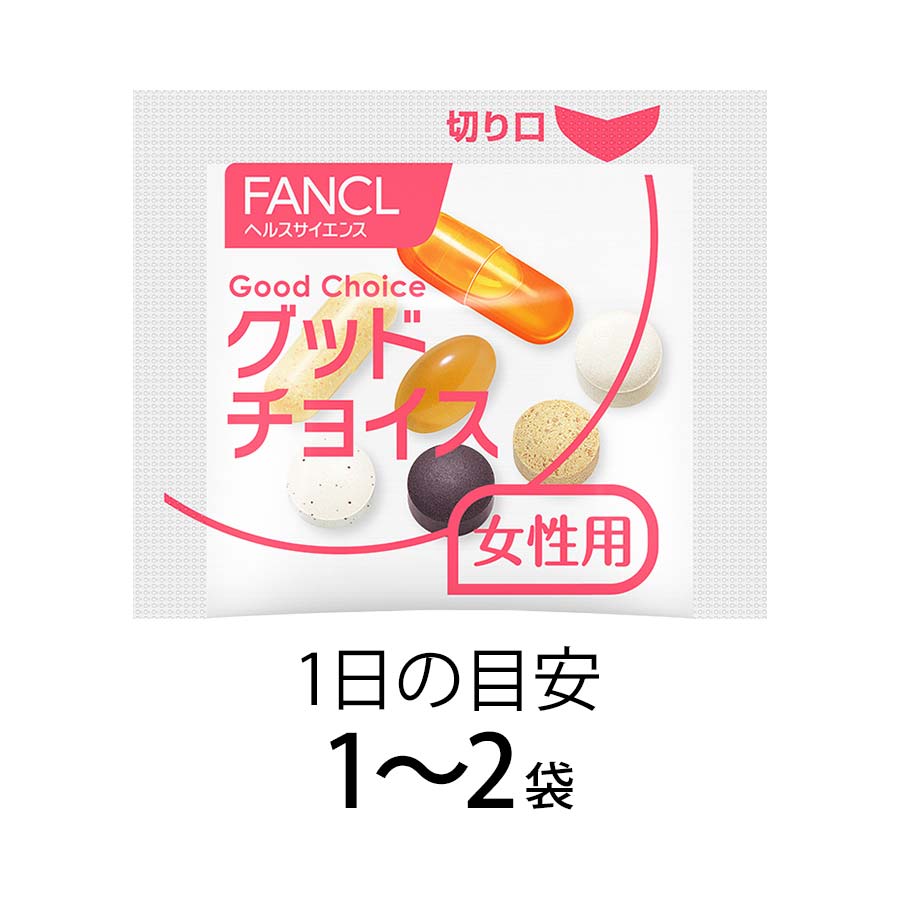
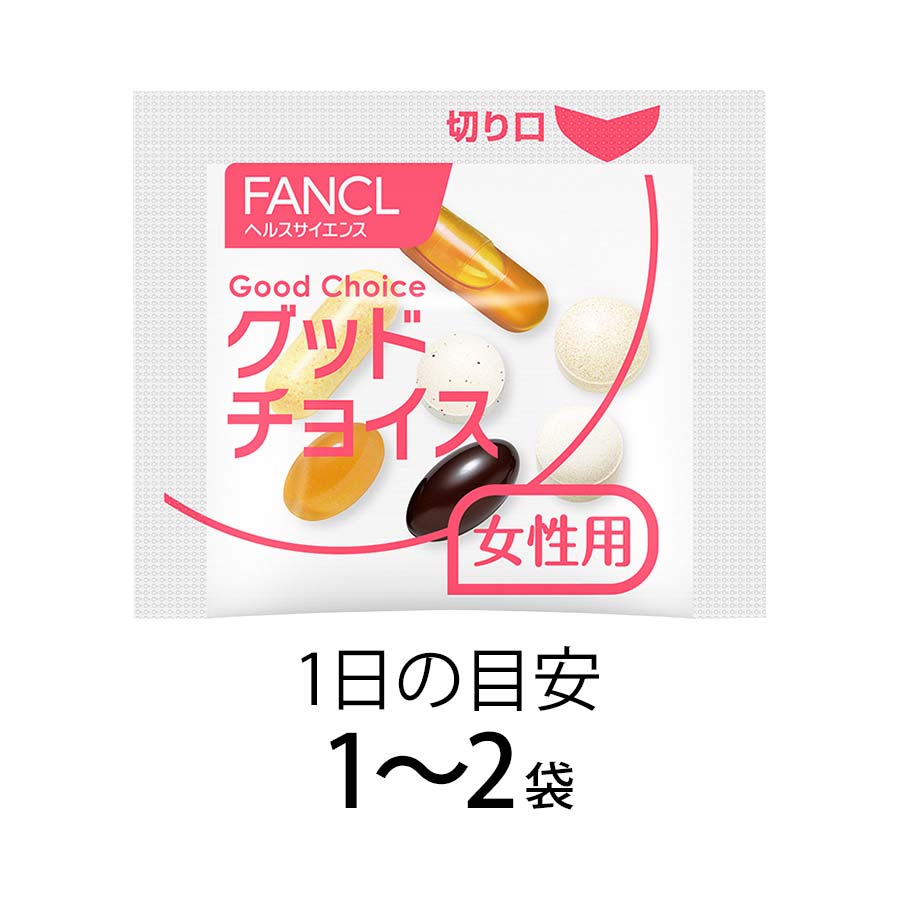
Each sachet contains seven tablets/capsules, not one pill. The daily one-to-two-sachet target therefore means seven to fourteen tablets/capsules in total.
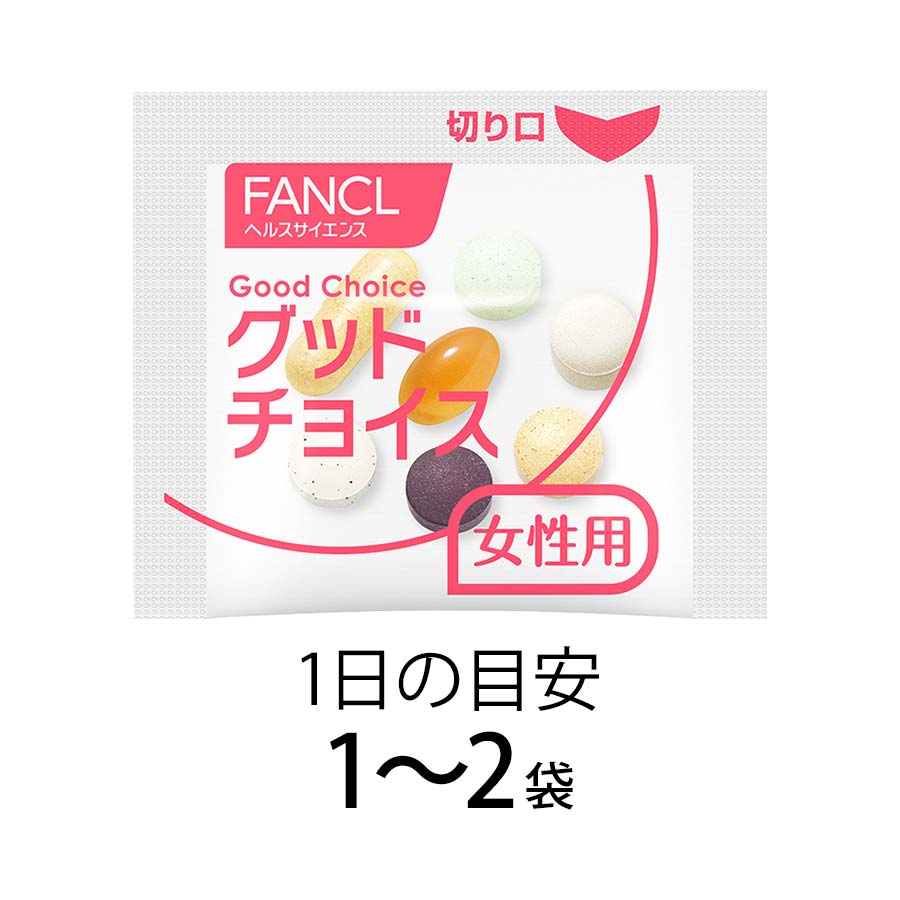
The convenience is the preassembled combination. You do not need to choose several separate bottles just to reproduce what the pack already contains. That can be useful for an established routine while travelling, but it also means you cannot independently change each ingredient's amount without changing the combination.
The ingredient amounts above are per sachet. Taking two sachets doubles those listed amounts. The one-to-two-sachet label is not a reason to automatically take the maximum or to combine two age ranges.
For a 30-sachet package:
- One sachet daily lasts 30 days.
- Two sachets daily lasts 15 days.
- A three-package set contains 90 sachets, giving 45–90 days at the labelled range.
These are package calculations, not a personalised recommendation to start or increase supplementation.
A practical check before buying
- Photograph the labels of supplements you already take, including multivitamins and individual iron, folate, vitamin E or isoflavone products.
- Compare their daily amounts with the sachet, keeping “per sachet” and “per day” separate.
- If you take medicine, have a medical condition, are pregnant, breastfeeding or buying for a child, discuss the actual product with a pharmacist or doctor before purchase. The explicit 40s/50s exclusions still apply.
- Follow the labelled one-to-two-sachet daily amount and take with water or a similar drink. The package does not prescribe a particular meal time. Open each individual sachet only when ready to take it and consume it immediately after opening.
FANCL notes that vitamin B2 can temporarily turn urine yellow. Do not use that explanation to dismiss other new symptoms; stop taking a supplement that makes you feel unwell and seek advice.
Handling and safety details worth keeping
Taking more will not cure disease or improve health further; follow the labelled amount and maintain balanced meals.
Check the ingredients before use. The labels say people with food allergies should not consume the products. If a product does not suit your constitution or condition, stop taking it. If you take medicine or are receiving medical care, consult your doctor before use. The 40s/50s pregnancy, breastfeeding and child exclusions are additional restrictions, not a reason to assume the 30s pack is suitable in those situations.
Handle the tablets/capsules hygienically with dry hands; the 30s and 40s labels specifically mention that wet tablets may stick to hands or clothing. Close the outer bag's zipper securely and avoid direct sunlight, high temperatures and high humidity. Keep it out of infants' reach and do not swallow the desiccant. The best-before date is printed on the lower part of the bag. Keep that outer package when packing individual sachets for travel.
The manufacturer notes that ingredient-related spots or colour variation can occur without affecting quality. The 40s/50s products can also rarely brown because they absorb moisture. These notes do not override the instruction to stop if the product does not agree with you.
Is a one-pack supplement the right format?
If you already use several products, reducing overlap matters more than adding another convenient sachet. If you are starting from scratch, decide what you actually need before buying a broad combination. For comparison with a different supplement format, see the Nature Made multivitamin guide; it is an alternative to assess, not a suggestion to combine both.
The best takeaway at the shelf is simple: read the contents, check overlap and restrictions, then calculate how long the sachets will last. The age label is only a starting point.
Sources
Checked October 15, 2026; Japanese domestic products.