A morning coach, an afternoon ferry and a ride back in the evening can look like three separate occasions for a motion-sickness tablet. For トリブラプレミアム錠, however, the Japanese directions are one tablet, once daily. A new leg of the journey does not allow another dose.

I’m Irene, a Taiwanese pharmacist working in a Japanese drugstore. This guide starts with the return-trip question and explains how the Japanese prevention-only indication and once-daily directions fit into a travel plan.
“Toribura Premium tablets” is a reading aid for the Japanese name in this guide, not a verified official English product name. Match the exact Japanese name and barcode when identifying the product.
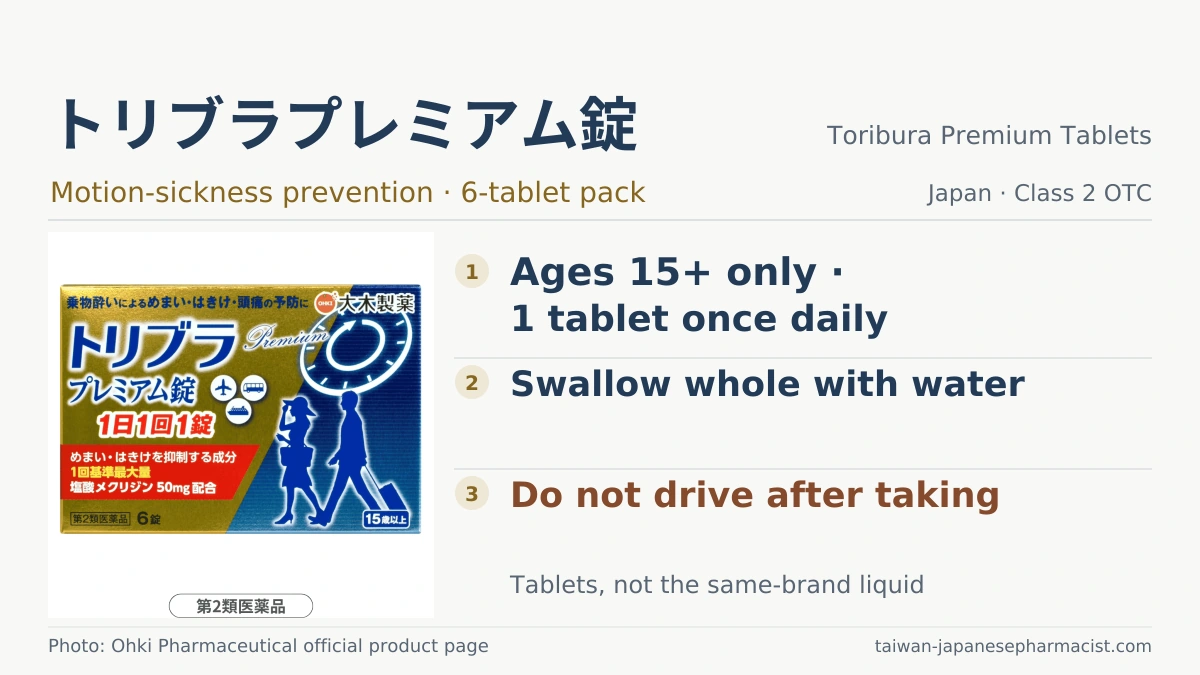
If you have taken one tablet that day, do not take a second for the return journey. This prevention medicine is for ages 15 and over. Its caffeine does not permit driving after taking it. If symptoms have started, you vomit after a dose or you want to change medicines, do not add a dose yourself.
Three limits to read together
This is a Japanese Class 2 OTC medicine indicated for the prevention of dizziness, nausea and headache caused by motion sickness. Its Japanese directions specify preventive use for long journeys by vehicle or boat. They do not state an indication for relieving motion sickness after it has started.
Ages 15 and over: one tablet, once daily
- Age: do not use under age 15. Splitting or crushing a tablet does not create a child’s dose.
- Frequency: once a day, not once for every journey. There is no instruction for an extra return-trip tablet.
- How to take it: swallow the tablet whole with water or warm water. Do not chew it or let it dissolve in your mouth.
Check the driving restrictions, medicines to avoid and consultation warnings below before use. Being 15 or older does not by itself establish suitability.
How long before departure?
The Japanese tablet leaflet does not specify a number of minutes. Ohki Pharmaceutical’s separate Toribura Premium FAQ gives general advice to take it 30 minutes to one hour before boarding. This is supplementary manufacturer FAQ guidance, not a timing instruction quoted from the tablet leaflet, and it does not permit another dose before each leg of a trip.
For an early departure, an overnight itinerary or uncertainty about which journey to plan around, give a pharmacist the departure times and details of medicines already taken. Do not invent a night-before dose followed by a morning top-up. “Once daily” also does not establish an exact duration of protection for every traveller.
Put the dose already taken into your return-trip plan
Before asking whether to take something for the next bus or ferry, record the product, the amount and the actual time taken. The following is a label-reading aid for organising questions, not a diagnosis or an automatic recommendation to take this medicine.
1. Identify the exact tablet product
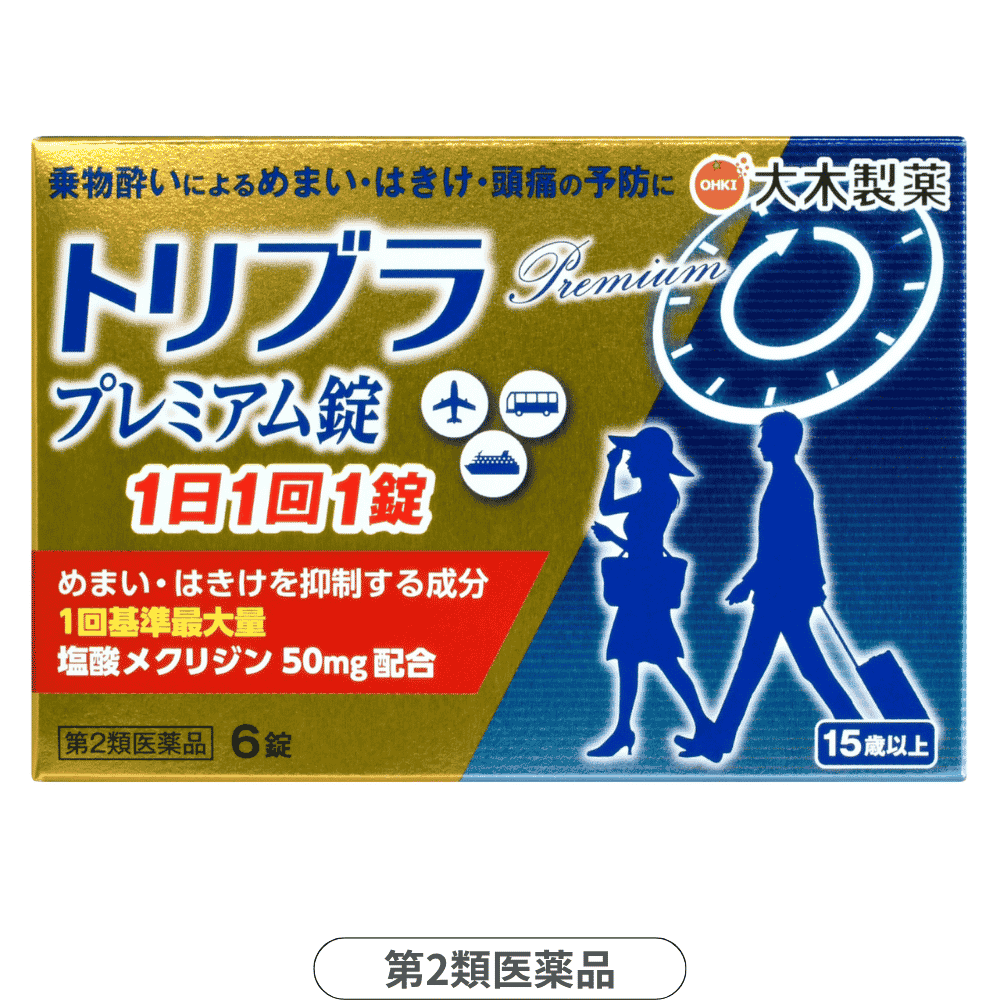
Match トリブラプレミアム錠, the six-tablet pack and JAN 4987030180321. The user must be 15 or older. Address driving plans, other medicines and consultation warnings first.
2. Record the outward-journey dose
If its suitability has been checked, follow the labelled dose: one tablet, once daily, swallowed whole with water or warm water. Note the product, date and time rather than just “taken this morning”.
3. Same-day return: no second tablet
Changing vehicles, boarding another boat or feeling less protected does not permit another tablet. If you feel unwell, do not add a different motion-sickness medicine or the Premium liquid.
4. Overnight plans, switching or vomiting: ask first
The label gives no minimum interval across midnight, switching interval or replacement-dose rule after vomiting. A new calendar date is not permission for an immediate dose or switch. Persistent vomiting, inability to keep fluids down or emergency warning signs need medical attention.
Four details to show the pharmacist
- The full medicine name or a photograph of the packaging.
- The date, time and amount taken, including medicines used the previous day.
- The outward and return itinerary, including who will drive.
- Current symptoms, any vomiting and all other medicines used.
These details support an individual assessment. Do not stop a prescribed medicine yourself in order to use this product.
What if symptoms have started before any dose?
The approved indication lists prevention only, not relief after motion sickness begins. Do not transfer another product’s “take when symptoms start” directions to these tablets. Ask a pharmacist about the appropriate next step. Headache or vomiting without a clear link to travel should not automatically be treated as motion sickness.
Check the final character: tablets or liquid?
- Exact Japanese name
- トリブラプレミアム錠
- Pack covered here
- 6 tablets, to be swallowed
- JAN barcode
- 4987030180321
- Japanese classification
- Class 2 OTC medicine for motion-sickness prevention
- Manufacturing and marketing authorisation holder / seller
- 日野薬品工業株式会社 (Hino Yakuhin Kogyo) / 大木製薬株式会社 (Ohki Pharmaceutical)
The range also includes トリブラプレミアム液, a liquid product. The ingredient combinations differ. The liquid is not simply this tablet formulation in a bottle, and it is not a separate return-trip top-up option.
Active ingredients per tablet
- Meclizine hydrochloride: 50 mg.
- Scopolamine hydrobromide hydrate: 0.25 mg.
- Anhydrous caffeine: 20 mg.
- Pyridoxine hydrochloride (vitamin B6): 10 mg.
These quantities are for one tablet. The listed inactive ingredients are lactose, potato starch, hydroxypropylcellulose and magnesium stearate. The liquid formulation includes diprophylline and differs from this tablet ingredient list. This article is not a dosing guide for the liquid.
Caffeine does not make driving permissible
The label says do not drive vehicles or operate machinery after taking this medicine. Drowsiness, blurred vision and unusual sensitivity to light may occur. Caffeine does not cancel that warning. Coffee, feeling alert or waiting a self-selected number of hours cannot establish permission to drive. Resolve the driving plan, including the return journey, before taking it.
Medicines to avoid and when to consult first
Do not use these medicines while taking this product
- Other motion-sickness medicines.
- Cold medicines.
- Fever-reducing and pain-relieving medicines.
- Sedatives.
- Cough suppressants and expectorants.
- Medicines for gastrointestinal pain and spasms.
- Oral medicines containing antihistamines, including some rhinitis and allergy medicines.
These are the categories listed on the Japanese label. The restriction is not limited to products with identical ingredients. If you have already used one, or cannot identify the category, show a pharmacist the actual medicine, dose and time. Do not choose your own safe interval or assume a different brand can be combined.
Ask before taking it if any of these apply
The leaflet requires consultation with a doctor, pharmacist or registered OTC medicine seller in Japan for:
- Anyone receiving medical treatment.
- Anyone pregnant or possibly pregnant.
- Older adults.
- Anyone who has had an allergic reaction to a medicine or another substance.
- Anyone with difficulty urinating.
- Anyone diagnosed with glaucoma or heart disease.
Taking a smaller dose yourself does not replace this check. Use under age 15 is prohibited, even if a child is nearly 15 or the tablet is divided.
What about breastfeeding?
Tell a doctor or pharmacist that you are breastfeeding before choosing a medicine. The checked Japanese tablet label does not give a breastfeeding-specific prohibition or instruction to interrupt feeding. That absence does not establish suitability for every breastfeeding person. This guide does not provide a blanket approval, a requirement to stop breastfeeding or a waiting time before resuming.
When to stop and when health comes before the itinerary
The two stopping rules on this product’s label
- Stop immediately and consult: rash, redness, itching, headache, difficulty urinating, facial flushing or unusual sensitivity to light after taking it. These may be adverse effects.
- Stop and consult if persistent or worsening: dry mouth, constipation, drowsiness or blurred vision.
Take the leaflet with you to a doctor, pharmacist or registered OTC medicine seller. The driving prohibition applies even if symptoms have not persisted or worsened.
If you vomit after taking it, do not automatically replace the dose. The label gives no replacement-dose instructions, and the time of vomiting alone cannot establish how much was absorbed. Record when you took it and when you vomited, then ask a doctor or pharmacist.
The following are general vomiting warning signs, not a list of this product’s specific adverse effects. Seek prompt medical help if vomiting continues and you cannot keep fluids down. Vomiting blood or material resembling coffee grounds, sudden severe headache or abdominal pain, difficulty breathing or confusion warrant emergency medical help.
Other preparations for the journey
General non-drug measures include looking at a fixed distant point, avoiding reading or screens while moving, getting fresh air and taking breaks. Avoid heavy meals and alcohol before or during travel. These NHS travel suggestions do not change the Japanese medicine directions and are not a recommendation to travel fasting.
Store the tablets in a cool, dry place away from direct sunlight and out of children’s reach. Do not transfer them to another container or use them after the expiry date. Keep the original packaging and leaflet so the medicine remains identifiable during the trip.
A useful question at a Japanese pharmacy
トリブラプレミアム錠について相談したいです。使った薬の名前と日時、年齢、運転の予定、往復の行程をお伝えするので、使用できるかと服用のタイミングを確認していただけますか。
Meaning: “I’d like advice about Toribura Premium tablets. I’ll give you the names and dates and times of medicines used, my age, driving plans and return itinerary. Could you check whether I can use it and when to take it?” Also explain any ongoing treatment, allergies, pregnancy or breastfeeding.
Record the dose already taken. No second tablet that day, no extra motion-sickness medicine and no assumption that caffeine permits driving. Bring the record to a professional if you need help with an overnight itinerary, a switch or continuing symptoms.
Sources and image credit
Checked on 11 November 2026. This guide explains current Japanese-market labelling. It is not a personal product trial or a substitute for individual medical advice. Read the complete information supplied with your pack. The checking date does not imply a 2026 launch or reformulation.
Official primary sources
- Ohki Pharmaceutical: トリブラプレミアム錠 product page: identity, six-tablet pack, JAN, directions, ingredients and precautions. The complete product photograph comes from this page and accompanies the identification discussion.
- PMDA product record and Japanese leaflet PDF: cross-check of the prevention indication, dose, complete use precautions, inactive ingredients and storage.
- Ohki Pharmaceutical FAQ: Toribura Premium tablets and liquid: question 3 gives general advice of 30 minutes to one hour before boarding. This is identified separately from the tablet leaflet.
- Ohki Pharmaceutical: トリブラプレミアム液 product page: used only to establish a different liquid formulation. Its directions have not been transferred to the tablets.
General travel and medical-help references
- NHS: Motion sickness: general non-drug travel measures.
- NHS: Diarrhoea and vomiting: general vomiting warning signs. UK product directions and telephone numbers have not been transferred to this Japan travel guide.
The media lead behind the topic
Japaholic’s Japanese motion-sickness medicine roundup includes this product. Originally published in October 2022, the page displays an update date of 27 July 2026. It helped identify a product travellers may encounter, not establish sales, search demand or efficacy. No PR or sponsorship marking was found in the visible content checked; this does not prove editorial independence or the absence of commercial involvement.