Product information checked: 12 October 2026 | Japanese-market products
Your shopping list says “Rohto Alguard”, but the shelf has EXa, Z, red lettering and green lettering. Which box should you choose? Separate two decisions: EXa versus Z changes the formula; Clear Block versus Clear Mild changes the cooling sensation. Within each pair, choosing Mild does not reduce the active ingredients or their concentrations.

I’m Irene, a Taiwan-born, Japan-licensed pharmacist working in a Japanese drugstore. Let’s match those two parts of the name, after checking whether these four allergy drops fit your situation.
- Check suitability before choosing a box
- Your short list: formula first, then feel
- Match the full Japanese name
- What actually changes between EXa and Z?
- How to use the version you choose
- Already using allergy tablets, a nasal spray or other eye drops?
- What about Clinical Shot or epinastine?
- Questions before buying
- Official sources and image credits
Check suitability before choosing a box
These four products relieve allergic eye symptoms caused by pollen, house dust and similar allergens: itching, redness, watering, a gritty feeling and blurred vision associated with excess discharge. Screen-related tiredness alone is not a reason to choose them.
- Do not use any of the four in children under 7, during pregnancy or possible pregnancy, or while breastfeeding. These are prohibitions in the Japanese leaflets, not simply advice to check first.
- See a doctor before use if symptoms affect only one eye, you have eye symptoms without nasal symptoms, or your vision is affected. The leaflets warn that these patterns cannot automatically be attributed to allergy.
- Seek advice before use if you have severe eye pain or glaucoma, are receiving medical or allergy treatment such as desensitisation, or have had allergic reactions to medicines.
- Remove all contact lenses before using these drops, including soft, hard and coloured lenses.
A red eye with changed vision or pain when looking at light needs immediate medical care. Severe eye pain, or a red eye in a contact-lens wearer, needs urgent assessment rather than a trial of allergy drops.
Rohto positions all four for persistent allergic symptoms with inflammation, particularly when conventional OTC allergy eye drops have not provided enough relief after about two days. If another product has not helped, show it to a pharmacist before switching. Repeatedly moving to a different box can delay finding the cause.
Your short list: formula first, then feel
Once this type of medicine has been confirmed as suitable:
- Choosing EXa and wanting cooling? Look for Clear Block EXa.
- Choosing EXa without cooling? Look for Clear Mild EXa.
- Considering the Z formula? It increases the concentration of two active ingredients. Discuss whether that difference is useful for you, then choose Clear Block or Clear Mild for the feel you prefer.
| Formula | Cooling version | Non-cooling version |
|---|---|---|
| EXa | Clear Block EXa: cooling level 4 | Clear Mild EXa: cooling level 0 |
| Z | Clear Block Z: cooling level 4 | Clear Mild Z: cooling level 0 |
Rohto’s cooling scale describes sensation, not treatment effectiveness. Mild is not a children’s version and does not remove the pregnancy, breastfeeding or contact-lens restrictions.
Match the full Japanese name
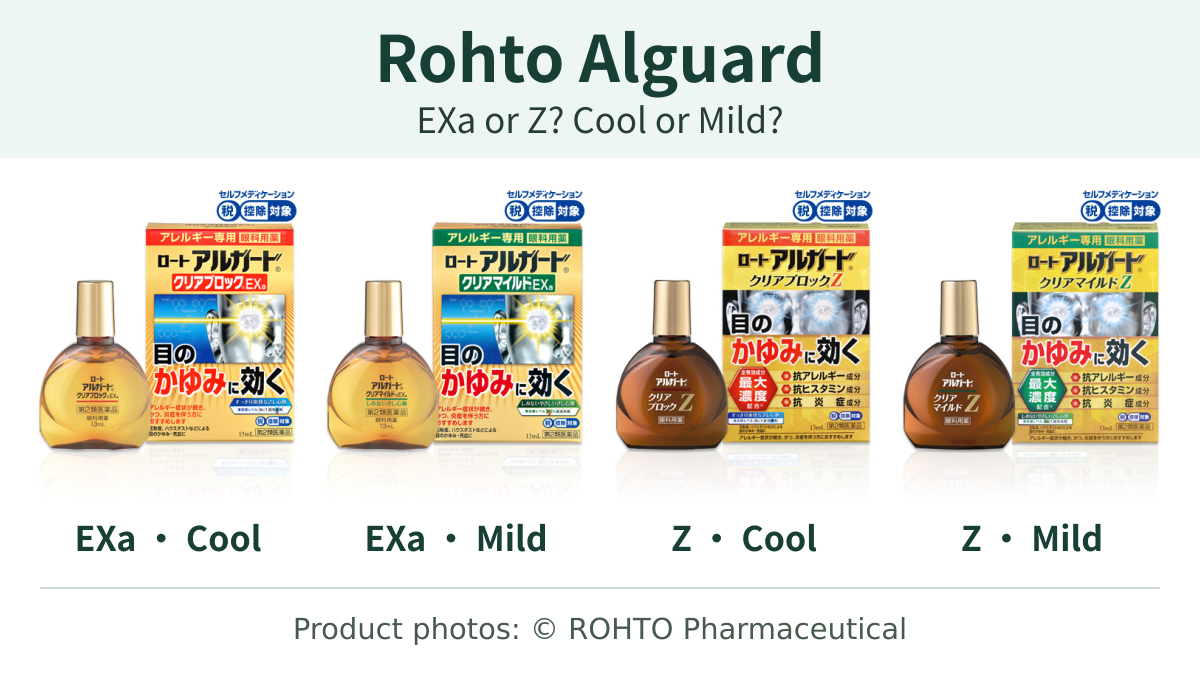
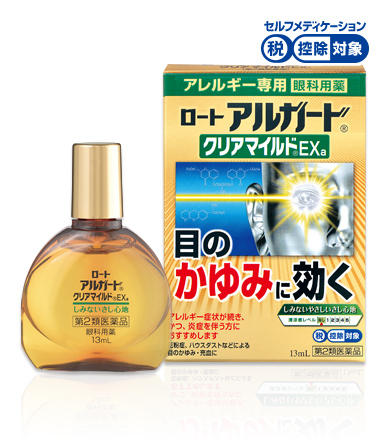
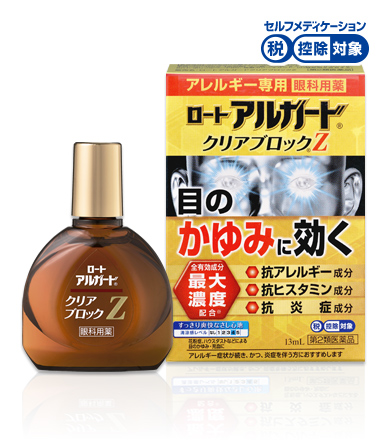
All four contain 13 mL and are Japanese Class 2 OTC medicines. Red or green lettering helps you find the right area of the shelf, but check both EXa/Z and クリアブロック/クリアマイルド before buying.
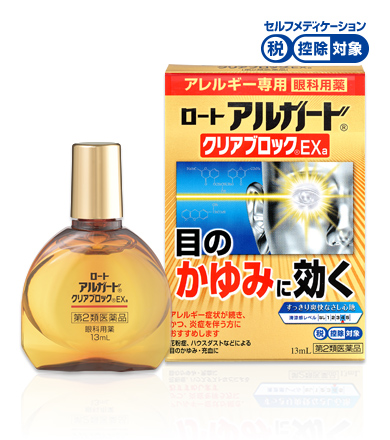
Clear Block EXa: the cooling EXa
Clear Mild EXa: the non-cooling EXa
Clear Block Z: the cooling Z
Clear Mild Z: the non-cooling Z
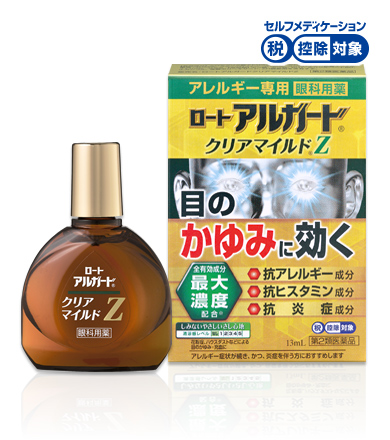
Product photographs: Rohto Pharmaceutical’s official product pages. Images support comparison and shelf identification and are not to scale. Check the full name on your pack because designs can change.
What actually changes between EXa and Z?
Both formulas have four active ingredients. Z has more chlorpheniramine maleate, an antihistamine, and sodium chondroitin sulfate, a corneal-protective ingredient. Sodium cromoglicate, which suppresses allergic reactions, and the anti-inflammatory pranoprofen remain at the same concentrations.
| Active ingredient | Both EXa versions | Both Z versions |
|---|---|---|
| Sodium cromoglicate | 1% | 1% |
| Chlorpheniramine maleate | 0.015% | 0.03% |
| Pranoprofen | 0.05% | 0.05% |
| Sodium chondroitin sulfate | 0.2% | 0.5% |
Z contains twice the antihistamine concentration of EXa. That does not establish twice the itch relief. Choosing the non-cooling version within either pair preserves that pair’s active ingredients and concentrations.
All four contain the anti-inflammatory ingredient pranoprofen. An eye-drop format still requires the age, pregnancy, breastfeeding and medical-condition checks above. Cooling and “maximum concentration” wording cannot settle those questions.
How to use the version you choose
For ages 7 and over: one or two drops per use, four times a day. Children need adult supervision; meeting the age threshold does not establish suitability on its own. Do not increase the frequency or alternate EXa and Z to add extra doses.
- Wash your hands and remove contact lenses before instilling the labelled number of drops.
- Keep the tip away from the eye, eyelid and lashes. Do not use cloudy liquid or share the bottle.
- Rohto’s product-specific FAQs for all four recommend waiting about 5–10 minutes after instilling the drops before reinserting lenses. If discomfort continues, ask an eye-care professional whether you should keep wearing lenses.
- Close the cap securely and store out of sunlight in a cool place. Avoid hot cars or areas near heaters at 40°C or above.
The two-day and two-week rules
- No improvement after two days: stop and consult a doctor, pharmacist or registered medicine seller, taking the leaflet with you.
- Improving, but wanting to continue beyond two weeks: seek advice before continuing. This is not permission to keep using the drops for two weeks regardless of symptoms.
- Worsening symptoms, persistent blurred vision, or reactions such as rash, eye or eyelid swelling, pain or irritation: stop and seek advice promptly. Do not wait for the two-day mark.
- Breathing difficulty, hives or a hoarse voice after use may signal a serious allergic reaction. Get medical help immediately.
The storage period after opening is separate from treatment duration. The EXa leaflets say to use within two months of opening, with proper storage. The Z leaflets say to use promptly; their current FAQs give roughly two to three months as a guide, depending on use and storage. Never exceed the expiry date. None of these storage windows permits continuous self-treatment for months.
Already using allergy tablets, a nasal spray or other eye drops?
Show a pharmacist the exact names or photographs of everything you use, especially products from different brands. A time gap between drops does not make every combination suitable.
All four leaflets specifically say not to drive or operate machinery when using the drops together with nasal medicines, because drowsiness may occur. If your trip includes driving, discuss your nasal spray and oral medicines before buying.
Rohto’s combination FAQ also warns that combining Alguard eye drops with oral Alguard allergy medicine can increase drowsiness. Combinations with another brand’s eye drops, oral medicines or nasal sprays require advice from a doctor or pharmacist. These four eye drops each use a four-times-daily schedule; do not borrow a more frequent schedule from another product.
What about Clinical Shot or epinastine?
Recognise them as separate products. Clinical Shot and Clinical Shot m use another formula containing tranilast; the EXa/Z directions should not be copied across to them.
ロートアルガード エピナスチン点眼薬 contains epinastine hydrochloride and is currently listed by Rohto as a pharmacist-guided medicine in Japan. Ask the pharmacist about its selection and use. These are not simply extra cooling options for EXa or Z, so this guide does not rank them from weak to strong.
Questions before buying
Is Mild safer because it does not feel cool?
The feeling alone cannot establish that. All four share the same minimum age, pregnancy and breastfeeding prohibitions, lens restriction and stop-use rules.
Can I add EXa if Z is not helping?
Do not layer them yourself: the formulas overlap. No improvement after two days calls for stopping and seeking advice, with earlier attention if symptoms worsen.
Can I use these for routine eye care?
They are medicines for allergic eye symptoms, not a routine necessity. If your actual concern is tired eyes or contact-lens discomfort, the Sante FX comparison or Rohto C3 Premium guide can help you distinguish those uses and their restrictions.
What should I ask before buying for someone else?
Check their age, pregnancy or breastfeeding status, symptoms, contact-lens use and current eye drops, nasal sprays and oral medicines. If they want a specific version, ask for a complete box photograph. “The green Alguard” leaves more than one possibility.
Before you pay, check both parts once more: EXa or Z, then Clear Block or Clear Mild. Confirm suitability first, then choose the feeling you prefer.
Official sources and image credits
The product sources below describe Japanese-market products; the NHS links cover general eye-symptom warning signs. This guide supports product selection and identification; it does not replace an eye examination. Follow the leaflet supplied with your pack.
- Clear Block EXa: product details and Japanese leaflet
- Clear Mild EXa: product details and Japanese leaflet
- Clear Block Z: product details and Japanese leaflet
- Clear Mild Z: product details and Japanese leaflet
- Contact-lens FAQ: Clear Block EXa, Clear Mild EXa, Clear Block Z, Clear Mild Z
- After-opening FAQ: Clear Block Z and Clear Mild Z
- Rohto’s Alguard combination FAQ
- Clinical Shot, Clinical Shot m and epinastine eye drops
- NHS: red eye warning signs and eye pain