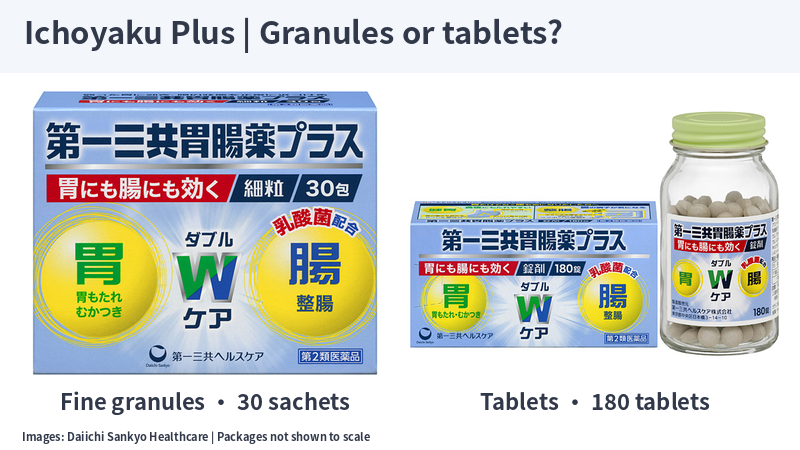
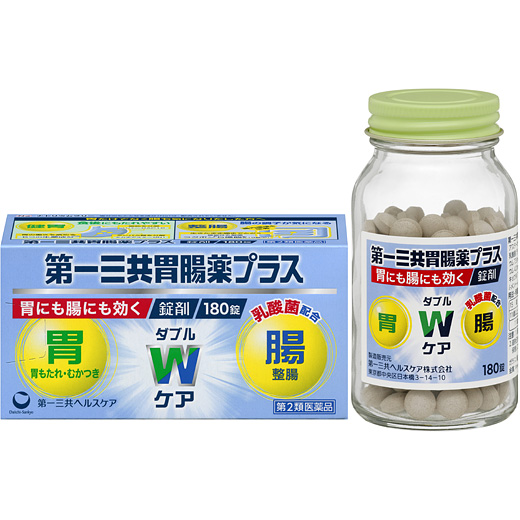
The blue-silver Daiichi Sankyo Ichoyaku Plus boxes look closely related, but choosing between the fine granules and tablets takes more than deciding how you prefer to swallow medicine. Their minimum ages and two antacid amounts differ. Both also contain digestive enzymes and a spore-forming lactic acid bacteria preparation.

I'm Irene, a Taiwan-born pharmacist licensed in Japan and working in a Japanese drugstore. Let's check whether this stomach-and-bowel medicine fits the situation first, then compare the two Plus packages and their practical instructions.
Sources checked: 13 October 2026. This guide covers the Japanese-market Plus Fine Granules and Plus Tablets, both Class 2 OTC medicines. Follow the latest leaflet supplied with your own pack.
- Check symptoms and suitability before choosing a box
- Match Plus first, then the dosage form
- The ingredients are similar, but the amounts are not identical
- How to take them: after meals, three times daily
- What is inside, and how should the remainder be stored?
- When to stop
- Official sources and image credits
Check symptoms and suitability before choosing a box
Sudden or severe abdominal pain, vomiting blood, black sticky stools or chest pain need urgent medical assessment. Do not use a shopping comparison to delay care. Worsening, persistent or repeatedly returning stomach symptoms also deserve assessment rather than repeated self-treatment.
For both Plus products, do not use if you are receiving dialysis, and do not take them continuously over a long period. Consult a doctor, pharmacist or registered medicine seller before use if you are receiving medical treatment, have previously had an allergic reaction to medicines or similar substances, or have kidney disease or thyroid dysfunction. Bring your other medicines and supplements for a compatibility check.
The shared labelled indications include stomach heaviness, indigestion, heartburn, excess stomach acid, bloating, nausea and regulation of bowel movements, including loose stools and constipation. This does not identify the cause of an unexplained stomach problem. The bacteria ingredient also does not turn this combination medicine into an everyday probiotic supplement.
Match Plus first, then the dosage form
| Package to match | Minimum age | Format and currently listed packs |
|---|---|---|
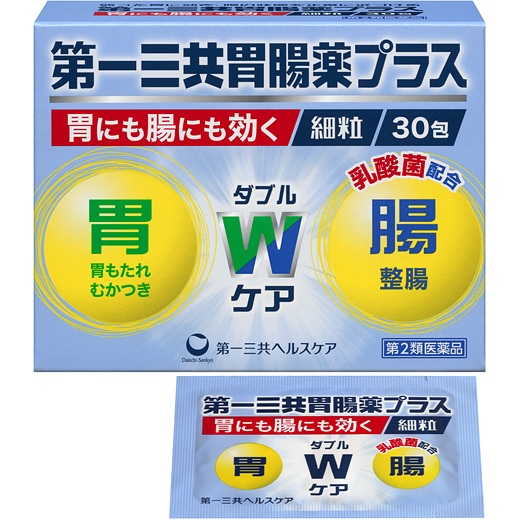
| Plus Fine Granules / 第一三共胃腸薬プラス細粒 | 3 years, with age-specific amounts | 1.3 g sachets; 12, 30 or 48 sachets |
| Plus Tablets / 第一三共胃腸薬プラス錠剤 | 11 years, with age-specific amounts | Bottle; 50, 180 or 270 tablets |
Look for プラス (Plus) and then 細粒 (fine granules) or 錠剤 (tablets). The same brand also has Fine Granules s, Tablets s and Green Tablets. This article's doses and ingredient comparison apply only to the two Plus products.
The ingredients are similar, but the amounts are not identical
The following amounts are for one labelled adult day, ages 15 and over: 3 sachets of granules or 9 tablets. They are not amounts in one dose.
| Antacid ingredient | Fine granules: 3 sachets per adult day | Tablets: 9 tablets per adult day |
|---|---|---|
| Magnesium aluminate silicate | 900 mg | 735 mg |
| Synthetic hydrotalcite | 600 mg | 600 mg |
| Precipitated calcium carbonate | 600 mg | 420 mg |
At the same adult daily amounts, both contain Taka-diastase N1 150 mg, lipase AP12 60 mg and spore-forming lactic acid bacteria preparation (Rakubon powder) 60 mg. They also share phellodendron bark powder 105 mg, cinnamon bark powder 225 mg, ginger powder 75 mg, clove powder 30 mg, fennel powder 60 mg, l-menthol 9 mg, aldioxa 60 mg and glycyrrhiza (licorice) powder 150 mg.
The granules contain more of two antacid ingredients at the labelled adult daily dose. That alone does not establish that they will work better for you. Age, symptoms, other medicines and a format you can use correctly remain the useful decision points. The excipients differ too: the granules list lactose; the tablets do not list lactose among their excipients. Check the complete ingredient lists if you have an ingredient allergy or intolerance.
How to take them: after meals, three times daily
These are amounts per dose, taken three times daily after meals, with water or warm water. Do not combine the two forms or add extra doses because symptoms persist.
| Age | Fine granules per dose | Tablets per dose |
|---|---|---|
| 15 and over | 1 sachet | 3 tablets |
| 11–14 | 2/3 sachet | 2 tablets |
| 8–10 | 1/2 sachet | Do not take |
| 5–7 | 1/3 sachet | Do not take |
| 3–4 | 1/4 sachet | Do not take |
| Under 3 | Do not take | Do not take |
Children must use the appropriate product under a parent's or guardian's guidance and supervision. A child who cannot take tablets does not automatically receive an adult sachet: use the granules' exact age-specific fraction. Ask a pharmacist if you cannot measure that fraction reliably. Do not apply the granules' age range to the tablet bottle.
What is inside, and how should the remainder be stored?
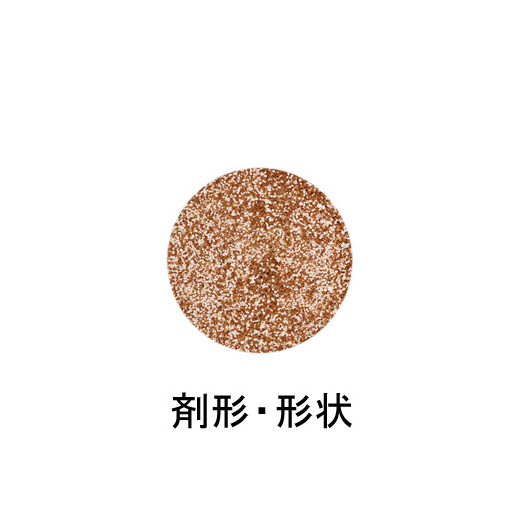
- Granules: fold back the opening of a divided sachet and use the remainder within two days.
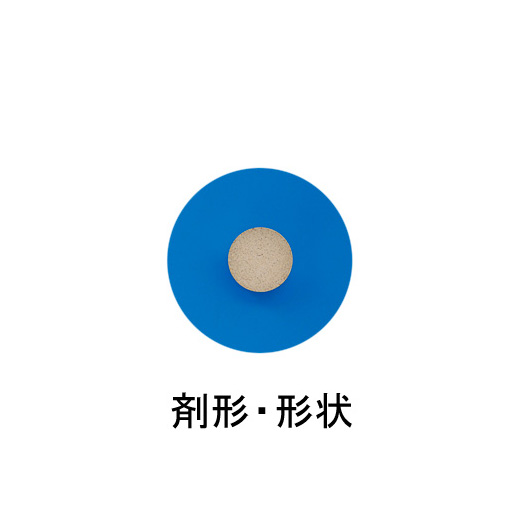
- Tablets: keep the bottle tightly closed, handle with dry hands and do not return wet tablets. Discard the protective packing material inside after opening.
- Write the tablet bottle's opening date on the box. Use it within 12 months of opening and before the printed expiry date, whichever comes first.
- Keep both products in their original containers, in a cool dry place away from direct sunlight and out of children's reach. Do not use either product after its printed expiry date.
When to stop
Stop immediately and consult a doctor, pharmacist or registered medicine seller with the leaflet if a rash, redness or itching develops. Stop and consult if constipation or diarrhoea persists or worsens. If the original symptoms have not improved after about two weeks, stop and seek advice. That is a label stop point, not a recommendation to wait two weeks with concerning symptoms or to keep taking the medicine indefinitely.
For a clear shopping request, match the full Plus name and dosage form. For your own symptoms, first check whether a combination stomach-and-bowel medicine is appropriate; then use the age table, the formula differences and storage instructions to choose a manageable pack.
Official sources and image credits
- Daiichi Sankyo Healthcare: Plus Fine Granules product information and current Japanese leaflet.
- Daiichi Sankyo Healthcare: Plus Tablets product information and current Japanese leaflet.
- Daiichi Sankyo Healthcare: current brand lineup.
- NHS: stomach pain warning symptoms, used only for general warning signs, not Japanese medicine directions.
- Package and dosage-form photographs: Daiichi Sankyo Healthcare, from the linked product pages.