
I’m Irene, a Taiwan-born, Japan-qualified pharmacist. When Hepalyse appears on a Japan shopping list, I suggest starting with the full product name: a small drink and a bottle of tablets can share the liver-shaped logo while having different formulas and schedules.
Start with the format you can use correctly
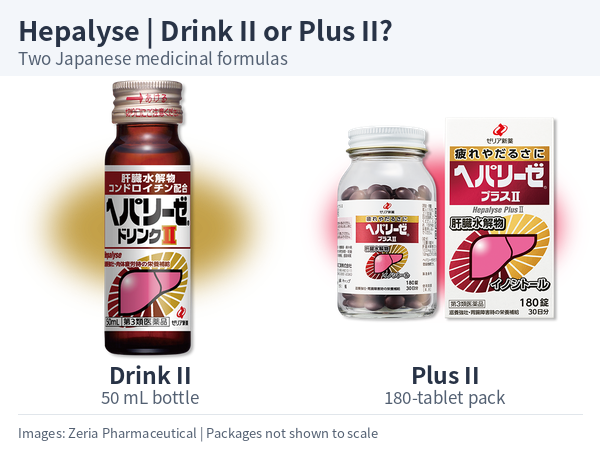
For adults aged 15 and over, Drink II is a once-daily, 50 mL medicinal drink; Plus II is a sugar-coated tablet medicine taken as three tablets twice daily. Both have approved nutritional-support uses. Neither is approved to prevent a hangover, make drinking safer or treat liver disease.
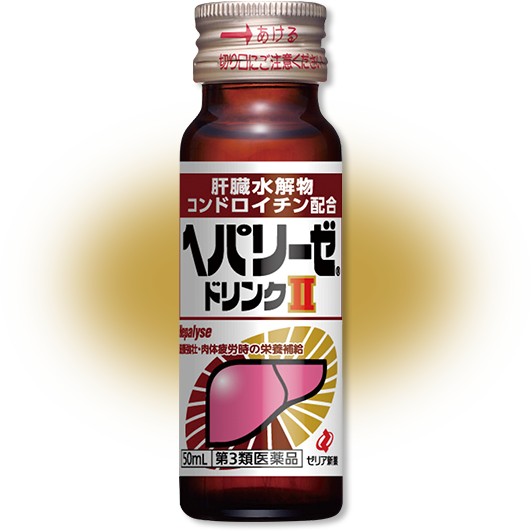
- Prefer a single liquid dose? Look for ヘパリーゼドリンクⅡ (Hepalyse Drink II).
- Prefer tablets and can remember two daily doses? Look for ヘパリーゼプラスⅡ (Hepalyse Plus II).
- Buying something to “protect the liver” before drinking? Pause here. That is not an approved use of either product.
This comparison covers these two Japanese Class 3 OTC medicines. Other Hepalyse names, including W foods and Amino designated quasi-drugs, need their own labels; the shop selling a bottle does not establish its category.
The differences that matter at the shelf
| Point | Hepalyse Drink II | Hepalyse Plus II tablets |
|---|---|---|
| Japanese name | ヘパリーゼドリンクⅡ | ヘパリーゼプラスⅡ |
| Japanese category | Class 3 OTC medicine | Class 3 OTC medicine |
| Format | 50 mL bottle; pineapple-flavoured | Reddish-brown sugar-coated tablets |
| Dose, age 15+ | 1 bottle per dose, once daily | 3 tablets per dose, twice daily |
| Total daily amount | 50 mL | 6 tablets |
| Under 15 | Do not use | Do not use |
| Main formula distinction | Liver hydrolysate, taurine, chondroitin, herbal extracts and B vitamins | Liver hydrolysate, inositol and vitamins B2/E |
| Caffeine | Caffeine-free | No caffeine listed in the active ingredients or additives |
Both labels cover nutritional support during physical fatigue, gastrointestinal or nutritional disorders, illness or recovery, fever-related wasting conditions, and pregnancy or breastfeeding, as well as tonic support and a weak constitution. These are nutritional indications, not permission to self-treat the underlying illness.
Drink II: liquid convenience, a multi-ingredient formula
One 50 mL bottle is both one dose and the entire daily dose. Its active ingredients are:
- Liver hydrolysate 200 mg; chondroitin sulfate sodium 120 mg; diisopropylamine dichloroacetate 20 mg
- Schisandra extract 54 mg, equivalent to 300 mg of the crude herb; lycium fruit fluid extract 0.2 mL, equivalent to 200 mg; astragalus fluid extract 0.1 mL, equivalent to 100 mg
- Taurine 1,000 mg; vitamin B2 phosphate ester 5 mg; vitamin B6 10 mg; nicotinamide 20 mg
Liver hydrolysate is processed animal liver, rather than a plant extract. The product is caffeine-free, but caffeine-free does not mean sugar-free or alcohol-free: the label lists a sugar ingredient and ethanol, with alcohol no more than 0.1 mL per bottle. If you must avoid alcohol entirely or need to manage sugar intake, ask a pharmacist to check the exact product with you.
Plus II: a different tablet formula
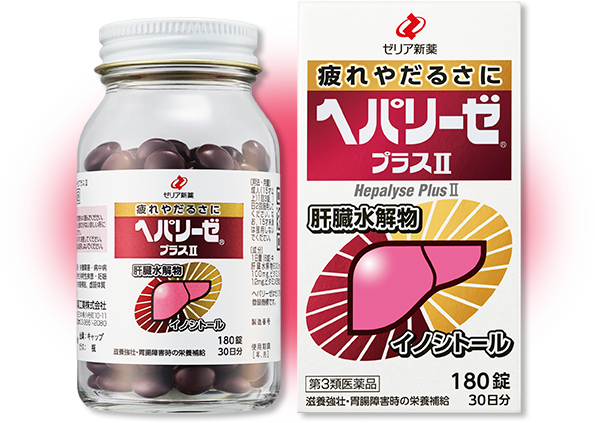
The adult daily amount is six tablets, split into two doses. Those six tablets contain liver hydrolysate 600 mg, inositol 100 mg, riboflavin (vitamin B2) 12 mg and vitamin E acetate 10 mg. These amounts are per day, not per three-tablet dose.
The tablets contain more liver hydrolysate per labelled day than Drink II, but that number alone cannot establish better fatigue relief. The formulas, other ingredients and schedules differ. The practical question is which suitable product you can take correctly, rather than which number is biggest.
The pictured bottle contains 180 tablets. The manufacturer also lists 6-tablet and 60-tablet packs; a different pack size does not change the tablet dose. The tablets have a sugar coating and list refined sugar among the additives.
How to take and store them
- Match the exact Japanese name and check your age, expiry date and the label on the product you bought. If you take other medicines or nutritional products, show them to a pharmacist before adding another formula.
- For Drink II, take one 50 mL bottle once daily. Do not take extra bottles because you still feel tired. The label does not require a before-meal or after-meal schedule.
- For Plus II, take three tablets per dose, twice daily. Its leaflet allows use either before or after meals. Keep your hands dry when handling the sugar-coated tablets.
- Keep the product away from children and direct sunlight. Store the tablets tightly closed in a cool, dry place, avoid heat and do not transfer them to another container. Follow the storage directions for the actual pack.
Do not combine the drink and tablets simply to increase the amount of liver hydrolysate. Have a pharmacist review overlapping ingredients first.
When to stop, and when to seek help
Stop and consult a doctor, pharmacist or registered OTC medicine seller if a rash develops. For Drink II, the same immediate stop-and-consult instruction also covers heartburn, nausea and diarrhoea. Bring the product or leaflet with you.
For both, stop and consult if symptoms do not improve after taking the product for a while. The labels do not give a fixed number of days; that is not a reason to keep masking persistent fatigue. Vitamin B2 can turn urine yellow. Do not use this explanation to dismiss other new symptoms.
Although nutritional support during pregnancy and breastfeeding appears in the approved indications, it does not establish that every individual should add the product. Discuss your situation, other supplements and any medical condition with your clinician or pharmacist.
After alcohol, difficulty waking someone, confusion, seizures or slow/irregular breathing requires emergency help. Do not give an unconscious person a drink or tablets, and do not wait for a “hangover remedy” to work. No Hepalyse product reverses alcohol poisoning. Reducing or avoiding alcohol is more meaningful than planning a medicine around it.
My quick shopping check
Choose by the full name, suitable formula and daily routine: Drink II means one 50 mL dose daily; Plus II means three tablets twice daily. If the real concern is ongoing fatigue, poor appetite or suspected liver trouble, professional assessment is a better next step than moving to another bottle in the range.
Sources
- Zeria: Hepalyse medicinal drink product information
- Hepalyse Drink II: Japanese label
- Zeria: Hepalyse Plus II product information
- Hepalyse Plus II: Japanese leaflet
- Zeria: nutritional-medicine information
- NIAAA: hangovers
- NIAAA: alcohol overdose
Product information checked on 14 October 2026. This guide covers Japanese products; follow the label on your own pack and seek individual advice when needed.