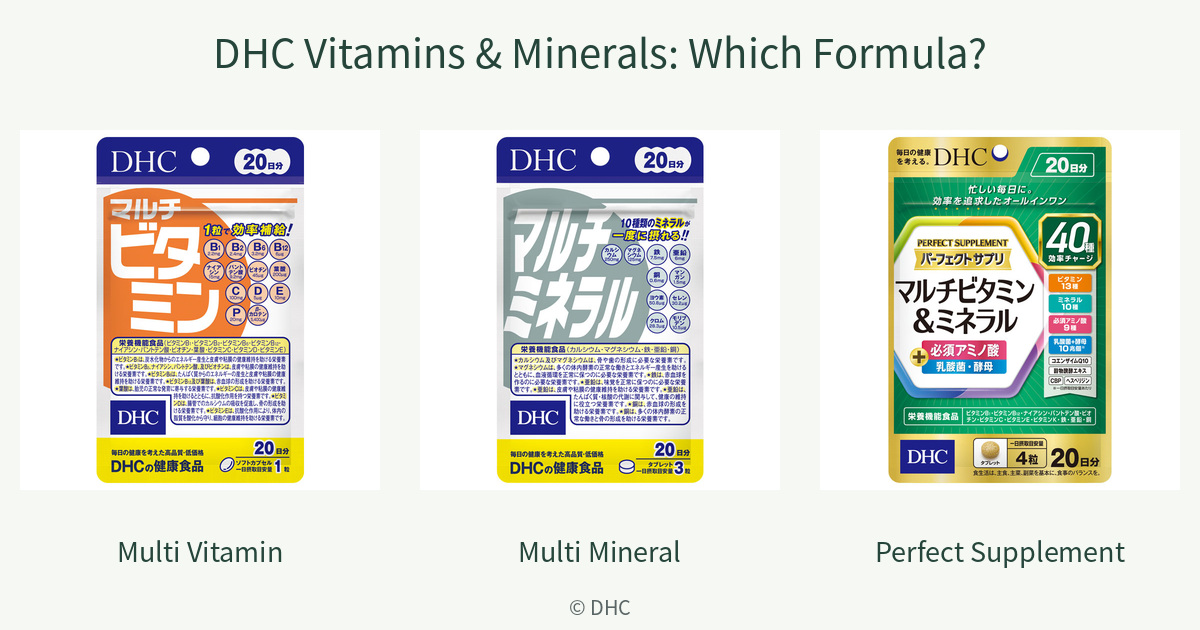
Choose Japan’s DHC Multi Vitamin, Multi Mineral or Perfect Supplement by the nutrients you actually need to supplement. Their daily servings are one soft capsule, three tablets and four tablets. Perfect’s “40 components” are not 40 vitamins, and buying all three is not a more complete plan.

I’m Irene, a Taiwan-born, Japan-licensed pharmacist working in a Japanese drugstore. If your shopping list simply says “DHC multivitamin,” let’s separate the orange, grey-green and gold-green pouches before you buy. The useful question is which formula fits your dietary gap and what you already take.
Sources checked on 19 October 2026, Japan time. This guide covers the current Japanese retail-store formulas. Products sold in other countries need their own label checks.
Do not use Perfect Supplement if you take anticoagulants. DHC expressly says to avoid this product. Multi Mineral and Perfect also expressly exclude infants and children.
- Start with the gap you want to fill
- Match the complete name on the Japanese pouch
- Compare a full daily serving, not one tablet
- What does “40 components” include?
- Already taking B vitamins, vitamin C or iron?
- Capsule or tablets: the practical routine
- Pregnancy, medicines, children and allergies
- If you meant a single-nutrient product
- Official sources and image credits
Start with the gap you want to fill
- A vitamin blend without the added mineral formula: consider Multi Vitamin if it matches an identified need. Its daily soft capsule supplies 11 vitamins plus vitamin P and beta-carotene.
- A mineral blend: compare Multi Mineral’s 10 minerals. It does not supply the vitamin blend in Multi Vitamin, and it contains iron as well as calcium and magnesium.
- A combined formula with additional ingredients: consider Perfect only after checking the whole combination. It contains less calcium, magnesium and iron per day than Multi Mineral, so it is not simply an upgraded version of the same formula.
- Unsure what is missing, or already taking several supplements: review your diet and labels first. Buying none is a valid choice. These are foods, not replacements for meals or treatment.
Match the complete name on the Japanese pouch
Multi Vitamin: マルチビタミン
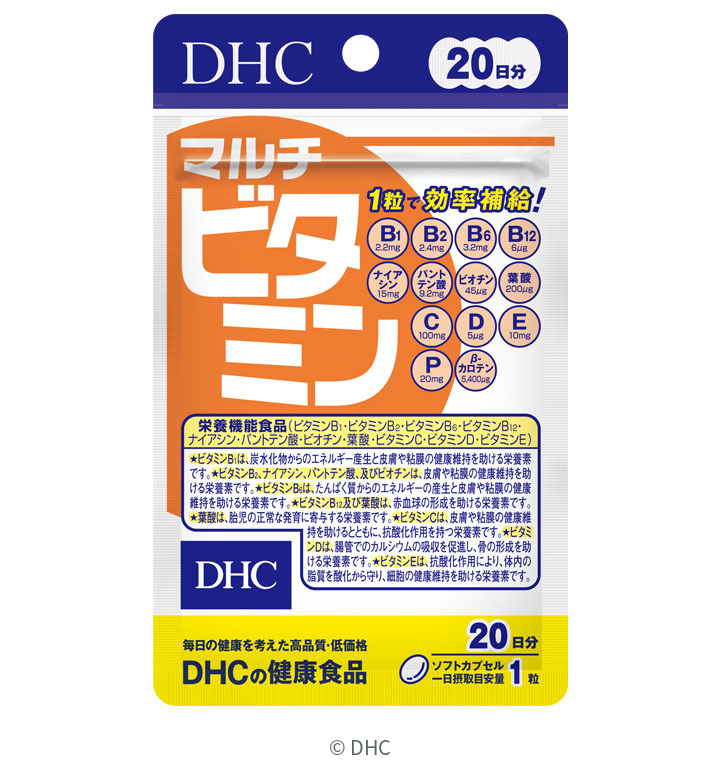
The orange pouch pictured contains 20 soft capsules for 20 days, with one capsule as the daily serving. Match the Japanese name rather than assuming that a DHC multivitamin sold overseas has the same label.
Multi Mineral: マルチミネラル
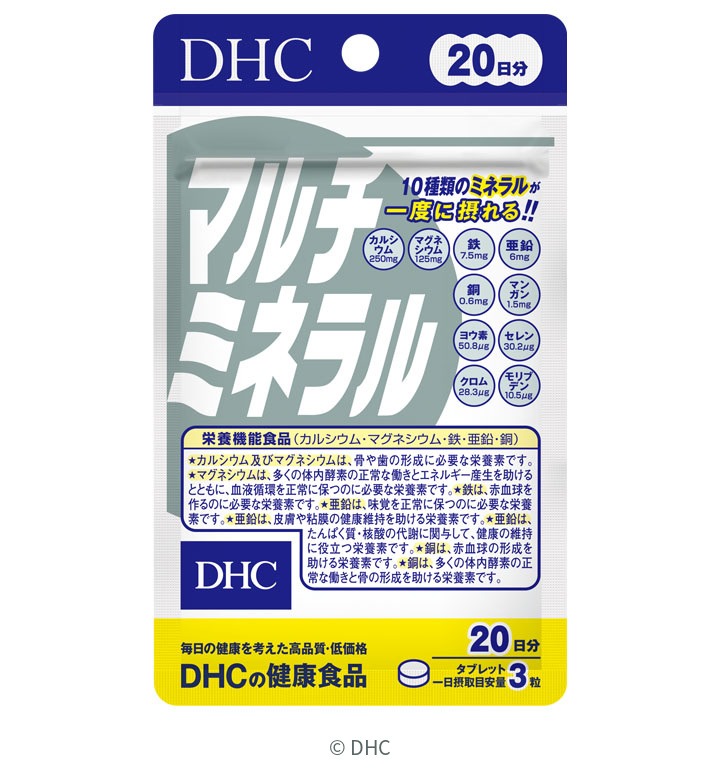
The grey-green pouch pictured contains 60 tablets for 20 days, at three tablets daily. Its 10 minerals are calcium, magnesium, iron, zinc, copper, manganese, iodine, selenium, chromium and molybdenum.
Perfect Supplement Multi Vitamin & Mineral
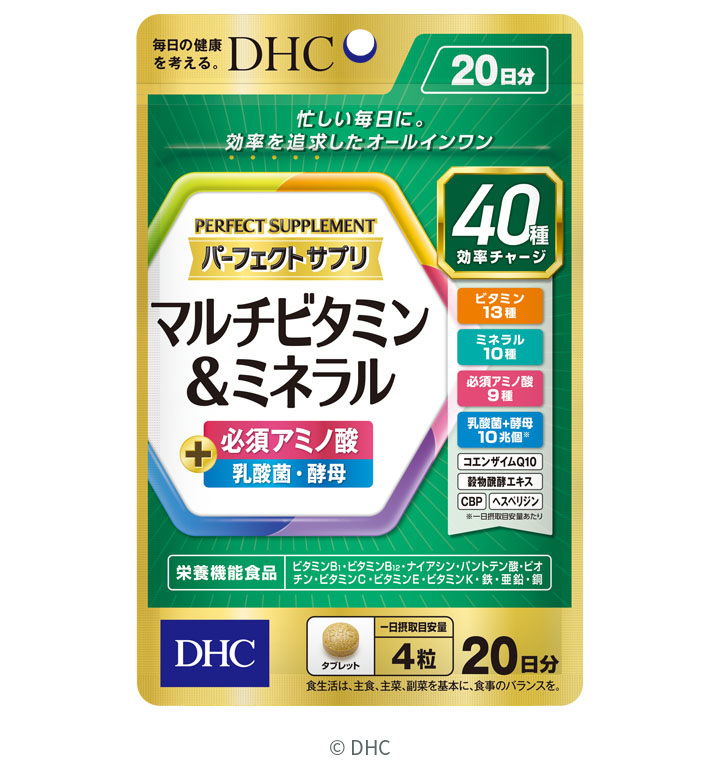
Look for “PERFECT SUPPLEMENT,” the large “40” and the Japanese name パーフェクト サプリ マルチビタミン&ミネラル on the gold-green pouch. The pictured 20-day pack contains 80 tablets, at four tablets daily. The intact pack photographs identify the products; they are not shown at a shared physical scale.
Compare a full daily serving, not one tablet
| Per labeled daily serving | Multi Vitamin | Multi Mineral | Perfect Supplement |
|---|---|---|---|
| Daily serving | 1 soft capsule | 3 tablets | 4 tablets |
| Vitamin C | 100 mg | Not listed as a supplemented nutrient | 100 mg |
| Vitamin B6 | 3.2 mg | Not listed as a supplemented nutrient | 13.0 mg |
| Folate | 200 μg | Not listed as a supplemented nutrient | 240 μg |
| Vitamin E | 10.0 mg | Not listed as a supplemented nutrient | 6.3 mg |
| Calcium | Not listed as a supplemented nutrient | 250 mg | 136 mg |
| Magnesium | Not listed as a supplemented nutrient | 125 mg | 64 mg |
| Iron | Not listed as a supplemented nutrient | 7.5 mg | 2.3 mg |
| Zinc | Not listed as a supplemented nutrient | 6.0 mg | 9.0 mg |
“Not listed” means the product does not list that nutrient as part of its supplementation formula; it is not a laboratory guarantee of zero content. Every number above is for the full daily serving.
Perfect has more B6 but less E than Multi Vitamin, and more zinc but less calcium, magnesium and iron than Multi Mineral. Switching to Perfect does not preserve the amounts in the two basic formulas. Start with the particular nutrient you need rather than the total ingredient count.
What does “40 components” include?
The Perfect pouch lists 13 vitamins, 10 minerals and nine essential amino acids. The detailed panel also lists fermented grain extract containing four enzymes, CoQ10 at 20 mg, hesperidin at 20 mg, concentrated active whey protein at 12 mg, inactivated fermented lactic-acid-bacteria/yeast powder and black pepper extract. Forty is the manufacturer’s count across the combination, not a count of vitamins. The inactivated powder should not be described as live cultures.
Perfect lists vitamin A at 770 μg and vitamin K at 150 μg per day. Multi Vitamin separately lists beta-carotene at 5,400 μg and vitamin P at 20 mg. Beta-carotene weight is not the same number as vitamin A activity; do not add all microgram figures together as though they measured the same thing. Nor should Multi Vitamin’s 11 vitamins plus vitamin P and beta-carotene be renamed “13 essential vitamins.”
Already taking B vitamins, vitamin C or iron?
Multi Vitamin and Perfect both already contain B vitamins and vitamin C. Put their daily amounts beside those on every other supplement you take. Different product names can hide overlapping nutrients. Separate iron, zinc, vitamin A and other multivitamin products especially deserve a combined label check with your pharmacist.
For example, full daily servings of Multi Mineral and Perfect together provide 9.8 mg iron and 15 mg zinc from those two products alone. This calculation shows the overlap; it is neither a combination recommendation nor an individual safety-limit assessment. DHC warns that too much zinc can impair copper absorption.
Capsule or tablets: the practical routine
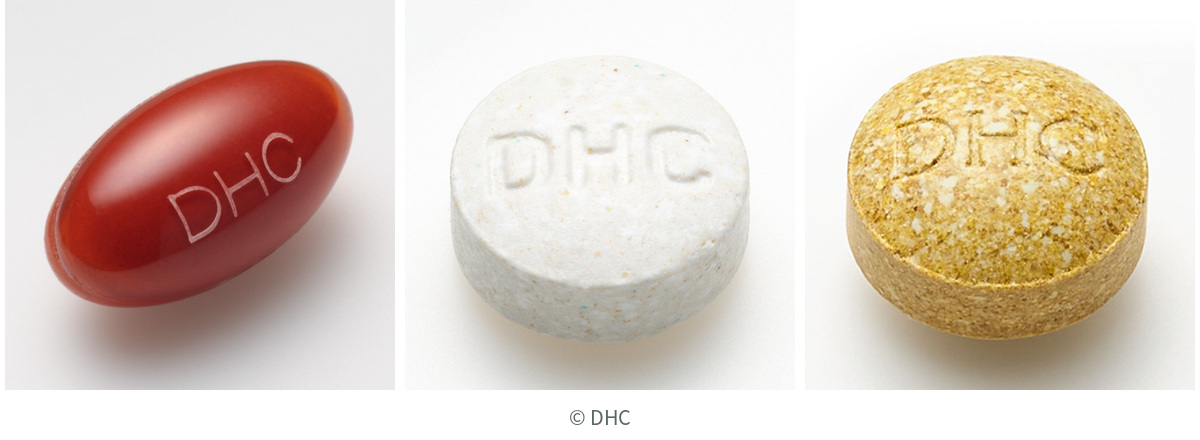
From left to right, these official enlarged photographs show the Multi Vitamin soft capsule, Multi Mineral tablet and Perfect tablet. They are not actual-size or true-scale comparisons. One capsule may be simpler to count, but that does not establish easier swallowing. These images cannot tell you how the products taste or feel to swallow.
- Use the daily serving on your own pouch with water or lukewarm water. Perfect specifically says not to chew; it is not a chewable sweet.
- The store-line pages list 20-, 60- and 90-day bags for Multi Vitamin and Multi Mineral, and 20- and 30-day bags for Perfect. Availability varies by shop. Their 20-day bags contain 20, 60 and 80 units respectively; the tablet count is not the day count.
- Divide the actual shelf price by the labeled days, then check that you are comparing the same formula. A bigger bag does not imply a higher daily concentration.
- Keep away from sunlight, heat and humidity. Close the pouch firmly after opening, use it promptly and store out of children’s reach.
Pregnancy, medicines, children and allergies
- Pregnant, taking medicines or receiving medical care: all three pages direct you to consult a doctor before use. Ask a doctor about illness and a doctor or pharmacist about medicines. Folate content does not make a product a prenatal formula; taking more folate does not improve fetal development. Seek individual advice when planning pregnancy or breastfeeding rather than building a regimen from this comparison.
- Anticoagulants: DHC expressly says users of these medicines should avoid Perfect. Do not stop prescribed treatment or change its timing to fit a supplement. Show the complete formula when checking other medicines, too.
- Children: Multi Mineral and Perfect expressly say infants and children should avoid them. The cited Multi Vitamin page does not provide a child-specific serving; do not invent one by halving the adult amount. “Age 18 and over” beside the nutrient reference percentages describes the reference calculation, not pediatric directions.
- Allergies: Multi Vitamin declares soy and gelatin; Perfect declares wheat, milk and soy. The Multi Mineral page has no separate allergen list, which does not prove it is allergen-free or vegan; its ingredients include shell-derived calcium. DHC advises checking ingredients and says people with food allergies should not use these products. Check the latest label on the bag you buy.
- Feeling unwell after use: stop and consult a doctor. Multi Mineral warns that large amounts may cause loose stools or diarrhea. DHC says Perfect may have ingredient-related speckles or slight color differences without a quality problem; that statement does not override the instruction to stop if you feel unwell.
All three are Japanese foods with nutrient function claims. This category allows specified nutrient-function labeling under set standards; it is not individual Consumer Affairs Agency approval of treatment effectiveness. They are not intended to diagnose, treat or prevent disease. Persistent fatigue or other symptoms call for assessment rather than self-treatment with a larger ingredient list.
If you meant a single-nutrient product
For release-format comparisons, see my guides to regular versus sustained-release DHC B Mix and DHC vitamin C capsules versus sustained-release tablets. Those formulas have different daily amounts and serving counts. These are alternatives to investigate, not a shopping list to combine.
My buying order: check the dietary gap and medicine/allergy restrictions, review what you already take, then choose the one-, three- or four-unit formula. Being able to explain why you need the product matters more than collecting all three pouches.