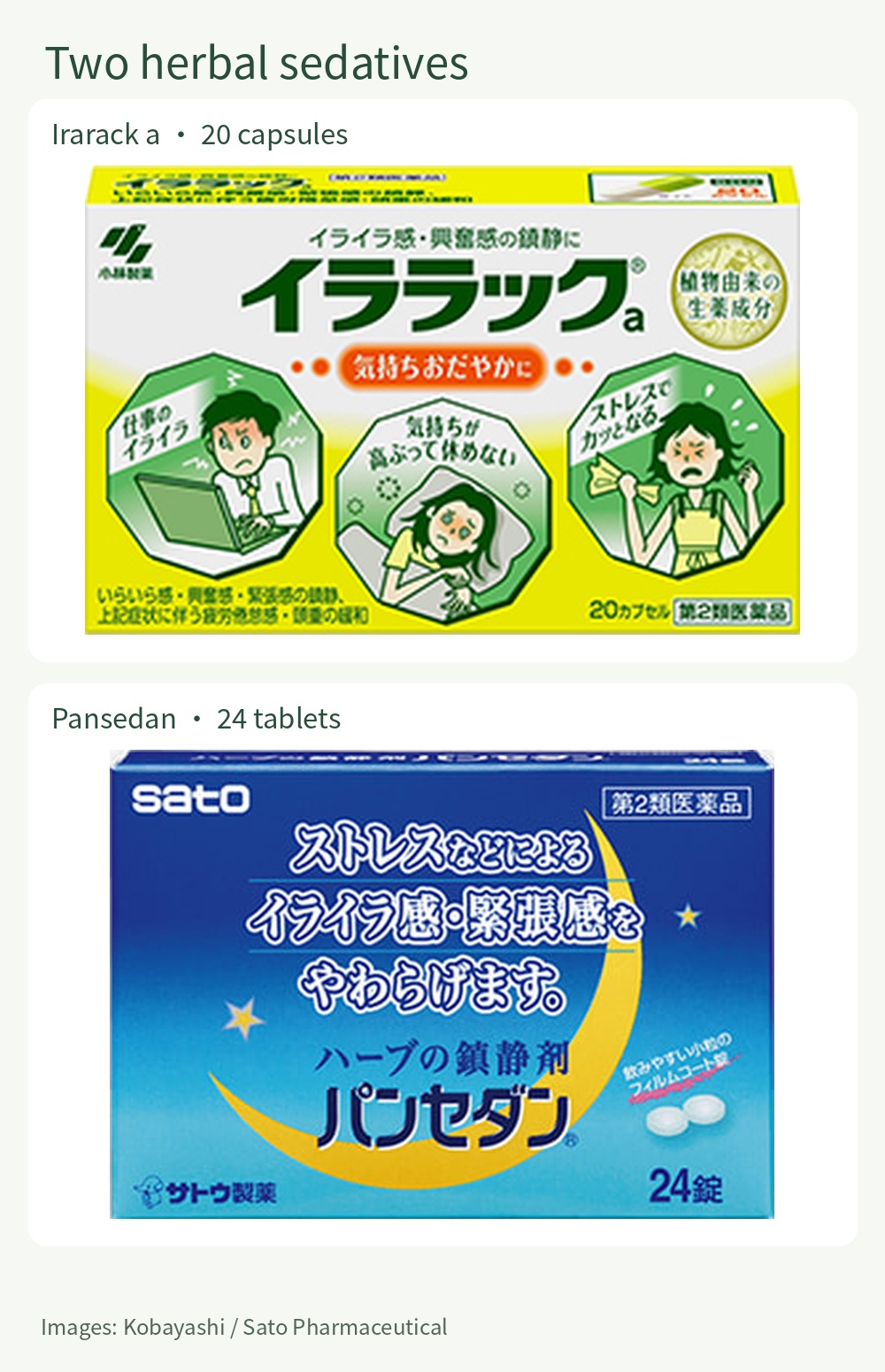
Irarack a and Pansedan are Japanese herbal sedative medicines for irritability, tension and nervous excitement. Neither is a sleep aid. Before choosing capsules or tablets, check whether your symptoms are suitable for short-term self-care and whether your other medicines rule either product out.

I’m Irene, born in Taiwan and licensed as a pharmacist in Japan, where I work in a drugstore. Here, the useful comparison is the formula, the dosage form and the precautions, rather than which box looks “stronger.”
Checked 19 October 2026. This guide covers Japanese イララックa, 20 capsules and パンセダン, 24 tablets. Both are Category 2 OTC medicines. “Irarack a” here is a romanization of the Japanese name; use the Japanese package name when asking in a shop.
- Start here: should you be choosing either one?
- The practical difference: capsule versus tablet, and different herbs
- All active ingredients: compare the same daily amount
- How to take them: twice daily means twice daily
- Other medicines, alcohol and driving: check before buying
- Pregnancy, breastfeeding and allergies: the wording differs
- When to stop, and why another box is not the next step
- Storage and the sleep-product distinction
- Sources
Start here: should you be choosing either one?
- Occasional irritability, tension or nervous excitement: these match the labelled symptom categories. A pharmacist can help check whether self-care is appropriate for you.
- Your main aim is falling asleep, treating an anxiety disorder or replacing prescribed treatment: neither product is an appropriate substitute for that care. Their labels also cover head heaviness and fatigue associated with the listed symptoms, not every headache or cause of tiredness.
- Symptoms are severe, keep returning or interfere with sleep, work or everyday life: arrange medical assessment rather than repeatedly buying another box. Seek urgent medical help if you are in immediate danger or cannot keep yourself safe.
- Under 15: do not take either product. Do not reduce an adult dose to create a child’s dose.
The practical difference: capsule versus tablet, and different herbs
Both contain four herbal extracts, but they are different formulas. Irarack a contains Japanese valerian; Pansedan contains European mistletoe instead. Their passionflower, hops and Uncaria extracts also have different labelled amounts. Comparing milligrams alone cannot tell you which works better or is safer.
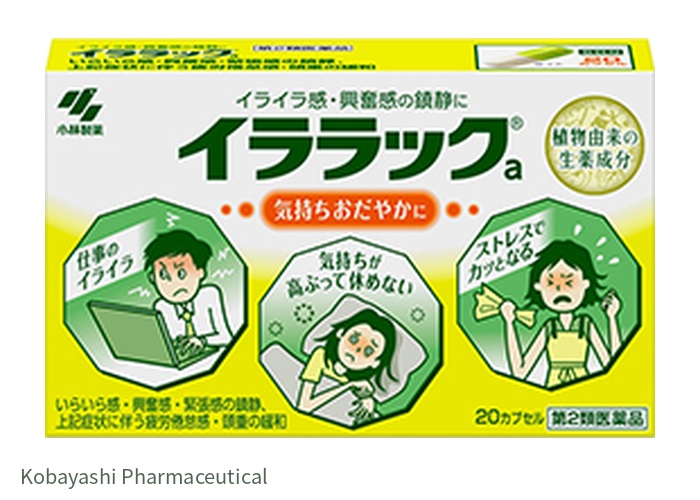
Japanese name: イララックa. Two capsules per dose, twice daily. A 20-capsule box contains five days’ supply at the labelled daily dose; that is pack arithmetic, not an instruction to continue regardless of symptoms.
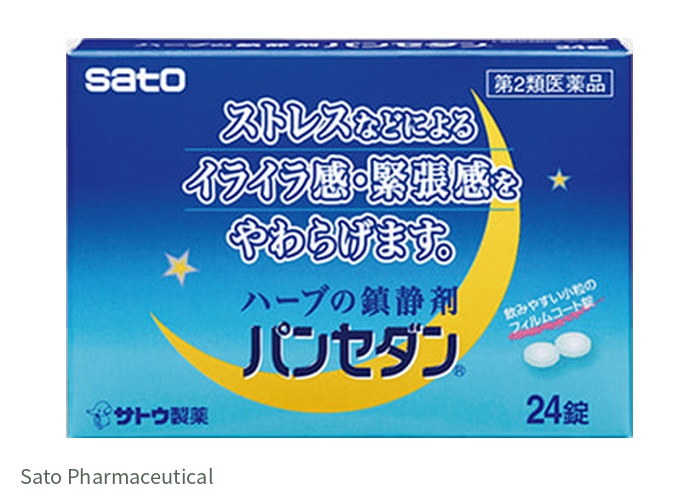
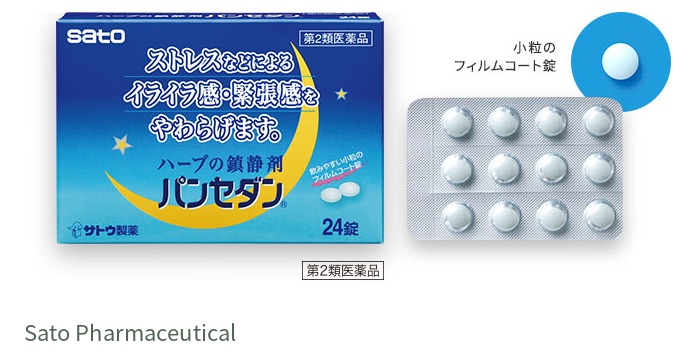
Japanese name: パンセダン. Two tablets per dose, twice daily. A 24-tablet box contains six days’ supply at the labelled daily dose. These are pale-green film-coated tablets.
All active ingredients: compare the same daily amount
The amounts below are for four capsules or four tablets in a whole day, not for one capsule, one tablet or one dose.
Irarack a: per four capsules
- Passionflower extract: 100 mg, equivalent to 700 mg passionflower.
- Japanese valerian extract: 240 mg, equivalent to 1,200 mg Japanese valerian.
- Hops extract: 60 mg, equivalent to 852 mg hops.
- Uncaria hook extract: 45 mg, equivalent to 450 mg of the crude drug.
Pansedan: per four tablets
- Passionflower extract: 160 mg.
- European mistletoe extract: 40 mg.
- Uncaria extract: 90 mg.
- Dried hops extract: 36 mg.
Pansedan’s catalogue also displays amounts per two tablets, whereas its leaflet gives four-tablet totals. Check the denominator before comparing labels. The extract names and preparations are not a basis for a simple potency ranking, and taking both products would overlap sedatives.
How to take them: twice daily means twice daily
- Irarack a, age 15 and over: two capsules per dose, twice daily, with cold or warm water. The current Japanese leaflet does not specify a meal relationship or a fixed hourly interval. Do not transfer Pansedan’s interval to this product; ask the pharmacist about timing.
- Pansedan, age 15 and over: two tablets per dose, twice daily. Sato’s FAQ says meals do not matter and to leave at least eight hours before the second dose.
- Do not add doses for an upcoming meeting, take the daily amount all at once or increase it because you notice little effect.
- Push each dose out of its blister first. Never swallow the blister packaging.
Other medicines, alcohol and driving: check before buying
Do not take Irarack a and Pansedan together. Both leaflets prohibit use with other sedatives. Sato’s FAQ also specifically excludes painkillers containing sedative ingredients. Bring the exact names of your prescribed medicines, OTC cold or allergy medicines, sleep products and supplements so a pharmacist can check ingredients and combinations. Do not stop a prescribed medicine to make room for either product.
Pansedan: Sato says not to take it with alcohol; if drinking, its FAQ specifies waiting at least eight hours after a dose. This is the manufacturer’s minimum interval, not a guarantee that drinking is suitable for every person or medicine combination. Choosing not to drink avoids that complication.
Irarack a: the Japanese leaflet does not give a specific alcohol interval. Do not borrow Pansedan’s eight-hour rule or use this medicine to counteract alcohol. Ask a pharmacist before combining alcohol with it.
If you need to drive or operate machinery, discuss that plan before taking either medicine. “Herbal” does not establish that alertness is unaffected. Do not drive if sleepy, dizzy or less alert. Neither reviewed leaflet supplies a fixed number of hours after which driving is guaranteed safe.
Pregnancy, breastfeeding and allergies: the wording differs
- Both products: consult a doctor, pharmacist or registered OTC salesperson before use if you are under a doctor’s treatment, are pregnant or may be pregnant, or have had allergic symptoms from medicines or similar substances.
- Irarack a: the leaflet additionally calls for consultation when breastfeeding or when medicines have previously triggered asthma.
- Pansedan: Sato’s FAQ says it can be taken while breastfeeding. That product-specific statement does not remove the other precautions or establish that every breastfeeding person and every medicine combination is suitable. Discuss your circumstances if you are uncertain.
For ingredient restrictions, Irarack a contains gelatin and colourants including tartrazine; Pansedan contains lactose. These are not complete allergy screens. The full additive lists below help you check the actual product.
Full additive lists
Irarack a: hydroxypropyl cellulose, carmellose calcium, calcium lactate, anhydrous silica, potato starch, gelatin, sodium lauryl sulfate, Yellow No. 4 (tartrazine) and Blue No. 1.
Pansedan: calcium hydrogen phosphate, carmellose, lactose, cellulose, magnesium stearate, hypromellose, titanium dioxide, macrogol and sodium copper chlorophyllin.
When to stop, and why another box is not the next step
With either product, stop immediately and consult a doctor, pharmacist or registered OTC salesperson if rash, redness, itching, nausea, vomiting or loss of appetite occurs after taking it. Bring the leaflet.
If symptoms have not improved after five to six days, stop and consult. Both leaflets say not to use continuously over a long period. Pansedan’s FAQ adds that even when it helps, use should be limited to approximately two weeks; tension continuing beyond that calls for medical assessment. This does not override the earlier five-to-six-day rule when there is no improvement, and it is not a two-week course that everyone should finish. Irarack a’s leaflet does not provide that two-week figure.
Do not wait for a day count if distress is severe or worsening. Ongoing anxiety deserves assessment and appropriate treatment, not an escalating OTC regimen.
Storage and the sleep-product distinction
Keep both products in a cool, dry place away from direct sunlight and out of children’s reach. Keep them in their original packaging, retain the leaflet and do not use past the expiry date. Irarack a notes that its herbal capsule contents may vary slightly in colour; this is not a reason to use damaged or expired medicine.
Drewell and Drewell EX are separate medicines for temporary sleeplessness with their own restrictions. FANCL Sleep & Fatigue Care is a food supplement with different claims and exclusions. Neither category should be treated as an interchangeable version of these herbal sedatives, and you should not build your own combined bedtime regimen.
My shopping order: describe the symptoms and how long they have lasted, show all current medicines, then compare capsule or tablet and the full formula. There is no evidence here that one of these two is universally the stronger or safer choice.