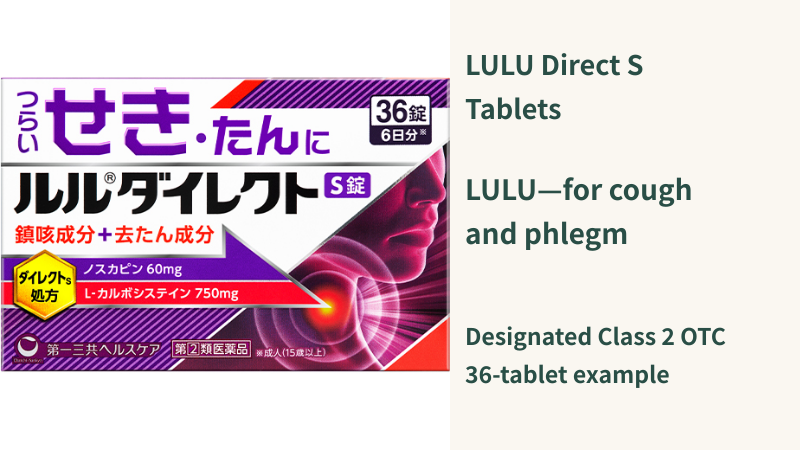
The LULU name does not make this box an all-symptom cold medicine. Launched in Japan on August 31, 2026, ルルダイレクトS錠 / LULU Direct S Tablets is indicated for cough and phlegm. Its new place in this familiar brand is a cough-focused option—not a new name proving greater strength, or an add-on to another LULU medicine.
This is a Japanese Designated Class 2 OTC medicine. We separate the jobs of its five ingredients before returning to age, current medicines and stopping rules. Matching a symptom on a box does not establish personal suitability.
- Identify Direct S Tablets—not a lozenge or water-free formulation
- Five ingredients: different jobs in cough signalling and the airways
- No caffeine—so why is driving still prohibited?
- Compare the indicated purpose—not a strength ranking
- A dose, a daily ingredient panel and “four hours” are different things
- What should you tell the seller?
- No improvement after five to six doses is not a signal to buy another box
- Keep track of when the foil bag was opened
- Current Japanese official sources
Identify Direct S Tablets—not a lozenge or water-free formulation
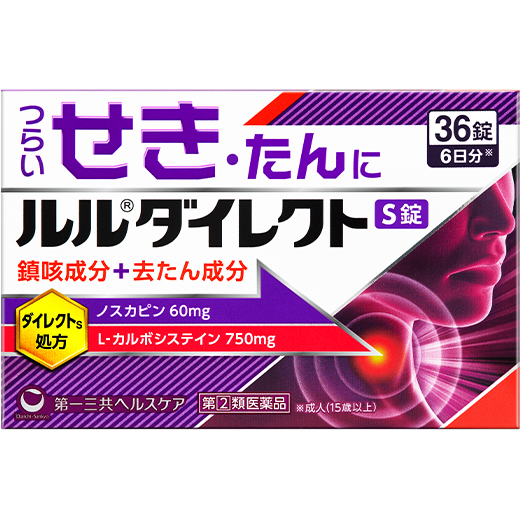
The photograph is the manufacturer’s official front view of the 36-tablet box. Look for ダイレクトS錠 in the full name. These are white film-coated tablets taken with water or warm water as directed. “Direct” is not evidence that they dissolve in the mouth, can be taken without water or work within a guaranteed number of minutes. The pack size is not an instruction to finish a course.
Five ingredients: different jobs in cough signalling and the airways
Thinking of every cough medicine as one “off switch” misses the formulation’s design. The manufacturer describes four cough-suppressing ingredients and one expectorant. Their roles are not identical. These amounts are per six tablets—the total daily amount for ages 15 and over, not one dose:
- Dihydrocodeine phosphate 24mg plus noscapine 60mg: both act on the cough centre to suppress coughing.
- dl-Methylephedrine hydrochloride 75mg: widens the bronchi and relieves coughing.
- Chlorpheniramine maleate 12mg: relieves allergic coughing.
- L-Carbocisteine 750mg: helps normalise the airway mucosa, making phlegm—one cause of coughing—easier to expel.
These are the roles stated in the current official information. They do not mean five times the effect, or that every person coughing has all these causes. A diagram cannot diagnose your cough; suppressing it does not establish that an infection is cured or that changes in your condition can be ignored.
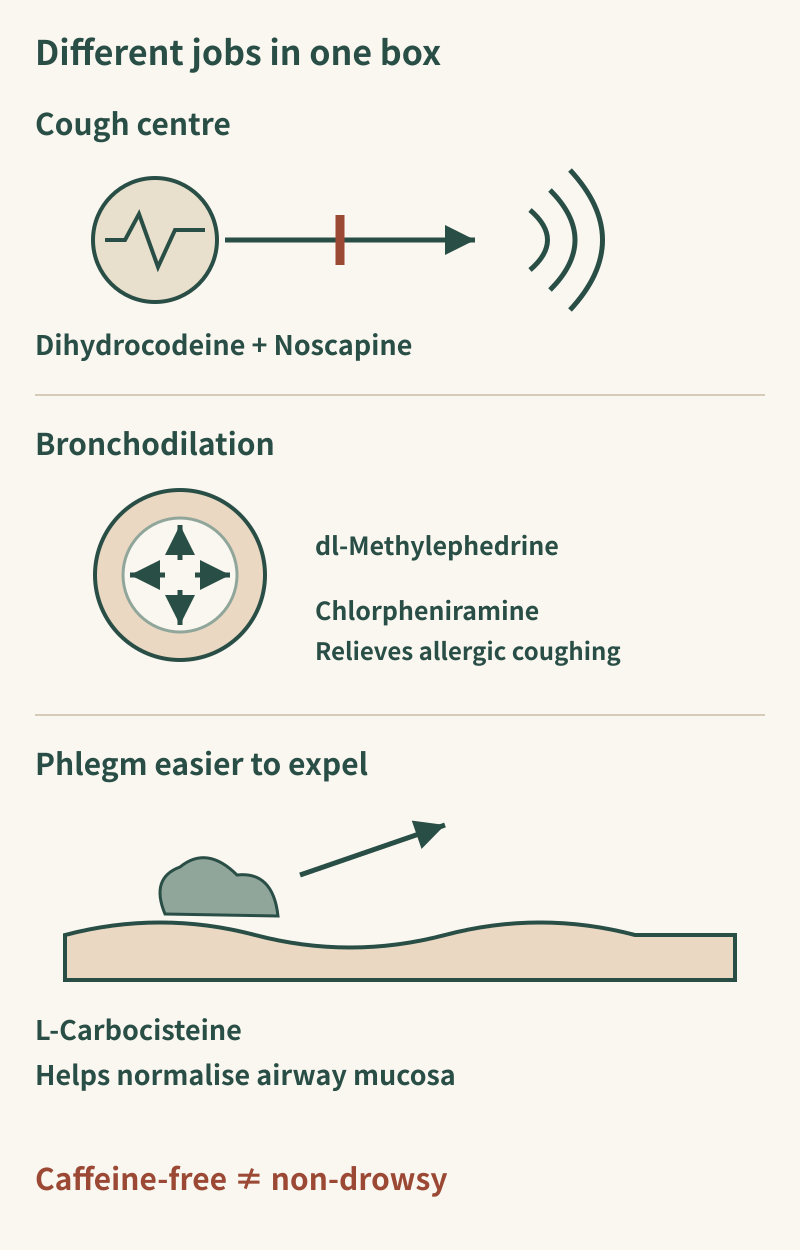
No caffeine—so why is driving still prohibited?
The manufacturer presents the caffeine-free formula as an option for people who prefer not to have caffeine interfere with sleep. But caffeine-free does not mean non-drowsy. This medicine can still cause drowsiness. Do not drive vehicles or operate machinery after taking it. Insomnia is not its approved indication, and it is not a medicine to take in order to fall asleep.
Night-time cough is a use scenario, not permission for an extra bedtime dose. Do not increase the frequency or add another cough medicine or sedative because you are still awake or still coughing.
Compare the indicated purpose—not a strength ranking
The combination cold medicines in our LULU A and LULU Attack comparisons cover several cold symptoms. Direct S lists “cough, phlegm” as its indications. It is not another name for a medicine treating fever, sore throat and every other cold symptom, nor an extra to add when a combination cold medicine seems insufficient for coughing.
While taking this product, do not use other cough suppressants/expectorants, cold medicines, sedatives or oral medicines containing antihistamines, including oral rhinitis, motion-sickness and allergy medicines. Tell the pharmacist or registered seller what you have taken and when. Do not invent a waiting interval that makes switching or combining safe.
For the initial distinction between products in the brand, see the LULU Attack comparison. This guide focuses on Direct S’s five ingredients and use decisions, not an efficacy ranking.
A dose, a daily ingredient panel and “four hours” are different things
- Ages 15 and over: two tablets per dose, three times daily after meals, with water or warm water.
- Ages 12–14: one tablet per dose, three times daily after meals, with water or warm water, under a parent or guardian’s supervision.
- Under 12: do not take.
The official FAQ says to leave at least four hours between doses. This does not turn three daily doses into permission to take it every four hours, and is not a safe waiting period for combining it with another medicine. Follow the dose exactly; do not overdose or use continuously for a long time. Remove tablets from their blister packaging before swallowing—never swallow the packaging.
What should you tell the seller?
This product contains ingredients within Japan’s designated misuse-prevention medicine category. Accurately tell the pharmacist or registered seller your age, purpose of use, current medicines and purchases at other shops when asked. “Age 12 and over” above is a dosing age—not a guarantee that a minor can independently buy any pack size or that a sale will be approved. Sales checks and individual medical suitability are separate matters.
Do not take if you have previously had an allergy to this product or its ingredients, or are under 12. If breastfeeding, either do not take this medicine or avoid breastfeeding while taking it; do not disregard this restriction. Consult before use if pregnant or possibly pregnant.
Also consult a doctor, pharmacist or registered seller first if receiving medical treatment, elderly, previously allergic to medicines or similar products, experiencing high fever or difficulty urinating, or diagnosed with heart disease, hypertension, diabetes, glaucoma, liver disease, thyroid dysfunction, impaired respiratory function, obstructive sleep apnoea or obesity. Do not stop prescribed treatment yourself in order to take this product.
No improvement after five to six doses is not a signal to buy another box
If symptoms do not improve after five to six doses, stop and consult a doctor, pharmacist or registered seller with the leaflet. These are doses, not days. The official FAQ mentions about a week as a guide when symptoms are improving; that must not delay stopping for non-improvement or become an instruction to take it for a full week.
Stop immediately and consult with the leaflet for rash, redness, itching, nausea/vomiting, loss of appetite, dizziness or difficulty urinating. Also stop and consult if constipation, dry mouth or drowsiness persists or worsens.
Obtain medical attention immediately for these serious reactions
- Itching, hives, hoarseness, sneezing, an itchy throat, difficulty breathing, palpitations or clouded consciousness soon after taking it can indicate anaphylactic shock.
- High fever, red eyes or eye discharge, eroded lips, sore throat and widespread rash/redness that persists or rapidly worsens can indicate severe skin/mucosal reactions.
- Fever, itching, rash, yellow skin or eyes, brown urine, general fatigue or loss of appetite can indicate liver dysfunction.
- Bruising, nosebleeds, bleeding gums, fever, pale skin/mucosa, fatigue, palpitations, breathlessness, feeling faint or blood in the urine can indicate aplastic anaemia. Sudden high fever, chills or sore throat can indicate agranulocytosis.
- Shortness of breath or difficulty breathing can indicate respiratory depression.
Do not keep taking it in order to reach the five-to-six-dose assessment point.
Keep track of when the foil bag was opened
Store out of direct sunlight in a dry, cool place beyond children’s reach; do not transfer to another container. Use within the printed expiry date and within 12 months after opening the foil bag. Record the opening date in the designated space on the box. This guide helps you understand the new product; it does not replace the full leaflet supplied with it or a professional assessment.
Current Japanese official sources
Checked November 1, 2026. Box photograph: the official front image on Daiichi Sankyo Healthcare’s current product page. It is not a recommendation to buy 36 tablets or finish the box.