Checked 19 October 2026 | Products sold in Japan
First check that this is a fresh, minor cut or abrasion that can be cleaned properly. BAND-AID Kizupowerpad is a hydrocolloid wound dressing, not a conventional gauze-pad bandage. Standard is the basic option; Plus emphasizes central absorption and reduced leakage; Ultrathin emphasizes flexibility and a thinner feel. None is a way to seal over a potentially infected wound, and none should be cut to size.

I’m Irene, born in Taiwan and licensed as a pharmacist in Japan, where I work in a drugstore. When you have a small injury, the useful questions are whether a pad is suitable and what to watch for afterward. Let’s start there, then compare the three boxes.
- Which wounds should you not cover with these pads?
- Children, diabetes and sensitive skin
- Standard, Plus and Ultrathin: construction and fit
- Can you save money by cutting a larger pad?
- Before application: clean, check and warm
- Check every 2–3 days; “up to 5 days” is not leave-and-forget advice
- A white swelling is not an infection test
- Remove it gently
- How is this different from liquid bandages and ointments?
- Official information and image sources
Which wounds should you not cover with these pads?
This guide is limited to fresh minor cuts and abrasions. Although the Japanese labeling includes other uses, this comparison is not a treatment guide for burns, bites or deep wounds.
- Possible infection: redness around the wound, continuing throbbing pain, pus, heat or swelling means stop using the pad and seek medical advice. Do not use Plus to hide worsening drainage.
- Deep punctures, large or deep wounds, human or animal bites, or debris that will not wash out: seek medical assessment. Visible muscle, bone or tendon is not a home-dressing situation. Animal scratches also need professional assessment rather than automatically following the steps for an ordinary scrape.
- Scabbed, dry wounds without fluid, older wounds, or wounds of unknown cause: do not self-treat with this product. Do not pick off a scab to restart moist wound care. Ask a professional before switching a wound already treated at home to a hydrocolloid pad.
- Acne, eczema, insect bites, dermatitis and scratches caused by scratching these conditions: the manufacturer excludes these uses. Avoid the eye area and mucous membranes.
- Bleeding that will not stop: address the bleeding and seek medical care. The manufacturer advises medical assessment if bleeding continues after 2–3 minutes. Do not cover ongoing bleeding and ignore it.
The labeling includes minor burns, but burn depth and extent need separate assessment. Current Ultrathin packaging explicitly says not to use it on nursing-related wounds. For burns, nipple or nursing-related wounds, or an injury you are unsure about, get professional advice rather than selecting any of these three pads from this article.
Children, diabetes and sensitive skin
- Do not use on children under 3. Children aged 3 and older require adult supervision and protection against accidental swallowing. Meeting the age threshold does not make every wound suitable.
- Treatment for diabetes or poor circulation: ask your doctor before use. Slower healing or reduced sensation can make complications harder to spot.
- Feeling generally unwell, including fever or marked fatigue, an allergic tendency, or a history of reactions to medicines or adhesive dressings: consult a doctor or pharmacist first. The manufacturer also advises avoiding use after previous adhesive-dressing hypersensitivity. “Hypoallergenic” does not mean allergy-proof.
- Older or fragile skin: removal needs extra care, and infection may not cause obvious pain. Current packs advise people with fragile skin to refrain from use; ask a professional if unsure.
Standard, Plus and Ultrathin: construction and fit
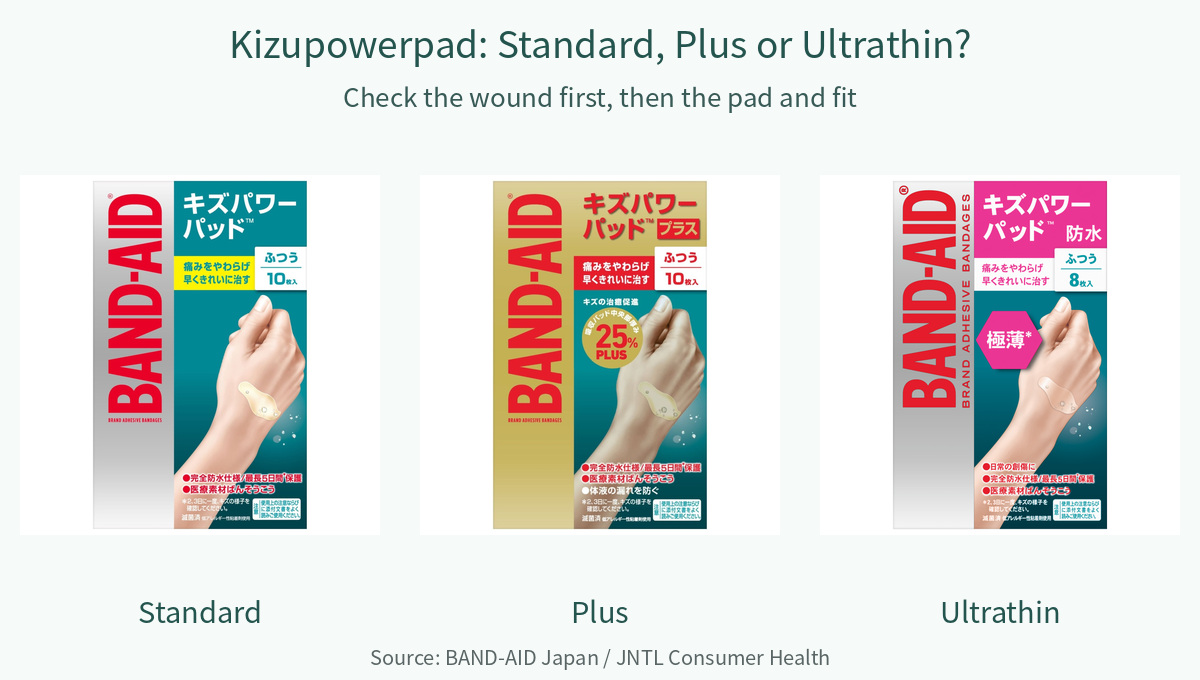
Look for キズパワーパッド on the Japanese box, then check for プラス (Plus) or 極薄 (Ultrathin). The BAND-AID brand alone is not enough: it also covers conventional bandages and patches with other purposes.
This comparison uses the regular size, labeled ふつうサイズ. Current official pages list all three as 60 × 20 mm. That is the overall pad size, not the size of wound it can cover: the edges need to seal securely to intact surrounding skin.
Standard: the basic hydrocolloid option
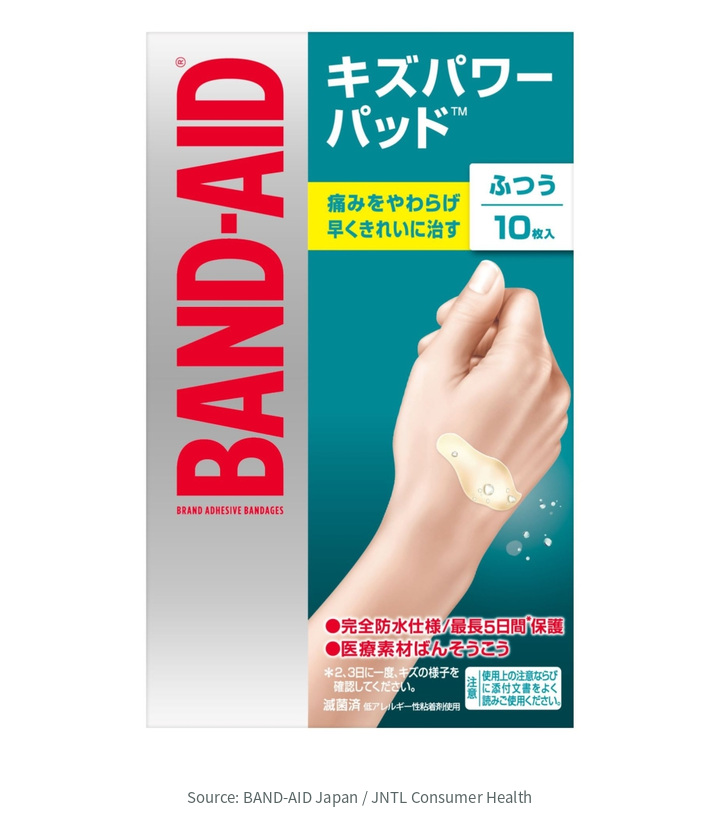
The box reads キズパワーパッド ふつうサイズ; the pictured pack contains 10 pads. The manufacturer describes a flexible, semi-transparent skin-colored waterproof pad. Standard regular is 0.6 mm thick, the reference used for the Ultrathin comparison. It is a starting option when the wound is suitable and the pad fits properly.
Plus: compare it when wound fluid and leakage matter
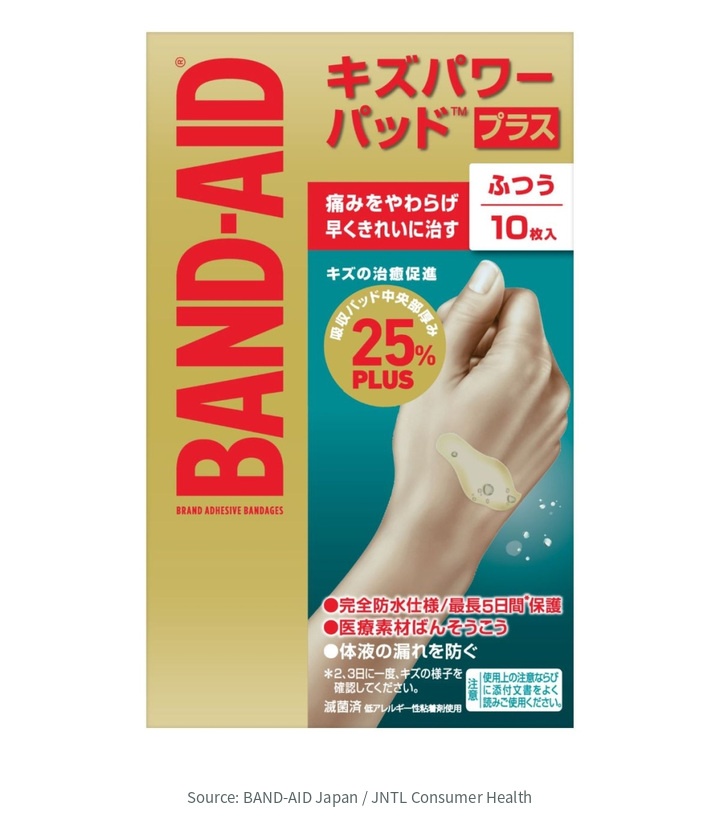
The box reads キズパワーパッド プラス ふつうサイズ; the pictured pack contains 10 pads. The manufacturer emphasizes central fluid absorption, reduced leakage and close adhesion; its back panel identifies a thicker central absorbent area. This does not mean stronger disinfection, suitability for infected wounds or fewer checks. Fluid reaching the edge, leakage or lifting still calls for replacement. Increasing redness or pain calls for medical advice.
Ultrathin: compare it for a thinner, more flexible pad
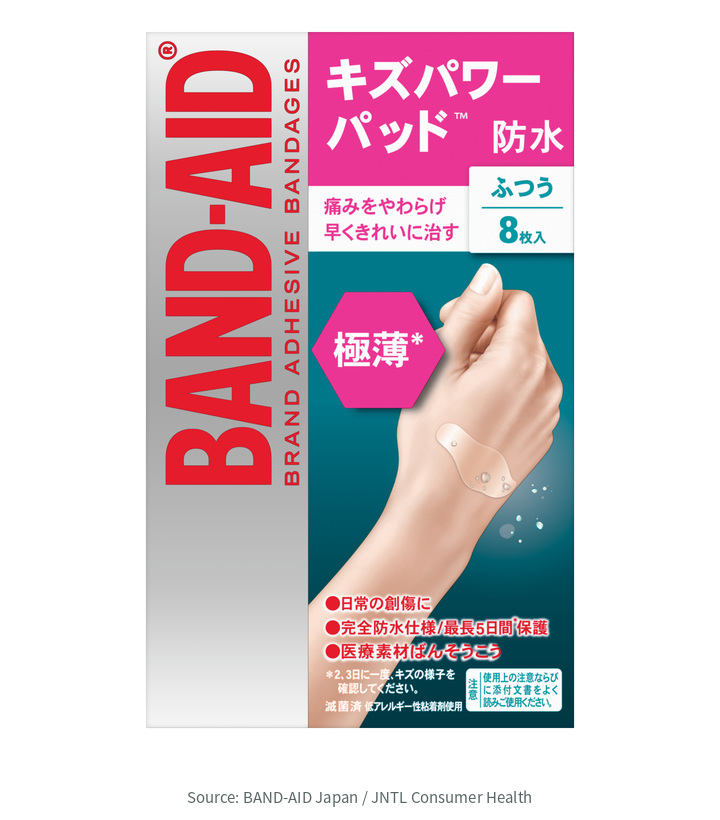
The box reads キズパワーパッド 極薄 ふつうサイズ; the pictured pack contains 8 pads. The official thickness is 0.2 mm, approximately 66% thinner than Standard regular at 0.6 mm. The manufacturer emphasizes comfort when bending and stretching. 66% describes thickness, not faster healing. It does not establish a lower allergy risk. The official page also shows a 3-pad pack; check the count on the box you buy.
All three are regulated in Japan as controlled medical devices, specifically home-use wound pads. Their registered name is BAND-AID キズパワーパッド, certificate 225ADBZI00048000. Hydrocolloid absorbs wound fluid and maintains a moist environment. The names Plus and Ultrathin do not create a universal ranking of healing effectiveness.
Can you save money by cutting a larger pad?
No. Do not cut these pads or reapply a used one. Cutting exposes the hydrocolloid edge, compromises the design that keeps outside water and bacteria out, and can cause excess water absorption and poor adhesion. Check the expiry date and each individual wrapper before use; do not use expired pads or ones with damaged or previously opened wrappers. Open each individually packed pad only when ready to use it. Do not use one that has been left out after opening.
Choose a single ready-made pad larger than the wound, with a shape that seals completely. If regular size does not fit, ask about a suitable size rather than cutting or joining pieces. A large or deep wound needs medical assessment first.
Before application: clean, check and warm
- Wash your hands, then rinse the wound and surrounding skin thoroughly with running tap water. Seek medical help if debris cannot be removed by rinsing.
- Confirm eligibility and that bleeding is controlled. Gently remove surface water and moisture from surrounding skin, avoiding loose tissue or towel fibers. Do not deliberately wait for the wound to dry into a scab.
- Do not put Oronine, another ointment, cream or antiseptic underneath. Ointment reduces adhesion. If the wound has already been treated, ask whether a pad is still appropriate; the manufacturer says residues must be thoroughly rinsed off before application, not sealed underneath.
- After opening, warm the pad between your hands for about 1 minute and apply following its backing-film instructions. Gently press and warm it with your palm for about another minute, checking that the edges seal.
- Do not wrap a finger tightly. Waterproof protection depends on a secure seal. Check for lifting, water entry or leakage after washing or bathing.
Check every 2–3 days; “up to 5 days” is not leave-and-forget advice
The current manufacturer FAQ instructs users to remove the pad at least every 2–3 days, inspect the wound and surrounding skin, rinse and replace it with a new one. Act sooner if anything changes. The pack’s “up to 5 days” is a maximum-protection claim with a 2–3-day checking reminder, not a direction to routinely keep the same pad on for five days.
- Replace sooner if edges lift, fluid leaks, the white swollen area reaches the edge, or the pad becomes dirty or water or debris gets underneath. Clean the wound and surrounding skin at each change.
- New itching or a rash: remove the pad and inspect the wound and surrounding skin rather than waiting 2–3 days. Ask a doctor or pharmacist about marked or persistent irritation; stop use and seek medical advice for infection signs.
- Stop and seek medical advice for persistent throbbing, redness, swelling, heat, suspected pus or deterioration. Switching to a thicker pad is not the answer.
- No improvement after several days: the manufacturer’s use guide advises seeing a doctor. Do not wait two weeks. Swelling or drainage that does not diminish across changes also needs reassessment.
A white swelling is not an infection test
The hydrocolloid absorbs wound fluid and forms a soft gel. Whitening alone does not mean pus, and it does not prove the wound is free of infection. Do not rule out infection by color, smell or the number of days alone. Suspected pus, redness, swelling, heat or continuing pain calls for stopping use and medical advice.
As healing progresses, less fluid and smaller white swellings may occur. But no whitening can also mean the wound is unsuitable for this dressing. Do not use pad color alone to decide that a wound has healed. Once new skin has formed and the wound is closed, do not keep applying hydrocolloid just to produce whitening.
Remove it gently
Gently stretch one edge sideways and peel slowly rather than pulling sharply upward. If it is difficult to remove, let warm water flow between the pad and skin. Newly formed skin is fragile. Rinse away gel residue and reassess whether another pad is appropriate; stop self-dressing if there are signs of infection.
How is this different from liquid bandages and ointments?
Liquid bandages form a film after application and have their own directions. Hibicare fissure creams and Oronine H Ointment are medicines. These are not base layers for Kizupowerpad, and their instructions are not interchangeable.
My shopping order: check the wound and user restrictions first, find a ready-made size that seals properly, then compare Standard, Plus and Ultrathin. A pad that sticks still needs ongoing checks.
Official information and image sources
- BAND-AID Japan: Standard
- BAND-AID Japan: Plus
- BAND-AID Japan: Ultrathin
- BAND-AID Japan: Application guide
- BAND-AID Japan: FAQ and precautions
This is a guide to Japan labeling and product selection, not a diagnosis. Read the complete box and enclosed instructions before use and follow professional advice.