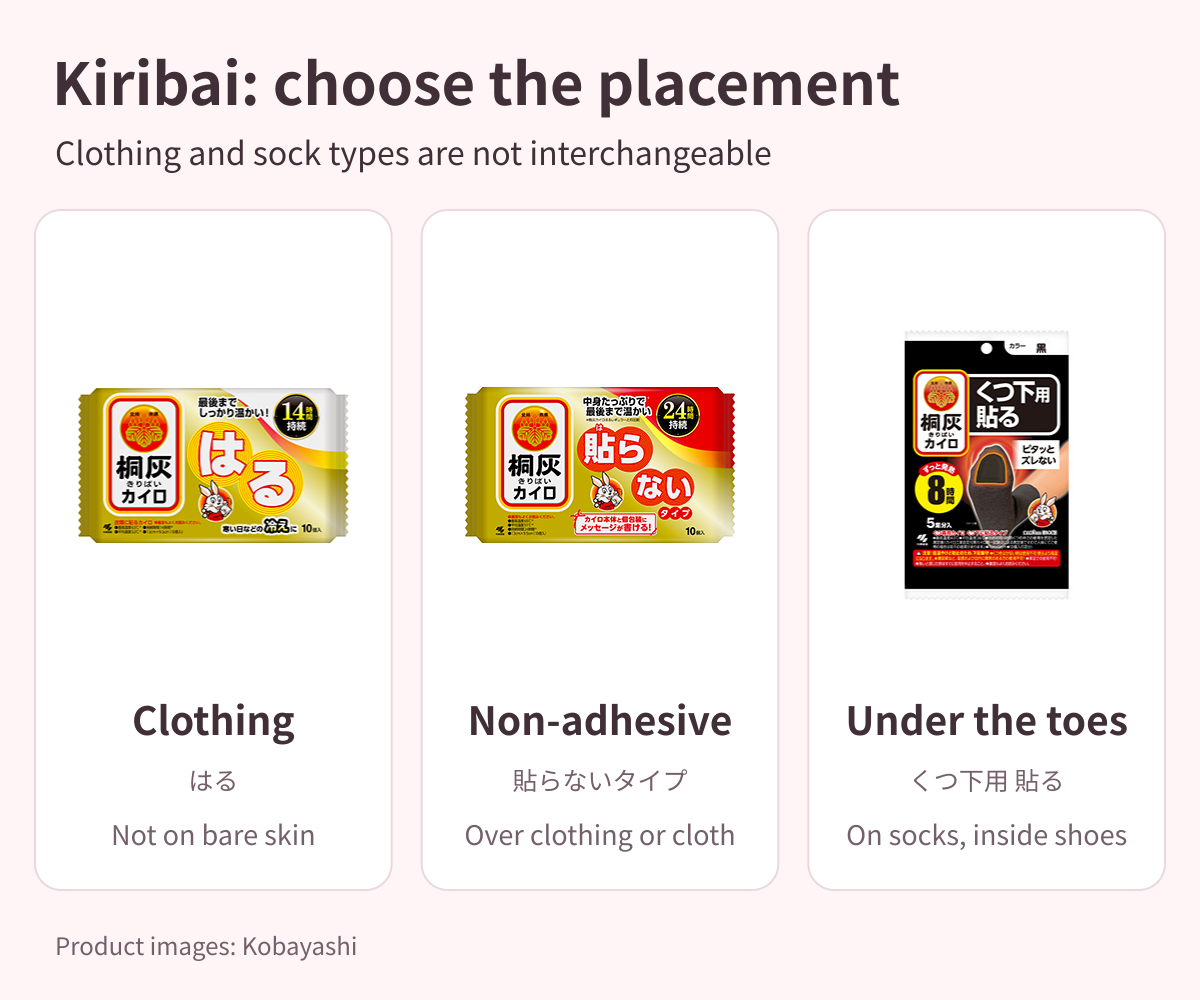
Buying Kiribai warmers for a winter trip to Japan? Choose the intended placement before the heating time: “はる” sticks to clothing, “貼らないタイプ” is non-adhesive, and foot warmers have their own specific instructions. Similar-looking packs are not interchangeable.

I’m Irene, a Taiwanese-born pharmacist working in a Japanese drugstore. Rather than naming the “hottest” pack, I want to help you match the Japanese label to your clothes, shoes and plans for the day.
Japanese product information checked: October 21, 2026. Scope: regular-size Kiribai Haru, regular-size Non-Adhesive, and the standard Stick-on Socks warmer for the underside of the toes. Mini, Magma, top-of-foot and loose in-shoe versions are not covered.
Three labels that mean different things
1. To attach to clothing: 桐灰カイロ はる
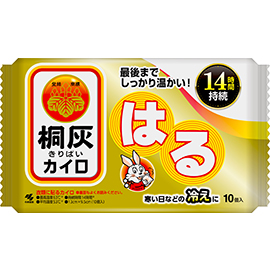
Peel off the backing and attach as directed to clothing—not skin—without kneading. Avoid pressure over the pack and garments that adhesive could damage, including valuable clothing.
The buying question: do you want a fixed position without holding a pack? Check what you are wearing before choosing by hours alone.
2. Without adhesive: 桐灰カイロ 貼らないタイプ
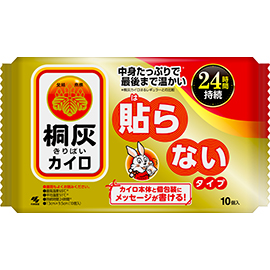
Do not knead it. Kobayashi directs users to shake it gently a few times, then use it over clothing or wrapped in cloth, away from bare skin. “Non-adhesive” does not mean prolonged direct skin contact is safe.
The buying question: do you want to avoid sticking anything to your clothes? You must still be able to move it away. It is not a sleeping aid or a substitute for a shoe-specific warmer.
3. For toes inside shoes: 桐灰カイロ くつ下用 貼る
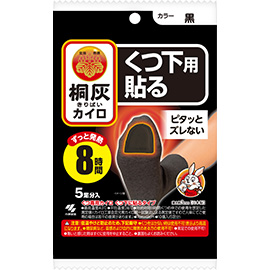
Without kneading, stick it to the outside of the sock underneath the toes and put shoes on immediately. Do not move it to the top of the foot. It is not the loose in-shoe type marked 敷く.
The buying question: will you keep suitable shoes on, and can you remove the warmer promptly if it feels hot? A shoes-off itinerary needs extra thought.
Planning to take your shoes off?
Restaurants, inns and indoor visits may involve removing shoes. This sock warmer is not for use outside shoes: leaving it attached can make it overheat. Remove the warmer when taking your shoes off; do not keep using it on your socks without shoes. My practical rule is to make easy removal part of the buying decision, rather than treating it as a fit-and-forget travel accessory.
- No slippers, sandals, oversized airy shoes, or jogging and other sports.
- No multiple warmers on one foot. Remove immediately if hot, and remove after use.
- Do not use on infants or anyone unable to respond independently; supervision does not override this prohibition.
- Some poorly ventilated boots or very cold conditions may reduce heating. Do not improvise with extra packs or a different placement.
Comfortably warm can still cause a low-temperature burn
NITE warns that prolonged contact with the same area can cause burns even without an intensely hot sensation. Do not press a warmer against your body with a belt or support. Avoid bedding, kotatsu and other heaters. Before a journey, consider whether you may fall asleep or be unable to remove it promptly.
The clothing and non-adhesive labels require caregiver attention for young children or people unable to respond themselves; the sock warmer prohibits that use. Do not transfer one product’s instructions to another.
People with sensitive skin should take particular care to avoid low-temperature burns. Stop if it feels too hot or uncomfortable. If signs of a burn appear, stop and consult a doctor. Cloth and socks do not make burns impossible.
Store out of reach of children and people with dementia to prevent accidental ingestion.
The stated hours are not a safe continuous-wear time
The regular adhesive pack states 14 hours, the regular non-adhesive pack 24 hours, and the sock version 8 hours. These are manufacturer test figures, with the foot-warmer test based on use inside shoes; real use can differ.
Longer does not automatically mean better—or safer. Rule out unsuitable uses first. Continued heat is not permission to ignore your skin or sleep with the pack.
What to ask in a Japanese shop
Clothing adhesive: “衣類に貼るタイプですか?” — Is this the type that sticks to clothing?
The sock version here: “くつ下の、つま先の裏に貼るタイプですか?” — Is this the type that sticks beneath the toes on socks?
Confirm both the product and its placement. If staff show you another version, read that product’s directions rather than applying this guide automatically.
Choose the placement, then check whether it fits your day. This is not a heat or endurance test, and warmers are not essential purchases for every trip. If monitoring or removal is inconvenient, choosing not to use one is a valid option.
Sources and product images
Directions and cautions were checked against Japanese official information. Read the complete label on the product you buy.
- Kobayashi: Kiribai Haru, clothing adhesive
- Kobayashi: Kiribai Non-Adhesive
- Kobayashi: Kiribai Stick-on Socks
- Kiribai: correct warmer use
- Kiribai: foot warmers and other purpose-specific types
- NITE: warming-product accidents and low-temperature burns
Product images: Kobayashi’s official Japanese product pages, shown without cropping. Packaging and specifications may change; check the actual product.